Description
Colorado Wildflower Seed Mix Product Info
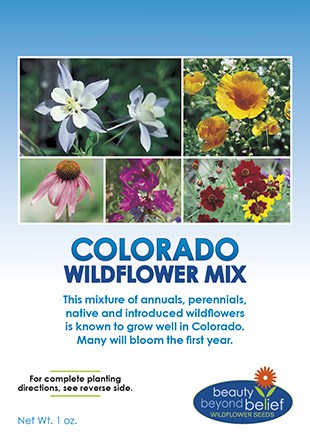
Bring Colorado color to your landscape with our Colorado Wildflower Mix, a Colorado wildflower seed mix built for first-year impact and long-term staying power. This blend combines annuals and perennials, plus native and introduced wildflowers selected to grow well in Colorado. Many flowers bloom the first year, while perennials establish and return with stronger blooms in the seasons ahead.
Quick Specs
- Origin: Native and introduced
- Type: Annual and perennial wildflower mix
- Color: Multicolored flowers
- Region Fit: Colorado; High Altitude
- Zones: 3a-4b, 5a-6b, 7a-8b
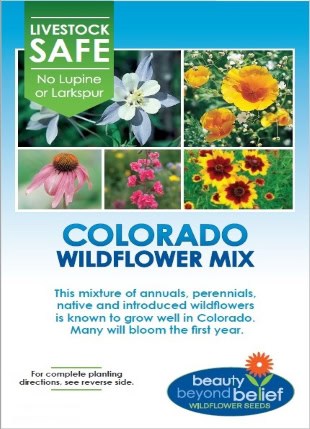
- Options: Standard or Livestock Safe (excludes Lupines and Larkspurs)
- Coverage Snapshot (lush to moderate): 1 oz covers 100 to 150 sq ft; 1 lb covers 1,500 to 2,000 sq ft
Why?
We designed this mix for buyers who want regional wildflowers with both quick visual impact and season to season color. The annuals bring that instant burst of color in the first season, while the perennials establish and return with stronger blooms in the seasons ahead.
Where?
This mix is best suited to Colorado and similar high-altitude western sites where a naturalized, multi-colored planting is desired including meadow-style area, larger borders, open garden spaces and informal landscape plantings. For inspiration on using wildflowers in a more natural landscape design, see this guide to wildflowers and native plants in the landscape.
When?
Plant in early spring or late fall for dormant seeding. We recommend sowing during the cool, moist part of the year so plants can establish before hot, dry conditions arrive.
Water?
Moisture is required for germination. Keep soil consistently moist during establishment, then taper as plants become established.
Best Planting Season:
Wildflowers can be planted in early spring or in late fall for dormant seeding. For spring planting, sow one month prior to the last hard freeze. For late fall planting, sow when freezing nighttime temperatures are consistent so seed stays dormant until spring.
Easy Planting Instructions:
- Prepare the soil: Remove weeds and grasses, then loosen only the top layer of soil for better seed-to-soil contact.
- Spread the seeds evenly: Divide seed into two or more batches and scatter each batch over the entire area to avoid uneven coverage.
- Cover lightly: Rake gently to snuggle seed into the top layer of soil. Cover only to about 1/8 inch, then press the soil down with your hands or a wide board. Use only a thin layer of mulch to hold moisture.
- Water regularly: Gently soak the area and maintain consistent moisture for 4 to 6 weeks. If irrigation is not practical, aim to plant when natural moisture is most reliable.
- Maintenance: Early seedlings can look like weeds. Wait until plants are recognizable or blooms appear before pulling weeds. Expect a strong annual display the first season, with perennials building strength into years two and three.
Growth Requirements:
Moisture must be present for germination.
Wildflower seeds often need light to germinate, so do not bury seed deeply.
For improved distribution in larger areas, you can mix seed with clean sand and use a spreader.
Seeding Rate:
(from lush to moderate coverage)
- 1 oz. 100 – 150 sq ft.
- 4 oz. 375 – 500 sq ft.
- 8 oz. 750 – 1,000 sq ft.
- 1 lb. 1,500 – 2,000 sq ft.
- 5 lb. 7,500 – 10,000 sq ft.
- 10 lb. 15,000 – 25,000 sq ft.
- 25 lb. 1 – 2 acres (1 acre = 43,560 sq ft.)
Mix Contents
Our Colorado Wildflower Mix is built around a simple goal: reliable first-year color, plus perennial species that establish and return stronger over time. If you need an option for properties with animals, choose the Livestock Safe version, which excludes Lupines and Larkspurs.
- Blue Flax: (Linum perenne) Perennial blue bloom for a naturalized look.
- Perennial Lupine: (Lupinus perennis) Classic spires and strong early-season presence.
- Tall Blue Bachelor Button: (Centaurea cyanus) Bright color and quick visual fill.
- Siberian Wallflower: (Cheiranthus allionii) Warm-toned accent in mixed plantings.
- Purple Coneflower: (Echinacea purpurea) Perennial structure and bold midsummer color.
- Rocket Larkspur: (Delphinium consolida) Tall spikes for vertical interest.
- Rocky Mountain Penstemon: (Penstemon strictus) High-country favorite with strong presence.
- Black-eyed Susan: (Rudbeckia hirta) Golden color and tough performance.
- Blanket Flower: (Gaillardia aristata) Perennial color built for sun and open sites.
- Indian Blanket: (Gaillardia pulchella) Fast color and warm tones in the first season.
- Lance Leaved Coreopsis: (Coreopsis lanceolata) Clear yellow color with a clean, meadow look.
- Scarlet Flax: (Linum grandiflorum rubrum) Red accent for contrast in the mix.
- Cosmos: (Cosmos bipinnatus ‘Sensation Mix’) Airy stems and soft, cottage-style color.
- Plains Coreopsis: (Coreopsis tinctoria) Quick seasonal color that pairs well with natives.
- California Poppy: (Eschscholzia californica, Orange) Orange pop of color and a light, natural drift effect.
- Annual Baby’s Breath: (Gypsophila elegans) Light texture that helps blends feel fuller.
- Mixed Shirley Poppy: (Papaver rhoeas Mixed) Showy seasonal color with classic wildflower style.
- Prairie Coneflower: (Ratibida columnifera) Drought-ready look that fits meadow plantings.
- Mexican Hat: (Ratibida columnifera, Mex Hat) Strong form that holds its own in open sites.
- Shasta Daisy: (Chrysanthemum maximum ‘Alaska’) White blooms for clean contrast in the stand.
- Baby Blue-eyes: (Nemophila menziesii) Cool-toned color for a softer palette note.
- Catchfly: (Silene armeria) Bright accents to diversify bloom color.
- Clarkia: (Clarkia unguiculata) Seasonal bloom that adds variety to mixed color.
- African Daisy: (Dimorphotheca sinuata) Bright daisy form that helps fill gaps.
- Sweet William Pinks: (Dianthus barbatus) Dense flower heads that add texture.
- Candytuft: (Iberis umbellata) Low bloom and bright color for edge interest.
- Blue Columbine: (Aquilegia caerulea, Blue) Colorado icon with distinctive blooms.
Mix contents may vary. Please call for current varieties.



Whit –
Is this product pesticide free?
Becky Hansen –
Absolutely!