
Description
Mountain Bromegrass- Bromus marginatus, VNS
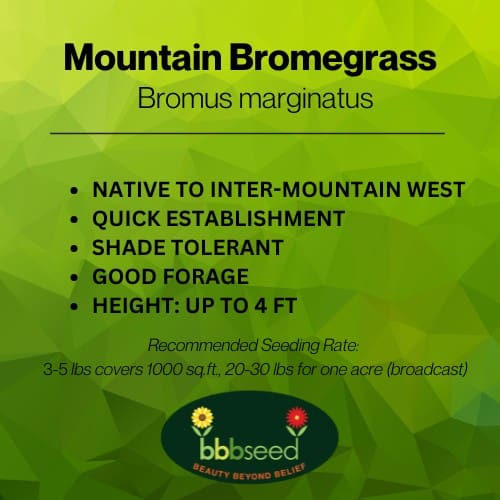
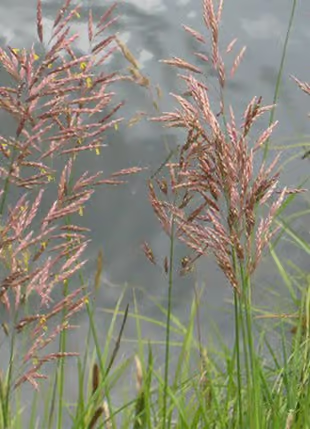
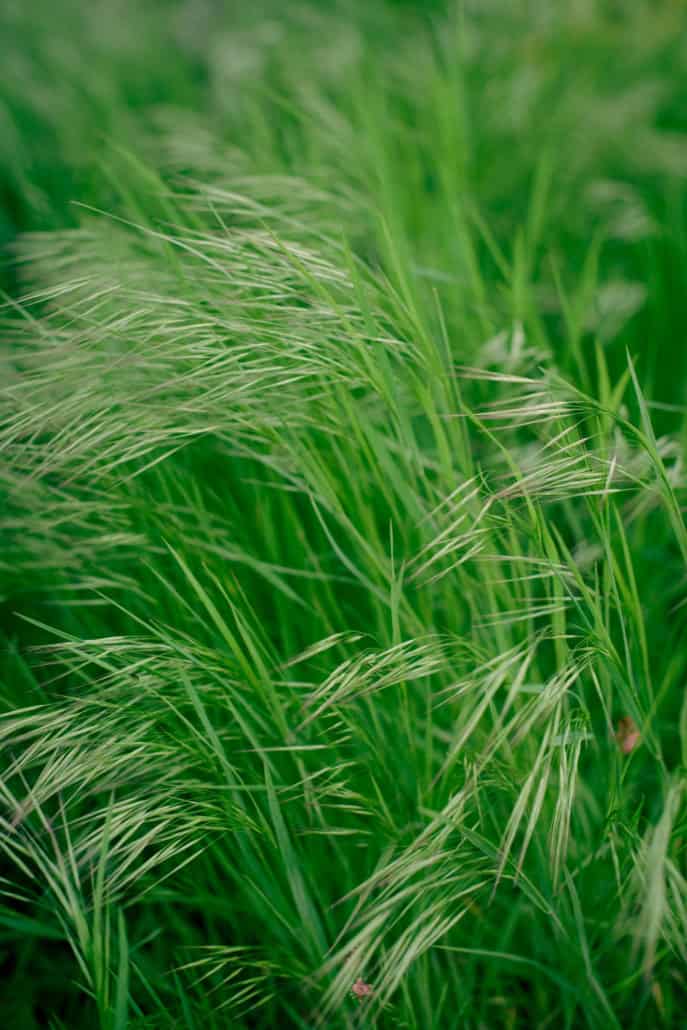
Mountain Bromegrass is a native, short-lived perennial bunchgrass found throughout the Pacific Northwest, Rocky Mountains, and intermountain West. This tall, leafy grass establishes quickly and provides excellent early cover for erosion control, reclamation, wildlife habitat, and forage plantings.
Quick Specs:
Origin: Native
Height: 2-4 ft
Growth Habit: Bunching
Season: Cool-season
Sun: Full sun to partial shade
Soil: Well-draining
Elevation: Best at Higher elevations up to 10,000 ft.
Seeding Rate: Small Areas 3-5 lbs. per 1000 sq. ft.
Larger Areas: 15-20 lbs. per acre drilled, 20-30 lbs. per acre broadcast
Why?
Mountain Bromegrass is valued for its vigorous growth, high forage production, and ability to establish on disturbed sites. It performs best on deep, well-drained soils and is adapted to upland areas with moderate precipitation. It is commonly used in restoration projects, mine reclamation, wildfire recovery areas, dryland pastures, and native grass mixtures.
This grass produces high-quality forage and is valued by wildlife managers and landowners for elk, mule deer, sheep, cattle, and horses. Its early spring growth and palatability provide valuable forage, and seed typically matures by mid-August.
Where?
While Mountain Bromegrass can provide quick ground cover, it is not a traditional lawn grass. Its tall, bunch-forming growth habit does not create the dense, low-growing turf desired for a typical yard. Instead, it is an excellent choice for natural landscapes, conservation plantings, open spaces, and areas where a hardy native grass is needed.
Because Mountain Bromegrass is relatively short-lived, it is often planted as part of a diverse native grass and wildflower mixture where it provides quick establishment while longer-lived species develop.
When?
Spring or fall are the best planting windows. For best results, seed when soil temperatures are 50 to 80°F and follow these grass seed planting tips for site prep and successful establishment.
Water?
Keep the seedbed consistently moist during germination and early establishment. After establishment, Mountain Bromegrass is adapted to dry upland sites and generally requires little supplemental irrigation. It performs best with natural precipitation of roughly 14-30 inches annually. Supplemental water may be needed during extended drought, but avoid overwatering or planting in areas with a high water table.

Reviews
There are no reviews yet.