Best Flowers for Bees: What to Plant for a Pollinator-Friendly Garden
Updated June 10, 2026
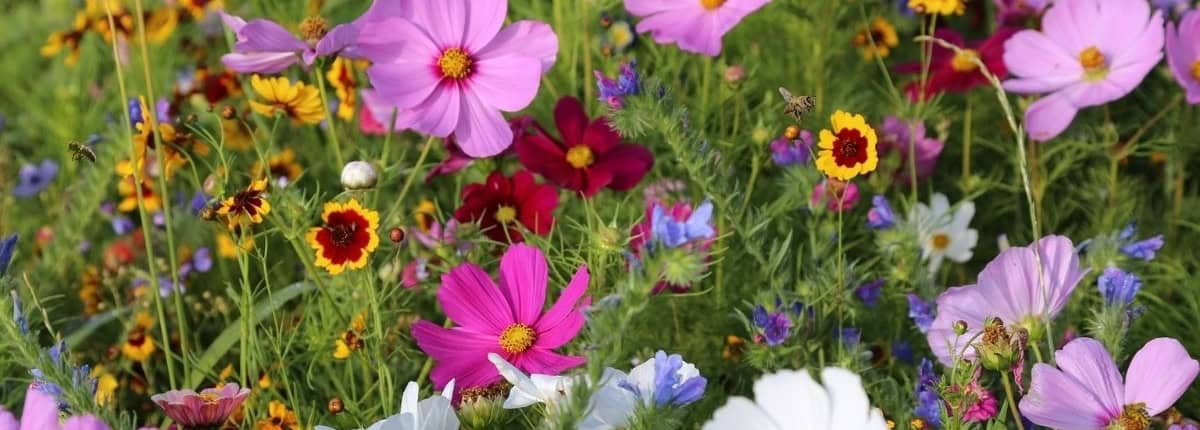
The best flowers for bees have abundant nectar and pollen, are long-blooming, easy for pollinators to access, and are planted in sufficient numbers to be discovered by foraging pollinators. The USDA Forest Service notes that bees rely on both pollen and nectar as their primary food sources, which is why flower choice plays such an important role in creating a supportive pollinator garden.
Not all flowers are equally valuable to pollinators. Many cultivated varieties are bred to have extra petals, which often means fewer pollen-producing structures. In contrast, true bee-friendly flowers do more than look good for a short season. They provide essential food for pollinators from late spring through fall. These plants tend to be tough and resilient, handling full sun, dry weather, clay-heavy soil, and the occasional harsh spring storm with ease.
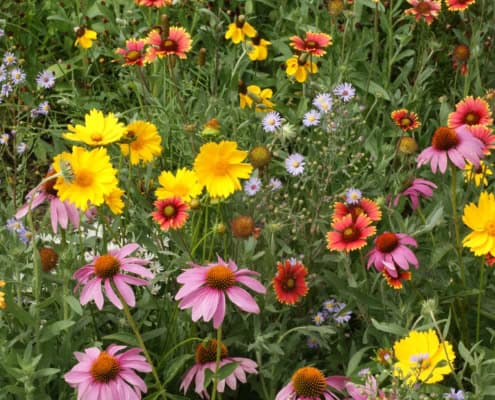
Want an easy way to plant flowers bees love? Start with our Honey Source Mix, a long-blooming blend of nectar- and pollen-rich wildflowers created to support honey bees throughout the growing season.
What Are the Best Flowers for Bees?
In my experience gardening near Boulder, the best bee flowers are those adapted to the Front Range climate. These tough, sun-loving, drought-tolerant, and pollinator-friendly plants include: bee balm, penstemon, catmint, lavender, coneflower, yarrow, milkweed, blanket flower, aster, goldenrod, and Rocky Mountain beeplant.
Quick List of the Best Flowers to Plant for Bees
| Flower | Best For | Bloom Season | Bee Appeal | Butterfly Appeal | Boulder/Front Range Notes |
|---|---|---|---|---|---|
| Bee balm | Bees, butterflies, summer color | Summer | High | High | Great for pollinator patches with some moisture |
| Penstemon | Bumblebees, native-style gardens | Late spring to summer | High | Medium | One of my most reliable bee plants in Boulder |
| Catmint | Honeybees, low-water borders | Late spring to summer | High | Medium | Bees work it heavily when planted in clusters |
| Lavender | Honeybees, fragrance, dry gardens | Summer | High | Medium | Best in sunny, well-drained soil |
| Coneflower | Bees, butterflies, seed heads | Summer to fall | High | High | Easy landing spots for butterflies |
| Yarrow | Native bees, low-water gardens | Late spring to summer | Medium | Medium | Tough, drought-tolerant, and low-maintenance |
| Milkweed | Monarchs, bees, butterflies | Summer | Medium | High | Important because it supports monarch caterpillars |
| Blanket flower | Bees, butterflies, hot dry spots | Summer to fall | High | High | Handles sun and dry conditions well |
| Aster | Late-season bees | Late summer to fall | High | High | Valuable before colder weather arrives |
| Goldenrod | Late-season nectar | Late summer to fall | High | Medium | One of the most important fall bee flowers |
| Rocky Mountain bee plant | Native bees, regional gardens | Summer | High | Medium | Strong choice for Colorado pollinator gardens |
| Zinnia | Butterflies, annual color | Summer to frost | Medium | High | Good annual filler if grown pesticide-free |
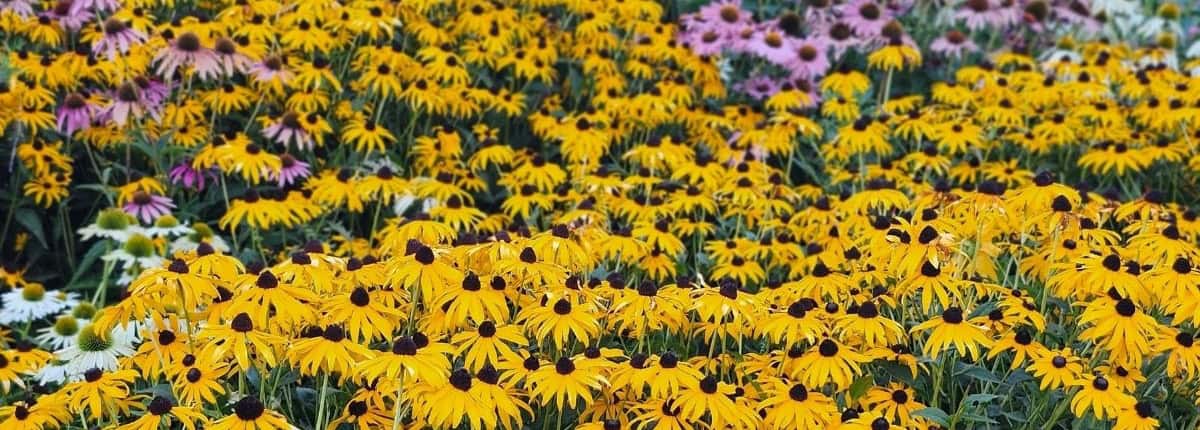
| Black-eyed Susan | Bees, butterflies, easy color | Summer to fall | Medium | High | Good landing spots and long-lasting blooms |
For another seed-focused breakdown, BBB Seed also has a helpful guide to 19 plants for honey bees.
What Makes a Flower Good for Bees?
Nectar and Pollen Matter Most
Nectar and pollen matter most. Nectar provides energy, while pollen provides protein and nutrients necessary for rearing young.
Bloom Time Is Important
Plant for the whole season. In Boulder, bees need food from spring through fall. Early blooms help them after winter. Summer flowers keep the garden active during the hottest months. Late bloomers like asters and goldenrod feed the bees and butterflies before colder weather arrives. When planting a bee-friendly garden, make sure to have a variety of flowers that bloom from spring through late fall.
For a broader bee-friendly planting, our Bee Rescue Mix is designed to provide nectar and pollen for full-season support of native and introduced bee species.
Simple, Accessible Flowers Are Best
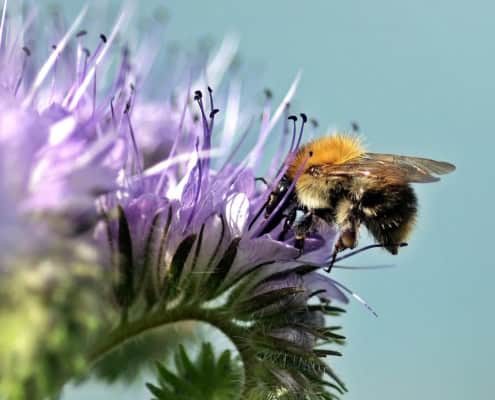
Many bees do better with flowers they can easily access. Simple flower forms, open centers (sunflowers, daisies), clusters of small blooms, and tubular flowers (beebalm, penstemon) can all be useful depending on the bee species. Avoid highly cultivated “double-bloom” flowers, which are often sterile and lack nectar.
My favorites include plants like catmint, yarrow, coneflower, penstemon, bee balm, sunflowers, zinnias, and asters. They are not just beautiful. They are practical feeding stations.
Pesticide-Free Plants Are Essential
A flower can look beautiful and still be a poor choice for bees if it has been treated with harmful pesticides. The Xerces Society recommends choosing bee-safe nursery plants, meaning plants that are free from pesticides harmful to bees and other pollinators.
I avoid pesticides completely in pollinator areas. I also prefer untreated seeds, native plant sales, and local nurseries that understand Colorado growing conditions.
The Best Flowers for Bees and Butterflies
Many of the best flowers for bees are also excellent for butterflies. Butterflies also search for nectar-rich flowers with easy access, good landing spots, and bloom times across the seasons.
For gardeners who want one mix that supports butterflies, bees, hummingbirds, and songbirds, our Butterflies and Birds Wildflower Mix is a natural fit.
Milkweed
Milkweed is one of the first flowers I recommend for butterflies because it is more than a nectar plant. It is also a host plant for monarch caterpillars. Monarch Joint Venture explains that native milkweeds and nectar plants are essential because monarchs need milkweed for egg laying and larval development, plus nectar resources for adult butterflies.
For a bee and butterfly garden, milkweed brings extra value because it supports the full butterfly life cycle while still attracting other pollinators. For help choosing the right species, read BBB Seed’s milkweed buying guide before you plant.
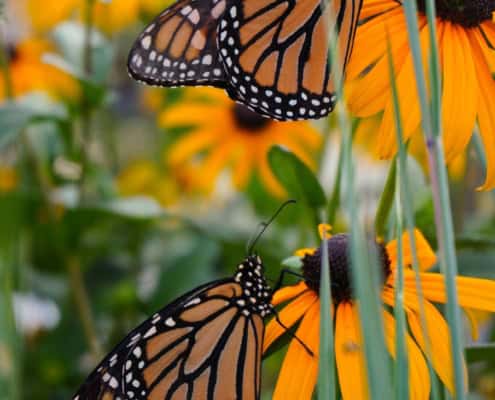
Want to support monarchs, too? Our Monarch Rescue Mix includes nectar-rich flowers for adult butterflies plus milkweed for monarch egg-laying sites and caterpillars.
Coneflower
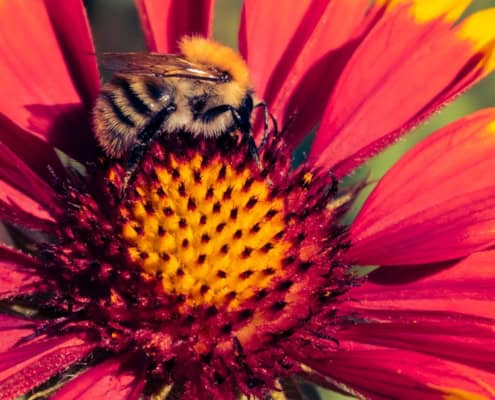
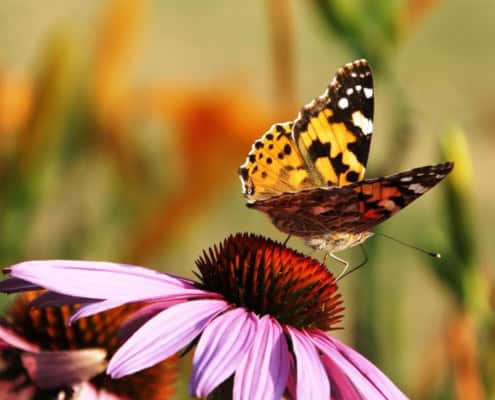
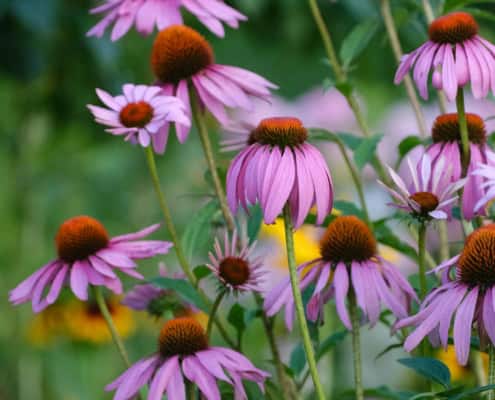
Coneflower is one of the easiest recommendations to make. Bees visit the center cones, butterflies can land on the broad petals, and the plant blooms for a long stretch of summer.
In my garden, coneflower becomes more active with butterflies as the weather warms. Purple coneflowers pair well with bee balm, catmint, yarrow, black-eyed susan, butterfly milkweed, coreopsis, and blanket flower.
Bee Balm
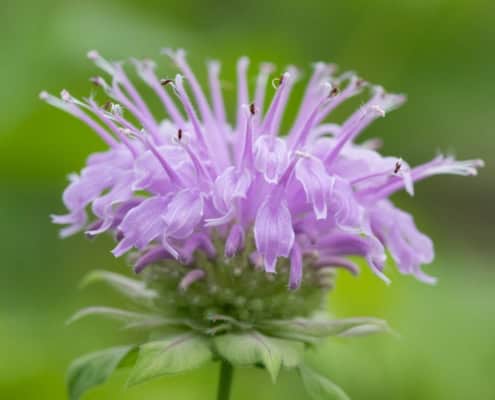
Bee balm is a strong summer-blooming flower for bees and butterflies. It brings color, nectar, and grace to the garden when many pollinators are highly active.
I like bee balm in a mixed planting rather than a single specimen. It works especially well when it is part of a grouping planted with coneflower, milkweed, and yarrow.
Blanket Flower
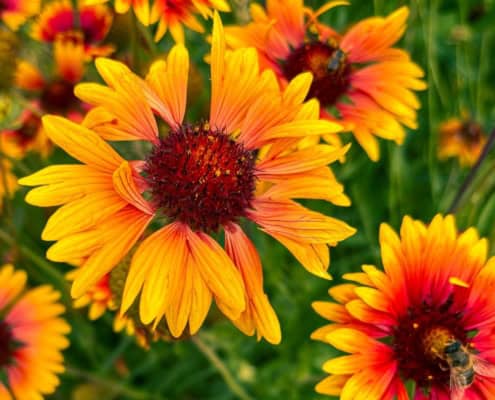
Blanket flower is one of my favorite tough plants for Boulder conditions.
Its brightly colored daisy-like flowers bloom all summer long. It handles sun, heat, and lower-water areas better than many flowers, making it an excellent choice for a low- maintenance garden.
Aster and Goldenrod
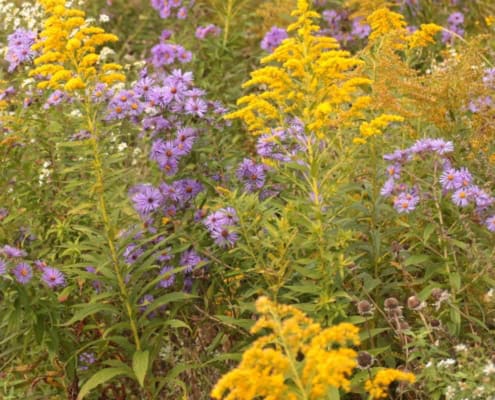
If you want to support bees for the whole season, do not skip late-blooming flowers like asters and goldenrod.
By late summer and fall, many gardens start running out of nectar. This is when aster and goldenrod become some of the most important plants in the garden as the season winds down.
Zinnia, Cosmos & More
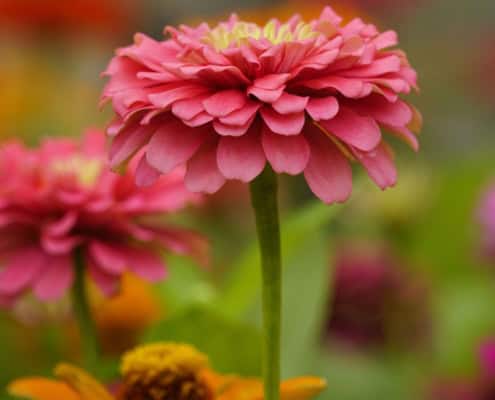
Many pollinator favorites are annuals like zinnia, cosmos, sunflowers, marigolds, lemon mint, lacy phacelia, and Mexican sunflower. These annuals are easily grown from seed, bloom all summer long, and provide late-season nectar and pollen resources. These flowers also add color and butterfly appeal to the garden.
Best Flowers to Plant for Bees in Boulder and the Front Range
Why Boulder Gardens Need Tough Pollinator Plants
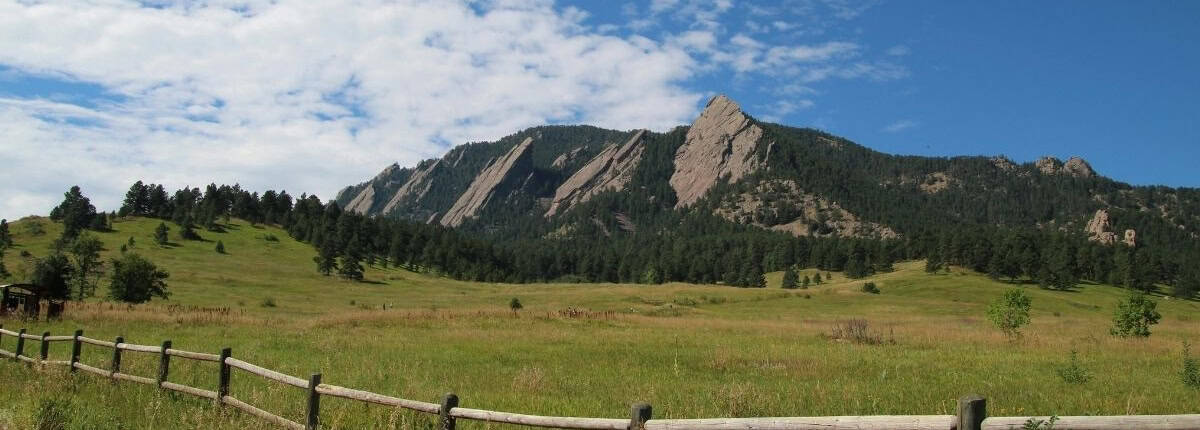
Gardening in Boulder teaches you quickly how to deal with dry summers, intense sun, clay-heavy pockets of soil, late spring snow, and the occasional hailstorm rolling off the Flatirons.
That is why I lean toward flowers that are both pollinator-friendly and resilient. Around here, the best flowers to plant for bees are usually drought-tolerant perennials, native flowers, trees, and shrubs, and well-adapted plants like those found in the Plant Select program.
Colorado State University Extension’s guide to creating pollinator habitat is a helpful supporting resource because it emphasizes planning for food, shelter, water, and nesting areas in pollinator-friendly landscapes.
Native and Well-Adapted Flowers That Perform Well Locally
For Boulder and the Front Range, my strongest recommendations are:
- Penstemon
- Rocky Mountain bee plant
- Yarrow
- Blanket flower
- Aster
- Goldenrod
- Milkweed
- Bee balm
- Catmint
- Lavender
- Coneflower
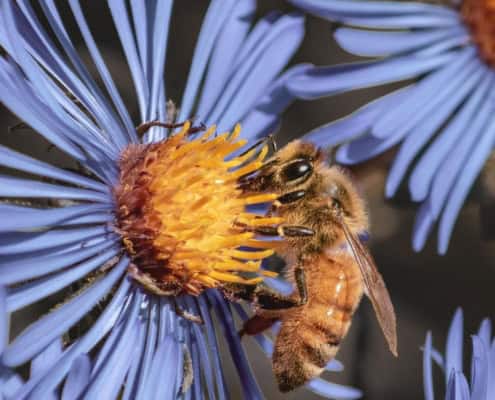
I like mixing natives with well-adapted non-native flowers. Native plants are especially important for native bees and local ecosystems, but plants like lavender and catmint can still be an excellent addition to the pollinator garden.
To go deeper, BBB Seed explains why native plants matter for pollinators, especially native bees that often specialize in certain plants and bloom times. For more region-specific ideas, the Xerces Society also provides pollinator-friendly native plant lists for bees, butterflies, and other beneficial insects.
Local Planting Notes for Boulder, Louisville, Lafayette, Longmont, and Nearby Areas
From North Boulder and Table Mesa to Gunbarrel, Louisville, Lafayette, and Longmont, the same basic rule applies: choose plants that can handle sun, dry spells, and variable spring weather.
For Colorado gardeners who want a regionally appropriate wildflower option, our Colorado Wildflower Mix combines annuals, perennials, native, and introduced wildflowers selected to grow well in Colorado.
For a more natural meadow-style planting, our Rocky Mountain Wildflower Mix is built for Rocky Mountain and western landscapes and includes regional favorites like Rocky Mountain penstemon, Rocky Mountain bee plant, blanket flower, prairie coneflower, and purple coneflower.
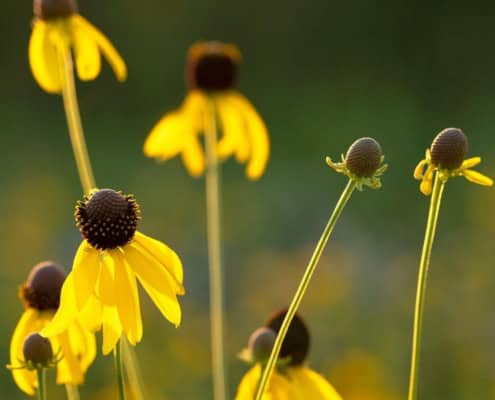
In hotter, drier spots, I would lean heavily on blanket flower, yarrow, catmint, lavender, penstemon, and Rocky Mountain bee plant. In slightly more forgiving areas, bee balm, coneflower, milkweed, aster, and goldenrod can round out the garden beautifully.
Plant for the Whole Season
A good bee garden should not peak once and then go quiet. The goal is to have something blooming from late spring through fall.
Late Spring Flowers for Bees
Good late spring options include:
- Penstemon
- California poppy
- Catmint
- Clover
- Wallflower
- Forget-me-nots
The delicate blue flowers of forget-me-nots are one of the first flowers to bloom in my spring garden, providing an early nectar source for the bees. Forget-me-not flowers have a vibrant yellow ring that signals bees to come feed. Once pollinated, this yellow center fades to a pale white, signaling to the bees that the nectar is already gone.
Summer Flowers for Bees
- Bee balm
- Lavender
- Coneflower
- Blanket flower
- Milkweed
- Black-eyed Susan
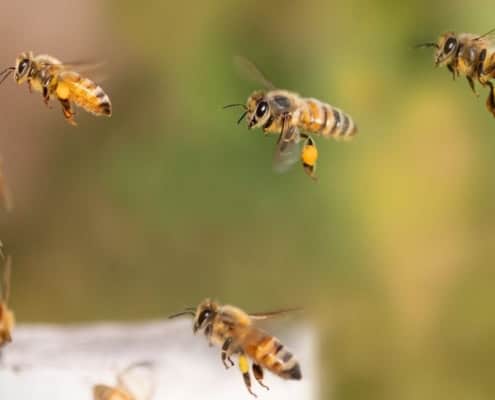
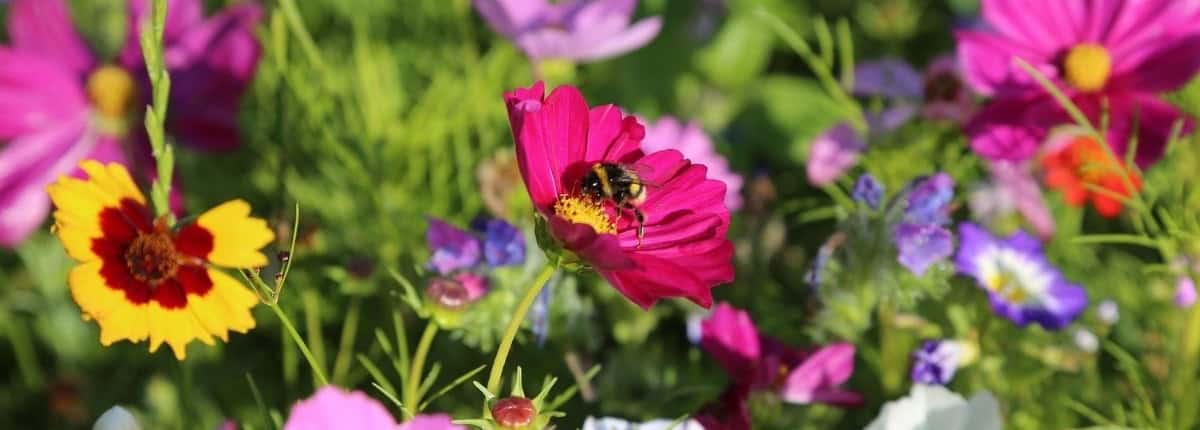
Summer is when the garden can really hum. Honeybees often cover my catmint in the afternoon, while bee balm, lavender, and coneflower keep the planting full of color and interest.
Late Summer and Fall Flowers for Bees
Good late-season options include:
- Aster
- Goldenrod
- Rocky Mountain bee plant
- Sunflowers
- Zinnia
- Cosmos
These flowers are important because late-season nectar can be harder to find. If your garden stops blooming in midsummer, you miss one of the most important windows for bees and butterflies.
How to Plant Flowers So Bees Can Actually Find Them
Plant in Clusters Instead of Scattering One of Everything
Bees find flowers more easily when they are planted in groupings rather than as individual plants.
The less distance a bee must travel to forage, the better. A cluster of three to five plants is usually more useful than a single plant tucked into a random corner.
Mix Flower Shapes and Bloom Times
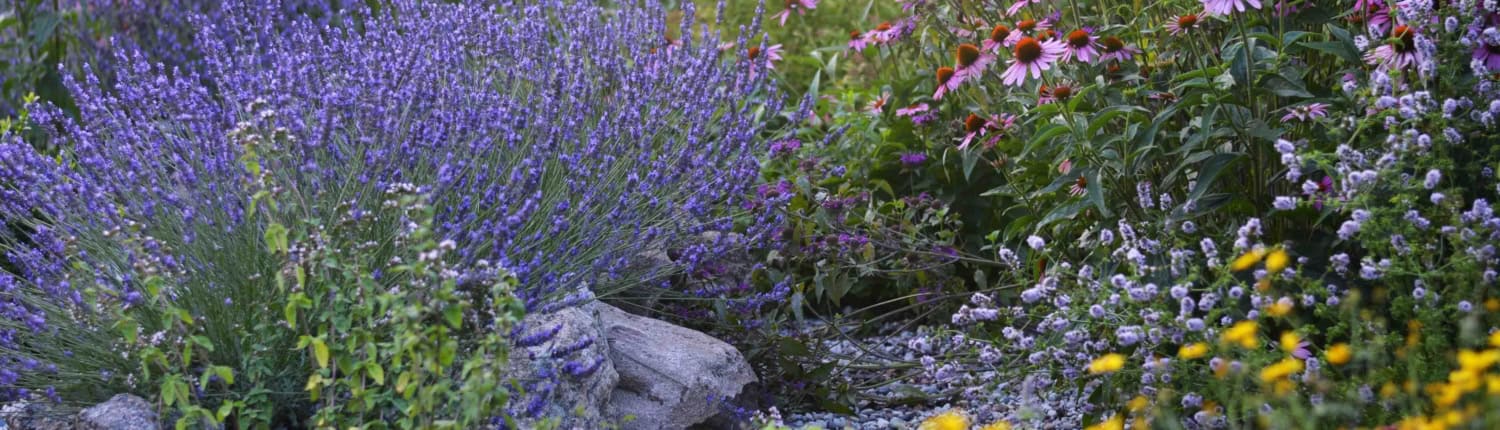
Different flower shapes attract different pollinators. Bumblebees enjoy tubular flowers like penstemon, while butterflies often prefer flowers with easier landing spots like coneflower, zinnia, and black-eyed Susan.
Mixing shapes and bloom times attracts more types of pollinators to your garden.
If you especially want to support bumblebees, our Bumblebee Bonanza Mix includes nectar- and pollen-rich annuals and perennials selected for bumblebees and other pollinators.
Common Mistakes to Avoid When Choosing Flowers for Bees
Buying Only What Looks Good at the Nursery
The biggest mistake I see homeowners make is buying flowers only because they look good in the pot. A lot of those plants bloom once, need too much water, or do not offer much value to native pollinators.
A better question is: will this plant feed bees for more than a week, and will it survive my actual garden?
Forgetting Late-Season Blooms
Many people plant for spring and early summer, then forget about fall. That leaves bees with fewer food sources when they still need them.
Aster and goldenrod are two of the best solutions for this problem.
Choosing Plants That Need Too Much Water
In a dry climate, high-water flowers can become frustrating. They may need more care, struggle in heat, or fail during watering restrictions.
Low-water flowers like yarrow, lavender, catmint, blanket flower, and penstemon usually make more sense for Boulder-area gardens.
Planting Treated Flowers Without Asking Questions
Pollinator gardening starts before the plant goes in the ground. If a plant was treated with harmful systemic insecticides, it may not be safe for bees even if the flowers look perfect.
Ask nurseries direct questions and look for untreated or pollinator-safe options.
Frequently Asked Questions About the Best Flowers for Bees
Q: What are the best flowers for bees?
A: The best flowers for bees include bee balm, penstemon, catmint, lavender, coneflower, yarrow, milkweed, blanket flower, aster, goldenrod, Rocky Mountain bee plant, zinnia, and black-eyed Susan. The best choice depends on your climate, sun exposure, soil, and bloom season.
Q: What flowers are best for bees and butterflies?
A: The best flowers for bees and butterflies include milkweed, coneflower, bee balm, blanket flower, zinnia, aster, goldenrod, black-eyed Susan, lavender, lemon mint, and Mexican sunflower. Milkweed is especially important because it supports monarch caterpillars as well as adult butterflies.
Q: What is the best flower to plant for bees?
A: There is no single best flower for every garden. If I had to choose a few dependable options, I would start with catmint, penstemon, bee balm, lavender, coneflower, and goldenrod. For Boulder and the Front Range, I would also add yarrow, blanket flower, Rocky Mountain bee plant, aster, and milkweed.
Q: Are native flowers better for bees?
A: Native flowers are often excellent for native bees because they evolved alongside local pollinators. That said, well-adapted non-native flowers can still be useful when they are pesticide-free and planted responsibly.
Q: How do I attract more bees to my garden?
A: Plant flowers in clusters, choose plants that bloom at different times, avoid pesticides, include native and well-adapted flowers, and make sure the garden has nectar and pollen from late spring through fall. A pollinator-friendly yard can also include host plants and nesting habitat, not just flowers.
Q: What flowers should I avoid if I want to help bees?
A: Avoid flowers treated with harmful pesticides, especially systemic insecticides. Also, avoid relying too heavily on short-blooming flowers, overbred blooms with little nectar or pollen, and plants that need more water or care than your garden can realistically provide.
Final Thoughts: Choose Flowers That Feed Bees All Season
The best flowers for bees are not only the prettiest ones on the nursery bench. They are the flowers that feed pollinators, bloom at different times, survive your local conditions, and come back strong year after year.
For my Boulder garden, that means a mix of native and well-adapted flowers like penstemon, bee balm, catmint, lavender, coneflower, yarrow, milkweed, blanket flower, aster, goldenrod, and Rocky Mountain bee plant.
Plant them in clusters, skip pesticides, include both early and late bloomers, and think of the garden as a season-long food source. That is how you get a garden that looks good, supports bees and butterflies, and keeps working long after the first flush of flowers fades.
Not sure which pollinator mix to choose? Our Pollinator Mixes Collection includes Honey Source Mix, Bee Rescue Mix, and Butterflies & Birds Mix, so that you can support honeybees, native pollinators, butterflies, and birds with one collection.
You can also compare BBB Seed’s popular pollinator seed mixes if you want a broader look at mixes for bees, butterflies, bumblebees, hummingbirds, and monarchs.
Looking for a small pollinator-friendly gift? Our Pollinator Tins include either Bee Rescue Mix or Honey Source Mix and make an easy gift for gardeners, beekeepers, teachers, or fundraiser groups.