Description
Texas Bluebonnet
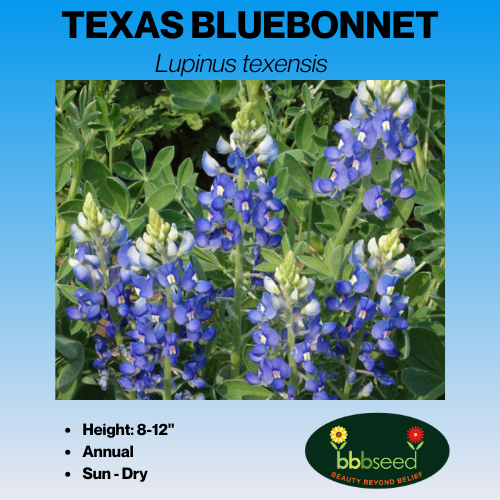
The iconic Texas Bluebonnet, the State Flower of Texas, paints roadsides, prairies, and open fields with breathtaking waves of brilliant blue each spring. This beloved native annual produces dense spikes of fragrant, pea-like flowers with distinctive white tips that rise above attractive, velvety, sage-green foliage. Easy to grow and naturally adapted to dry, sunny conditions, Texas bluebonnet is an outstanding choice for wildflower meadows, native plantings, roadsides, and pollinator gardens.
Blooming from March through May, Texas bluebonnet is an important early-season nectar source for native bees, bumble bees, butterflies, and other beneficial insects. It also serves as a larval host plant for Hairstreak and Elfin butterflies, adding valuable habitat alongside its striking beauty. During winter, the plants form attractive low-growing leaf rosettes before bursting into bloom the following spring.
Note: Texas bluebonnet seeds and plants are toxic if ingested by humans or animals.
Quick Specs
- Origin: Native
- Type: Annual
- Color: Blue with white tips
- Height: 12-24 inches
- Width/spread: 12-18 inches
- Sunlight: Full sun
- Water: Low
- Bloom Season: Spring
- Planting Time: Spring or fall
- Zones: 7b-10a
- Regions: Texas/New Mexico
- Use: Meadows, roadsides, pollinator gardens, native plantings
- Attracts: Butterflies, bees, bumblebees
- Packet weight: 2 grams
- Seeds per packet: Approx. 35 seeds
Best Planting Season:
For best results in southern climates, sow seed in late fall to allow natural winter chilling. In colder regions, start seeds indoors in early spring or direct sow after the last frost.
Easy Planting Instructions:
- Prepare the soil: Remove weeds and grasses, then loosen the top layer of soil for better seed-to-soil contact.
- Spread the seeds evenly: Scatter the seeds over the entire area. Aim for even coverage and 3-6 inches of space between seeds.
- Cover lightly: Rake gently to settle the seed into the soil. Cover with approximately a 1/8 inch of soil, then press the soil down with your hands or a wide board. Use only a thin layer of mulch to hold moisture.
- Water regularly: Gently soak the area and maintain consistent moisture from seeding through early growth. If irrigation is not practical, aim to plant when natural moisture is most reliable.
- Maintenance: Early seedlings can look like weeds. Wait until plants are recognizable or blooms appear before pulling weeds.
Special Treatment:
Because the seed coat is extremely hard, scarifying or soaking seeds before planting will greatly improve germination.
Growth Requirements:
Plants thrive in full sun and well-drained soils, including limestone, sandy, clay, and caliche soils, and are highly drought-tolerant once established.
Seeding Rate:
1 oz. covers 75 sq ft.
Mix Contents:
Single Species, Texas bluebonnet (Lupinus texensis ) is found in the wild along roadsides and fields of the southwestern hill country of Texas and New Mexico. The tall blue and white spikes of Bluebonnet flowers form in the spring over sage-green foliage.
Reviews
There are no reviews yet.