


Description
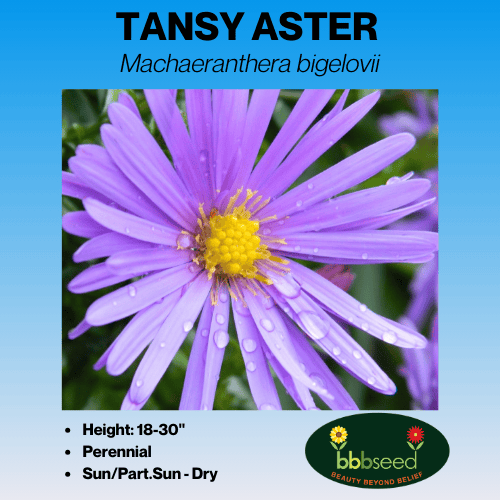
Tansy Aster is one of those native wildflowers that seems to shine brightest when summer begins to wane. From midsummer through fall, this southwestern beauty covers itself in cheerful lavender-to-violet blooms with glowing golden centers, creating a dazzling display against its finely textured gray-green foliage. The flowers appear in abundance, transforming dry landscapes into vibrant ribbons of color and providing a welcome source of nectar when many other wildflowers have finished their show.
Native to the grasslands, foothills, mesas, and open woodlands of Arizona, New Mexico, Colorado, Utah, Texas, and northern Mexico, Tansy Aster is perfectly adapted to life in the sun. It thrives in well-drained sandy, rocky, gravelly, or clay soils and asks for little once established. Its exceptional drought tolerance and ability to flourish in poor soils make it a natural choice for water-wise gardens, native landscapes, and challenging sites where other flowers struggle.
Growing 1 to 3 feet tall, Tansy Aster brings both beauty and ecological value to the garden. Its nectar-rich blossoms are a magnet for native bees, honeybees, butterflies, skippers, and other beneficial insects, filling the landscape with the gentle hum of pollinators throughout the blooming season. Whether planted in wildflower meadows, xeriscapes, prairie plantings, pollinator gardens, or restoration projects, this easy-care native provides months of color and habitat. Pair it with native grasses and other drought-tolerant wildflowers to create a landscape that feels both wild and wonderfully alive.
Quick Specs:
Origin: Native
Type: Perennial
Color: Purple
Height: 18-30 inches
Width/spread: 12-24 inches
Sunlight: Full sun, partial shade
Water: Very low/low
Bloom Season: Mid-late summer, early fall
Planting Time: Spring or fall
Zones: 5b-7b
Regions: Southwestern & Intermountain West
Use: Borders, meadows & cottage gardens, native and restoration plantings
Attracts: Birds, butterflies, bees, and other invertebrates


Reviews
There are no reviews yet.