
Description
Revegetation Grass and Wildflowers Mix Product Info
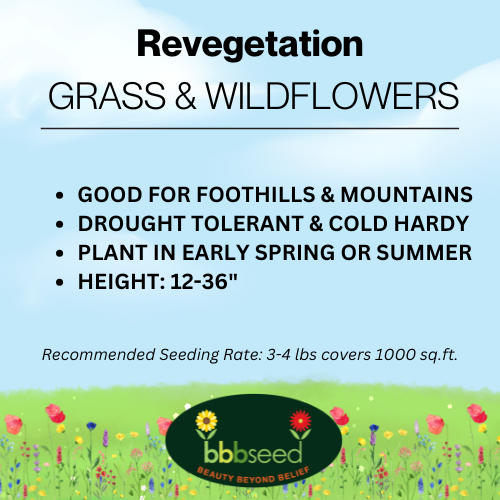
Revegetation Grass and Wildflowers Mix is a grass-forward seed blend designed to establish cover quickly, stabilize soil, and create a natural meadow look on disturbed sites. We built this mix with cool-season bunch grasses for durability and root-driven soil stabilization on roadsides, ditch banks, and rangelands, then added 5% wildflowers for seasonal color.
Quick Specs
- Mix Type: Cool-season bunch grass blend with wildflowers
- Wildflowers in Mix: 5%
- Mature Height: 12 to 48 inches
- Best Uses: Revegetation, soil stabilization, disturbed sites, rangelands, roadsides, ditch banks
- Climate Fit: Drought tolerant and cold hardy; great for foothills and mountain areas
- Planting Window: Spring or early summer
- Zones/Regions: Zones 3a to 8b; West, Northwest, Southwest, Midwest, and Canada
- Available Sizes: 1 lb, 5 lb, 10 lb, 25 lb, 50 lb
- SKU: RevegGrWF
Whether you are restoring a disturbed area, improving a roadside, or creating a more natural landscape, this revegetation grass and wildflower mix is designed to help bring life back to challenging spaces. The combination of hardy bunch grasses and colorful wildflowers creates a resilient planting that changes throughout the season. From early green-up and grass establishment to waves of blue, yellow, red, and white blossoms. Watching a once-bare area transform into a living meadow is one of the most rewarding parts of growing from seed.
Beyond its beauty, this mix helps support the landscape from the ground up. Deep-rooted grasses help hold the soil in place, improve long-term site stability, and provide valuable cover for wildlife, while the wildflowers add habitat and seasonal resources for pollinators. With a little patience during the first year of establishment, this mix can develop into a durable, low-maintenance planting that feels like it has always belonged there.
Why?
We formulated this mix to balance quick germination with long-term durability. The bunch grass base provides strong root systems for soil stabilization, plus palatability for livestock and wildlife.
No two revegetation projects look exactly alike, and that’s part of their appeal. Local soils, rainfall, elevation, and seasonal weather all influence which species become most prominent over time. The result is a planting that reflects its surroundings and develops its own unique character while remaining true to the purpose of restoring the landscape.
Where?
Use this grass and wildflower seed mix on roadsides, ditch banks, slopes, and open disturbed areas where you need reliable cover and a naturalized meadow effect.
Plant with your region in mind: Every landscape is unique. Before establishing a new planting, check in with local extension offices, conservation districts, or state agricultural resources for guidance on regionally appropriate species.
When?
Plant in spring or early summer for best establishment, when soil temperatures are 50 to 80°F. Follow these grass and seed planting tips for site prep and successful establishment.
Water?
The first year is an important time for root development and establishment. Keep the seedbed consistently moist during germination, especially during dry periods. As grasses and wildflowers mature, they become better adapted to local conditions and require less supplemental water.
Final Thoughts
Every planting develops its own unique character as the grasses and wildflowers establish and adapt to local conditions, creating a meadow that looks like it naturally belongs in the landscape. With a little patience, you’ll enjoy a resilient planting that provides lasting beauty and dependable performance for years to come.
Since 1985, BBB Seed has been committed to providing high-quality seed for gardeners, landowners, and restoration projects. Our seed is professionally tested for germination and weed seed content, so you can plant with confidence knowing you’re starting with quality seed backed by decades of experience.


Reviews
There are no reviews yet.