
Description
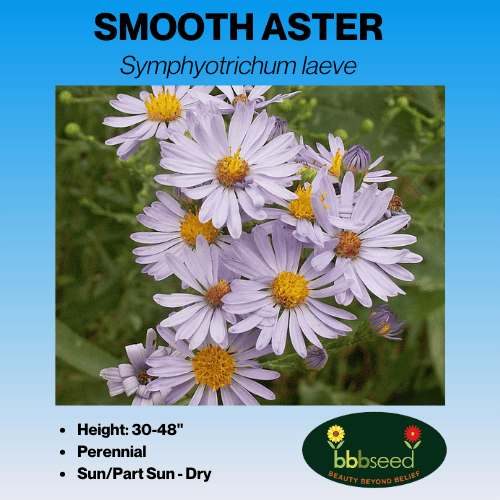
Smooth aster is a hardy native perennial prized for its masses of lavender-blue to violet daisy-like flowers with sunny yellow centers, with an attractive vase-shaped habit. These blossoms brighten the landscape from late summer into fall. One of the most adaptable native asters, it provides valuable late-season nectar when many other flowers have finished blooming, making it an important resource for pollinators preparing for winter or migration, including the next generation of bumblebee queens foraging before entering winter dormancy.
Native to much of North America, smooth aster is commonly found in prairies, open woodlands, meadows, roadsides, and dry slopes. It grows 2 to 4 feet tall and is easily recognized by its smooth, bluish-green foliage that remains attractive throughout the growing season. This resilient species thrives in full sun to partial shade and prefers well-drained soils, but adapts readily to clay, loam, rocky, and sandy soils. Once established, it is notably drought-tolerant and requires little maintenance.
Smooth aster is an excellent choice for native plant gardens, pollinator habitats, wildflower meadows, prairie restorations, naturalized landscapes, and perennial borders. Its abundant blooms attract native bees, honeybees, butterflies, skippers, and other beneficial insects, while birds may feed on the seeds later in the season. Deer-resistant and easy to grow, smooth aster adds long-lasting color, texture, and ecological value to the late-season garden. Plant smooth aster with other late summer- blooming plants like goldenrod, black-eyed Susan, purple coneflower, and ornamental grasses like little bluestem.
Quick Specs
Origin: Native
Type: Perennial
Color: Blue/Purple
Height: 30-40 inches
Width/spread: 18-24 inches
Sunlight: Full to partial sun
Water: Low
Bloom Season: Summer to fall
Planting Time: Late fall to early spring
Zones: 4b-7b
Regions: Canada, the United States & Northern Mexico
Use: Borders, prairies, meadows, restoration, wildlife habitat
Attracts: Butterflies, honeybees, native bees, and birds


Reviews
There are no reviews yet.