

Description
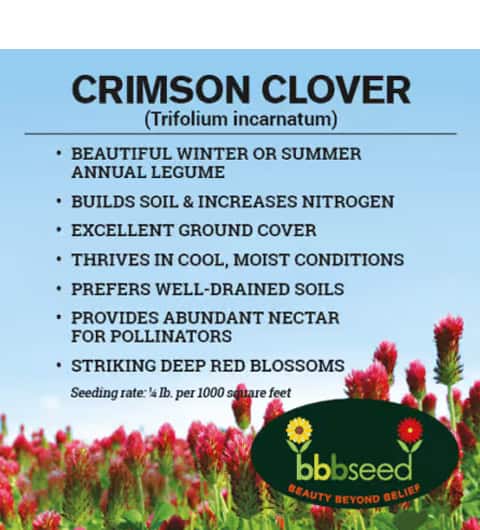
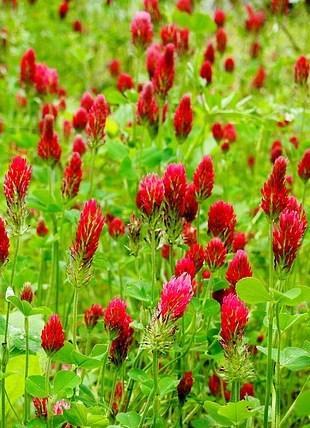
Crimson Clover, a rapidly growing and exceptionally attractive cover crop, offers a range of benefits for agricultural and gardening purposes. This winter annual, characterized by its herbaceous legume nature and striking deep red blossoms measuring between 1/2 to 1 inch in length, is not only visually appealing but also serves as an asset in sustainable farming practices.
Quick Specs
- Botanical Name: Trifolium incarnatum
- Common Name: Crimson Clover
- Life Cycle: Winter annual
- Growth Habit: Upright, fast-growing
- Zone: 3-6 annual, 6-9 perennial
- Leaf Size: 1/2-1 inch
- Mature Height: 1-3 feet
- Bloom Color: Crimson
- Bloom Time: Early Summer or Late Fall
- Sun: Full sun
- Soil: Wide range of well-drained soils
- Climate: Cool-season, medium – moist
- Available Sizes: 1 lbs, 5 lbs
- Use: cover crop, meadow, pollinator garden, ground cover
- Seeding Rate: 1/4 lbs per 1,000 sq. ft.
Why?
Crimson Clover is a great choice for gardeners, farmers, and conservation projects looking to add seasonal beauty while improving the health of the soil. As a legume, it works with naturally occurring soil bacteria to capture nitrogen and return it to the soil. Its dense growth also helps protect bare soil from erosion and provides habitat for beneficial insects during cooler months.
Where?
Plant Crimson Clover in open areas with plenty of sunlight, including gardens, agricultural fields, meadows, and cover crop plantings. It performs well across a variety of regions where cool-season growth is possible and adapts to many soil types as long as the area has good drainage. Avoid low spots where water collects, as consistently wet soils can reduce plant growth.
When?
Plant in fall or spring. Plant Crimson Clover in late summer to early fall so plants can develop before winter and produce blooms the following season. In colder regions, it is grown as an annual cover crop, while warmer areas may allow it to continue growing longer. Spring planting is also an option after the threat of frost has passed, especially in areas with shorter growing seasons.
Water?
Keep soil consistently moist while seeds are germinating and plants are becoming established. Once established, Crimson Clover tolerates periods of dry conditions, though regular moisture encourages healthier growth and better flowering.
Detailed Information
This versatile crop exhibits the following key characteristics and applications:
- Seasonal Versatility: Crimson Clover excels in various seasonal roles. It provides an early spring source of nitrogen, experiences rapid growth in the fall, and can even serve as a summer crop in cooler regions. In zones 5 and colder, it is often used as a winter-killed annual, like oats.
- Weed Control and Ground Cover: When planted in late summer, crimson clover establishes robust ground cover, effectively suppressing weed growth. This makes it an excellent choice for weed management.
- Companion Planting: Crimson clover thrives when grown alongside other crops such as small grains, grasses, and different clover varieties. It is frequently paired with oats to create an enhanced planting mixture.
- Pollinator Attraction: The vibrant crimson flowers of this legume produce abundant nectar, making them a magnet for various types of bees and other beneficial insects. This not only benefits the local ecosystem but also enhances overall pollination in the area.
- Soil Adaptability: Crimson clover demonstrates adaptability to a wide range of well-drained soils, with a preference for sandy loam. Once established, it flourishes in cool and moist conditions, though it is less tolerant of extreme heat or cold.
For specific applications, follow these guidelines:
- Winter Annual Use: To maximize its winter annual benefits, sow crimson clover in late summer, allowing the plants to establish themselves before the onset of cold weather. Aim for planting depths of 1/4 to 1/2 inches for optimal results.
- Summer Annual Use: For summer planting, wait until all danger of frost has passed to ensure successful growth.
- Green Manure Use: If using crimson clover as green manure, harvest the plants just as the red tops start to fade, preventing seed formation. Cut the plants at the soil line using a sharp hoe and incorporate them into the soil 2-3 weeks before planting the subsequent crop. This practice enriches the soil with valuable nutrients.
Incorporating crimson clover into your agricultural or gardening endeavors can yield numerous advantages, from soil improvement to enhanced pollinator support, all while adding a touch of natural beauty to your landscape.
Find more information about cover crops in this post.

Reviews
There are no reviews yet.