Plants as Conversation Starters

All About Plants

by Sandy Swegel

One of the awkward parts of the holiday season is ending up at gatherings where you only know the person you came with and everyone else is a stranger. There’s always the option of getting a plate of food and finding a comfortable chair to sit in and people watch but it can be awkward. I recently had a great time at a party I was going where I didn’t know many people or have much in common with them and it was entirely thanks to plants. So I know you’re supposed to bring a small gift when you are invited to a dinner, but wine or even grocery store flowers can set you back $15- 20 and I’m frugal or cheap or broke, depending on my mindset that day. So I’ve taken to making my own flower arrangements from gathered natural items and thrift store vases. These can turn out quite creative and cute (I used ornamental cabbages as the center “flowers” recently.) or so unusual that my family says things like “What weird thing is that?”

So at this recent party, the hostess took my cabbage flower and evergreen arrangement politely said thank you and put it on an out-of-the-way table. I sat on a comfortable chair with a plate of food and stumbled over small talk. As my mind idly looked around the room I looked up at the ceiling and saw a stray ivy vine tacked up along the beams near the high ceiling. Its pot was on a narrow ledge about ten feet high and I blurted out without thinking, “Who gets up to water that pot?” The husband came over and said proudly, “That’s my job.” And together the two of them started an animated story about this little vine had grown over 40 feet long in just the past year and now was entwined across the ceiling like a spider web or halo over their living space. We had a great bonding conversation about the marvels of this ordinary little vine and its impact on their lives as they had to find new places to attach it every month. They appreciated that I noticed and admired it too.

The nice part of this brief encounter was later in the evening when the hostess stood by the little arrangement I brought and looked at anew and commented how beautiful the cabbage and juniper berries were.

It was a win-win-win situation. We came to appreciate each other in a new way because of how we each appreciated nature. And the ivy? Well, you know how vain plants are…it loved being the center of attention.


You can use plants as a conversation starter in your own home by having unusual plants like a string of pearls or bloomers most people aren’t familiar with like a clivia. At other people’s homes, you can just take a moment to remark on the plants that grow there. Turns out the plants we live with and manage to keep alive are important to us.

Photos:

http://carlaaston.com/designed/swap-holiday-decor-for-indoor-plants
Gifts FOR the Garden

Gardening Tips

by Sandy Swegel

Growing up in the South, we always had a wrapped gift under the tree just in case we needed an extra gift. This was in part a combination of Southern graciousness and straight-out guilt. What if someone brought us a gift and we didn’t get one for them? Or what if someone brought a guest to Christmas and we felt sad that everyone was opening presents except that person. The extra gift was just perfect to make the holidays smooth and happy for everyone.

This year I’m thinking I need gifts under the tree for the one who gives me so many gifts but I don’t have anything for them. The Earth. The Garden. Gaia. Mother Nature. Whatever name you use.

I was reflecting on the many lists of “Gifts from the Garden” like jellies and preserves, or flower arrangements, or just the pine cones I use instead of bows in gift wrapping. And I thought of all the food the earth gave me. And the daily gift of earthly beauty.

Nature provides naturally for herself so I’m not sure what to give her. Other cultures have traditional gifts in their spiritual rituals. Native Americans offer tobacco or burnt sage, cedar or sweetgrass. Some Hindu traditions offer rice and ghee in fire rituals.

What can we modern Americans offer? A shamanic friend tells me the gift itself isn’t as important as the intention behind the gift. My intention is gratitude and acknowledging that my relationship with Nature is two-way…not just us receiving but also us giving. I haven’t decided yet what to give, but here are some of the gifts I’m considering:

Gifts For the Garden

A Gift for the birds. A feeder for the tiny birds that live in the tree across the street. Or a birdbath heater to provide water when the temperatures are far below freezing in January. The nearest lake or creek or ditch is over a mile away.


A Little Bag of Leaves. This is a symbolic gift to represent all the leaves I left unraked this year in out-of-the-way places….behind the shed, under the deck, in the garden beds…to provide winter homes for the crickets and ladybugs and all the beneficial insects…and even the aphids.

A Bigger Compost Bucket. I love to compost but sometimes in winter, it’s easier just to let things go down the disposal or put it in the City Yard Waste container. It’s still getting recycled, but the garden that gives me so much would probably appreciate extra food for its microbes and earthworms.

A Heart-shaped Stone. A friend collects these while hiking. She has at least twenty rocks in natural heart shapes that she’s run across over the years. She puts them under a tree to remind the earth how much she loves it and appreciates it.

A Little Pair of Shoes. Something for dolls or some discarded kids’ shoes. This would be a reminder to me to walk more often and leave the car at home.

You get the idea. What gift would you like to give Nature in Appreciation this year?

Holiday Gifts for Gardeners

Gift Ideas

by Sandy Swegel

There’s something about winter coming on that sparks the desire to garden. Suddenly we think of all the things we wish we had grown. Or we remember how nice it was to always have a vegetable or flower bouquet to give away. And now what. We want to grow and create to give something.

These are the gifts that I’m giving that I can grow indoors quickly in time for the holidays.

Flowering Amaryllis

A lucky visit to the garden center showed me this year’s casual gift. Amaryllis bulbs already starting to bud right in the box were on sale at 50% off. Amaryllis are ridiculously easy to grow…in soil or in water. I soaked the roots of the bulbs overnight and potted them in plan plastic pots and put them on the windowsill. Once they bloom, I wrap the pot in holiday wrap, add a bow and have awesome gifts ready to go.

Fresh pots of basil.

If you soak basil seeds overnight and plant them densely in clean potting soil in a warm place they’ll germinate very fast. Keep them in a sunny spot or under lights and in two weeks they will be a vigorous aromatic patch of basil micro greens that make a great winter gift.

Vase of coleus

Before your coleus freezes, take lots of cuttings of the most beautiful leaves. Put several stems in a mixed vase. It will be a beautiful arrangement (the reds are quite poinsettia-like.). This is the perfect gift for people who say they have a brown thumb…they just have to monthly refill the water. Those with green thumbs will have rooted plants next Spring.

My favorite gift idea a gardening friend gave last year is pretty hard-core. It is a gift from a serious gardener to another serious gardener. The gift? A bucket of goat manure pellets. Goat manure is one of the best manures…dry, no weeds and not very smelly. I love my eccentric gardening buddies!

Photo credits
http://www.jacksonandperkins.com/amaryllis-bulb-gifts/c/JP-Amaryllis/
https://myurbanfarmscape.com/tag/coleus/

Alyssum

Wildflower Seeds

by Sandy Swegel

It’s time to give the last garden award of the year: Latest Bloomer of the Year. Late blooming flowers are important because they are the last nectar and pollen sources of the season for bees and other pollinators. Bees especially show up on sunny Fall days when the warmth prompts the bees to leave the hive but freezes have already killed off all the flowers except for a hardy few who have little warm micro-ecosystems.

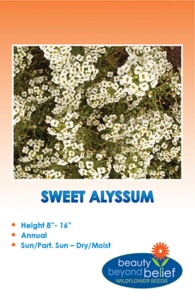
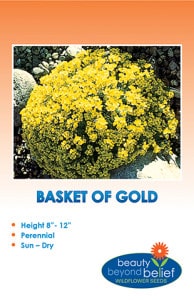
It’s a tie this year. The day after Thanksgiving only two flowers were in bloom: Sweet Alyssum, Lobularia maritima, the annual, and yellow perennial alyssum, Aurinia saxatilis.

Perennial alyssum is the Spring yellow cascading ground-cover known as “Basket of Gold“. It’s glory days are Spring, but it throws out tiny yellow flowers here and there most of the year. The cooler weather of Fall spurs on more flowers and the bees can see those bright yellow flowers from far away.

White or Sweet Allysum is the annual often found in planters mixed with geraniums. It is sturdy, blooms all season and has a very sweet smell. Bees love it all season long. It reseeded itself which is how it made itself at home between pavers on a stone patio. Adorable, hardy and bee food. What a flower!

So, dear Alyssums, we salute you this year as latest bloomers. The bees appreciate your food and the humans love your beauty as winter gray takes over our once colorful gardens.Basket-of-gold AlyssumSweet AlyssumPhotos:

http://typesofflower.com/alyssum-flower-beautiful-meaning-with-gently-care-flower/alyssum-flower-annual-or-perennial/
https://roundrockgarden.wordpress.com/tag/parsley/

Garlic: Last crop of the season.

Cover Crop Seeds

by Sandy Swegel

It’s still unseasonably warm in many parts of the country. Most but not all leaves have fallen. Tomatoes are miraculously still ripening…there won’t be many green tomatoes this year. But the easiest crop of all can be planted very quickly if you haven’t gotten it in the ground yet.

Garlic gets planted in the fall because it does best with a cooling period before growth. Garlic grows very easily and will grow even in poorer soil. But give it good garden soil and good moisture (winter rains and snow usually take care of the moisture) and you’ll have fabulous tasting fresh garlic all year…scapes in Spring and cloves in summer. It really does taste better than the traditional store-bought.

If your soil is fairly soft and porous, you can just poke your gloved finger down into the soil and drop a single clove in…pointy side up. My soil is tough so I carve a hole with my hori hori knife. You can leave the paper on the clove. Space the garlic about six inches apart. You can do rows or a grid. Press the dirt back on the hole. Mulch if you have some leaves or compost. Water if your soil is dry.


Truthfully, planting garlic takes less time than chopping up garlic for dinner. The traditional time for planting garlic is October-November. Our local garlic market farmer says she’s been known to be in the fields Thanksgiving morning brushing away snow and pressing the cloves in. Just get it done. If you don’t have fancy planting cloves, just use some organic garlic from the grocery store this year.


You can get fancier and fussier about planting garlic and amend the soil or pre-soak cloves or dig perfectly measured trenches. But I’m outta time and interest this year….thinking about Thanksgiving already. So I’m going for “good enough” because I’m just so busy this year and garlic is very forgiving.

The garlic will be finished maybe late June so choose a part of the garden you won’t need until them. Someplace the squash will eventually grow over is a good spot.

Photo:
http://www.rodalesorganiclife.com/garden/trick-planting-healthy-garlic
http://sproutedgarden.com/plant-garlic-for-fall/

Drought again?!

Gardening Tips

by Sandy Swegel

Unseasonably warm weather means I finally had time to get some more bulbs planted this week.  It has been warm and sunny this fall but I didn’t fully realize how drought had snuck up on us until I went to dig the deep holes for the daffodils.  In decent garden soil that has had regular if modest irrigation all year, the soil below six inches was dry dry dry.  Pulverized dirt dry.  During times of drought, the soil all over dries down.  The water table recedes and deep-rooted trees and grasses have used up whatever water is available.  We can keep irrigating with an inch of water a week on the surface, but it’s not possible to water enough to keep the soil moist deep in the ground if there’s no natural rainfall.

Drought really snuck up on lots of the US this year.  Except for poor southern California, most of the country started the year with good water.  Now significant parts of the plains and southeast (as well as southern California which started the year dry) are experiencing moderate to severe drought.  See the drought monitor for your area.  http://droughtmonitor.unl.edu  In my area, we went from an awesome spring to virtually no rain since July.

So what’s happening in your garden now?  Here’s what happens in moderate drought:

Soil with clay in it turns hard and cracks open.  (The clay shrinks when it dries out.)

Soil critters go into self-preservation mode.   During times of drought, they have varying survival techniques from as simple as laying eggs for the next generation once conditions improve.  Earthworms go into a hibernation-like state called estivation.  Balled up little earthworms are what I found in my garden bed when I was planting bulbs.

What can you do besides pray for rain or snow or freeze?

Give your trees and shrubs a good long slow-watering now.  Trees need 10 gallons of water per inch of trunk diameter once a month.  If your irrigation is still turn on, you can run it longer than usual.  Or put a light sprinkler on for several hours.  Here’s a great fact-sheet on ways to water trees during drought.   http://www.colostate.edu/Dept/CoopExt/4dmg/Trees/caring.htm

Otherwise, leave the soil alone.  Digging in too dry soil ruins soil texture just like digging in too wet soil.  The soil I had dug for the daffodils was like dust when I filled the holes back in.

Pay attention to rain or snow this month.  If you aren’t getting significant precipitation, water the trees and shrubs once a month even if the ground is frozen.

And pray for rain.

Garlic Chives – A Rugged Plant with Pretty Flowers

Cover Crop Seeds

by Sandy Swegel


It’s that time of year when I nominate plants for this year’s Garden Awards. All Fall I’ve been admiring one plant that is a “crossover” plant able to be a contender in both the “Tough and able to handle the absolute worst soil and little water” category AND a nominee in the “Aren’t You Pretty” category. That stellar plant this year is Garlic Chives (Allium tuberosum). It gets extra kudos for being a late-season nectar and pollen source for bees and butterflies too.

The flowers are beautiful little white stars. Even as they turn to green seeds pods, they are still attractive enough to put in a vase. I’ve never seen any bugs or pests or disease on the chives…probably because they do smell like garlic.


Pungent aroma is one reason they aren’t a perfect garden flower. The greens are edible just like garden chives (and known in Asian cooking as Chinese chives). The flavor is more garlicky than oniony. They are lovely thrown in a stir fry or sauteed and served in egg or tofu dishes.

Now full disclosure requires I tell the other downside of garlic chives: they make a lot of seeds. And they love to reseed in rocks and crevices of garden walls. I deal with this by dead-heading the seed heads in about October before the black seeds drop. While this can be a bother in an irrigated flower garden, it’s not a problem at all in a tough xeric area where there’s not much water anyway.


You can direct seed the chives or start them and transplant. The only extra requirement they have is that they need dark to germinate well….so sprinkle some soil over the seeds. Most of the time the chives overwinter or reseed. They grow in clumps about a foot tall and the flowers are one-two inches wide…depending on your water and soil fertility. If you have sun and moist soil they grow big and spread quickly. But part shade is fine. So is very dry or heavy clay soil. The plants will be smaller, but still impressive.

Yes, that’s what the garlic chives were this year: impressive. Tough plants and pretty.

Photo Credits
http://www.missouribotanicalgarden.org/PlantFinder/FullImageDisplay.aspx?documentid=10864
https://www.mountainvalleygrowers.com/alltuberosum.htm
http://statebystategardening.com/images/uploads/article_uploads/11June_mwnews_5-B2.jpg

Trapped by Nature

Noticing Nature

by Sandy Swegel

Traffic jams and Mother Nature conspired yesterday to make me notice. I had to get to work early and as I reached the top of a hill I could see the traffic on the single highway was at a dead stop for miles. In my hurry that day I had also let my cell phone battery run down and the car charger was suddenly broken. I decided I was too impatient to wait and tried a detour but soon it was obvious a thousand other people were trying this too. So I was driving about five miles per hour for 45 minutes with no smartphone, no music or news to listen to, and it was the best thing that happened to me all week.

Forced idleness tricked me into simply being and observing. My detour took me thru areas of small farms just after sunrise. So many wonders.

There was a hundred-year-old cottonwood tree with only the outer three feet of all the branches turned bright yellow. Every other leaf was dark green. It looked like a punk rocker hairstyle. Then traffic inched on and I saw fields of organic kale. Some frozen solid and white frosted. Others just an acre away but three feet or so upslope were dark green. Cold sinks into low areas and that morning the frost line ran right through the field of kale. Traffic inched forward and I saw flocks of chickens put out to free range surrounded by the flimsiest electric fence. I laughed out loud and remembered my first chickens where we installed one of those portable electric fences. We stood back proudly and watched as our chickens figured out right away that even with clipped wings they could fly up to the top of the short electric fence and not get shocked because they were birds and didn’t have a foot touching the ground to conduct electricity. They just jumped off into a neighboring field.


The rest of the slow ride gave me dozens more magical moments. A hay field already finished for the year had hot air ballooners just starting to inflate tiny collapsed balloons. Down the way, llamas stood at fierce guard between the big noisy cars and their sheep munching quietly in the background. Hawks and huge birds of prey were swooping as if on roller coasters on the winds coming off the mountain

I hope events conspire to give you a rest sometime. Life is so busy and full of thinking and doing that we grown-ups don’t get delighted so often. And much as we’d like, we can’t force the magic. I drove the same way home that day. The cottonwood tree had turned more normal yellow during the day. The chickens were locked away safely from coyotes and I forgot to look for the llamas because I was thinking about dinner. So if you have a moment today when the grandeur of Nature breaks through the mundane…be sure to notice and be happy.

Garden and Grow Flowers all Winter Long

Wildflower Seeds

by Sandy Swegel

For gardeners foolish enough to live where winter takes hold and the ground freezes, the time between first frost and last frost can be very long. Some gardeners are wise enough to welcome the break from the work of the garden and enjoy the natural flow of the seasons. Others like me start longing for a greenhouse or dream of living in warm tropical climates. I fantasize about building a mobile greenhouse I could drive down south to grow all winter and drive back to Colorado next Spring. I mourn the death of geraniums in beautiful pots and the brown frozen leaves of basil.

Before you lug dozens of plants into your living room where they mostly suffer until they succumb to low light and pests, make a plan for how to garden your indoor area.

If you have good indoor southern exposure…

Blooming plants like geranium, Hibiscus, Bougainvillea and Mandevilla will put on winter-long displays of flowers. Often by January, the dry air and lack of circulation will cause aphid explosions, and you’ll need to give the plants a quick shower or deal with the aphids in some other way before they get completely disgusting. Fragrant plants like rosemary will also thrive and even bloom if you keep them well-watered. Plants that didn’t need much water outdoors have different needs indoors and will probably need to be watered twice a week.


Low light windows…

Winter is the time to move cyclamen and African violets out of the direct winter sun to the north or east windows to keep them happy. Begonias also do well in lower light.
Cuttings of coleus bring in lots of foliage color. Coleus plants are so attractive in pots but expensive to buy. Simple jars of water will keep the coleus happy and grow roots so you have plants next Spring.

Herbs…

The rosemary is in the southern window. You can harvest the thyme from outdoors all winter as long as you can push aside leaves or snow. Tender herbs like basil and oregano are another story. I haven’t had much luck bringing them indoors…they bolt or get buggy. I have had great luck seeding narrow windowsill pots densely and enjoying the young leaves as microgreens.

Forcing bulbs…

Amaryllis are great to start now. Setting aside a few bulbs from Fall plantings can occupy your gardeners’ heart for weeks in January and February. Not all bulbs force so there is some experimentation here and some bulbs will need a cooling period in your frig or cold garage. But little daffodils inside in late January give great joy.


Forcing stems…

Make a mental note now of what spring flowering trees and shrubs there are in your yard or neighborhood. In late winter after a warm spell, you can see the new buds swell on woody stems. Cut those stems and bring them indoors.

Winter doesn’t have to be long and gray. You can garden inside all season long.

Photos:
http://www.hiddenvalleyhibiscus.com/forum/index.php?topic=144.0
http://picklesandcheeseblog.blogspot.com/2009/11/bright-red-geraniums-in-big-black-pots.html
Miss Priss the Bougainvillea, Good To Grow, Liza’s plants

Quit Working so Hard This Fall

Garden Clean Up

by Sandy Swegel

The old adages say cleanliness and hard work are virtues. That may be true in your kitchen, but in the garden, a little sloth can save many lives and make your life a little easier.  Mother Nature isn’t just messy when she clutters up the Fall garden with leaves and debris….she’s making homes for her creatures.  Old dead leaves may look like clutter that needs to be tidied up, but it’s really nice rustic sustainable homes for many of a gardener’s best friends.

Here’s who is hiding in your garden this winter if you DON’T clean up.

Ladybugs in the garden beds next to the house.  Ladybugs want a nice sheltered home safe from wind and exposed soil. I most often find them under the leaves and dead flower stalks in the perennial garden.

Butterfly larvae (aka caterpillars) in leaf bundles. Sometimes in winter, you’ll see a couple of leaves looking stuck to a bush or tree or in a clump on the ground.  Often there’s a butterfly baby overwintering there.

Lacewing at the base of willows or in the old vegetable garden.  Insects don’t work very hard in the fall either.  Often they are eating happily on the aphids in your vegetable garden or your mini forest and just go through their life cycle right there.  They lay their eggs on the bottom of leaves and the leaves fall to the ground.  If you clean up too much, you’ll clean up all the beneficial insect’s eggs

Slugs in your hosta garden. Even slugs are a good thing to leave for the winter.  They will be plump food for baby birds next Spring.

The bottom line is don’t do a good job of cleaning up in the Fall.  Take away any very diseased leaves.  Clean up the thick mats of leaves on the lawn so they don’t encourage lawn fungus.  But leave the flower stalks with seeds and the leaves in the beds.  They insulate and protect plants and insects.

Another good reason to be a little lazy this Fall.

Photos: http://www.nashvilleparent.com/2013/07/fall-for-fun/http://antsbeesbutterfliesnature.blogspot.com/2009/11/overwintering-caterpillars.html