Tomatoes in the Heat

Tips for Gardening in the Heat

by Sandy Swegel

My neighbor is panicking and frantically watering all her plants and trees that have droopy wilting leaves. The leaves weren’t getting any better and she feared there was some horrid disease killing everything. But there isn’t some disease…the plants are just stressed by our heat wave with temperatures in the 90s and above. One way plants cope with heat is to let their leaves droop or fold so that they aren’t losing so much water from the leaf surface.


Still, plants coping or not, a heat wave means you are getting few tomatoes. Plants quit setting fruit when the temps are above 92 or so no matter how many pollinators you have. So what can you do? When temperatures are a little lower, July is the time when I usually recommend a good fertilizing to keep the tomatoes at production. But in the heat, tomatoes are just struggling to live and fertilizing may just add to the stress.

What can you do for your heat-stressed plants?

Make sure you keep your watering consistent. You don’t need to drown the plants. No amount of water is going to compensate for temperature.

Mulch any exposed soil exposed to direct sun. Some tomato plants have already shaded the entire surface with leaves, but if there is garden soil getting hit by full sun, put some mulch or grass clippings or old leaves over the soil to keep it from baking in the sun.

If it looks like the heat wave will last quite a while, try to shade your tomatoes. The most effective shading blocks the hot afternoon sun. You can try hoops with shade cloth or throw some row cover over the plants. One frugal local farmer stretches old bedsheets on T-posts on the western side of the plants. Any protection helps until the temperatures lower again. The shade also will help protect the fruit from sunburn.

Photos and information:
http://reaganite71.blogspot.com/2013/07/helping-your-tomatoes-survive-brutal.html
http://www.organicswgardening.com/article4.html
http://squarefoot.creatingforum.com/t3224-watering-during-a-heat-wave
Time to Reboot the Veggie Garden

Gardening Tips

by Sandy Swegel

We ate the last of the Spring Peas this week. They were gnarly and kinda tough, but I savored the sweet Spring memories. Even though the peas were planted in a little shade and watered regularly, a pea plant can only take so many blistering hot days. Pooped-out peas are a sure sign that it’s time to start thinking about the Fall Garden. It seems slightly absurd since we still don’t have a single red tomato here in zone 5, but if I want a lush fall and winter garden, the time to reboot the spent Spring garden is now.

But it is July and it’s hot, so let’s start the fall garden in nice easy baby steps. These week’s plan is simple:

1. Pull out the finished pea plants. Pull out the weeds. Scratch in some fresh compost and keep the area watered for a few days as the soil settles down.
2. Plant some seeds. Keep the patch well moistened (or throw some row cover over to keep the water from evaporating so fast.
3. Have something cold to drink and flip through your seed cache or favorite seed website to plan something new and different the next time a little patch of soil is ready for replanting.

Some excellent July planting choices:

Leafy greens: arugula, Asian greens, collards, more kale or chard
Cool-season herbs like cilantro and dill
Root crops you want to enjoy after frosts like carrots and beets
Rapini (Broccoli raab)

Don’t stress yourself in the heat….just plant that one little patch that’s just growing weeds now and reap the rewards in September.

Photos:
http://www.popsugar.com/fitness/Healthy-Recipes-Winter-Vegetables-Fruits-21357784#photo-21357809

Gaillardia aristata, Blanket Flower

Wildflower Seeds

by Sandy Swegel

Gaillardia is my favorite flower this week!

Gaillardia aristata or blanket flower is already a favorite of xeric gardeners. It doesn’t require much water. It comes in beautiful orange and red and yellow colors. It blooms a long time. It is one tough little plant. I had one re-seed in the cracked hard dry clay of my driveway once. It’s intriguing…some gaillardia have petals that are double at the edges giving it an interesting alien look.

But this week I fell in love with Gaillardia all over again because I met the Gaillardia Flower Moth (Schinia masoni). This is a little moth that mimics the coloration of the Gaillardia so well, I could barely get a picture that shows it. This flower moth basically lounges on the Gaillardia flowers all day and does its pollination, as moths do, at night. The exclusive food of the larvae of moth is the Gaillardia!


While the moth relies only on this species for its life cycle, it species feeds many different insects and pollinators. Here are some of the primary visitors to Gaillardia:

Butterflies
Edwards fritillary
Dakota skipper

Bees:
Honey Bees (Gaillardia is heavily visited by honeybees
Leaf Cutter

Beetles
Flower Beetles (Listrus senilis)


Pests
I haven’t often seen pests on Gaillardia but researches say they are visited by aphids, caterpillars, slugs, thrips, spider midges and leafhoppers. I don’t like pests but they are food for the beneficial pollinators.

I have one of those “Isn’t Nature Amazing!” moments when I see Gaillardia. One beautiful flower and so many beneficiaries.

Photos:
Charles S. Lewallen; alamy.com; commons.wikimedia.org/wiki/

Natural Weed and Pest Control

Alternatives to Poisons

by Jessica of TheBeesWaggle.com

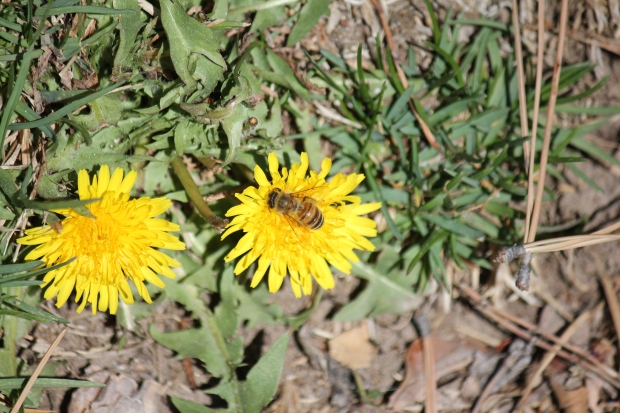
Honey Bee on Dandylion

Weeds do have value to pollinators, as most produce blooms that carry highly nutritious contents for pollinators.  However, they can be overwhelming in their growing power, and we need ways to control them without poisoning the soil and the things that feed on them.  I would like to begin by saying I pull each and every weed that I do not want growing in specific places.  I never use chemicals, not even vinegar and salt.  I would like to urge you to do the same, but I am providing you with some choices that are nontoxic.

  1.  Boiling water.  Pouring boiling water over weeds cooks them, and kills them.  Water is only water, so it’s okay for it to get into the soil and groundwater.
  2. Spray straight White Vinegar on the leaves of weeds being careful not to go overboard.  Too much vinegar in the soil isn’t good for the pH of the soil so it will affect the balance of the existing underground ecosystem if it is applied excessively.
  3. Spray a mixture of salt and vinegar…and then maybe pull them, roast them, and eat them?  Just a joke.  The recipe is 1 cup of salt into 1 gallon of vinegar

Wasps, hornets, and yellow jackets are the other most popular topic of seasonal pests.  I don’t consider them much of a  pest because they eat other insects, which makes them a very important part of the food chain.  So, instead of finding ways to kill them, I find ways to coexist.  They do not like peppermint oil, lavender oil, or eucalyptus oil.  So, the best prevention is to spray a mixture of these oils with water around the areas you’d rather them not set up shop.  The recipe is as follows:  1 tsp of peppermint oil; 1/2 tsp lavender oil; 1/2 tsp eucalyptus oil into 2 cups of water.  Use a good spray bottle to apply this mixture anywhere you do not want them present.  I suggest daily application, and the smell is pleasant, at least I think so.

Bald Faced Hornet

Remember that every living thing has a purpose, so frugally controlling them is in our best interest! I hope you all are having a wonderful summer so far! Thank you for being part of this very important movement to save our bees!

Jessica

Here are a couple of links to steps to control pests using non-chemical controls and least toxic methods, and a link to a great video from BeyondPesticides.org website.

Manage Safe

Organic Land Managment Practical Tools and Techniques


The Flowers and the Bees – Why Bees Matter

The Flowers and the Bees
Why Bees Matter

contributed by Sarah Woodard (of  PerfectBee)

About the Author:  Sarah Woodard has three years experience as a beekeeper, loves constantly learning from her bees and helping others discover beekeeping. See some of her other writing at https://www.clippings.me/sarahwoodard

________________________________________________________________________________________________________________

As flower lovers, you already know that bees are attracted to some flowers more than others and that the more bees in your garden, the more beautiful your flowers. Did you also know that bees are responsible for pollinating 90% of our food supply?

With the introduction of chemicals and mono-agriculture practices, honeybees are increasingly under threat. If we lose the bees, we lose a lot more than food, flowers, and hive products like honey and wax. We also lose the natural antibacterial properties of products produced in the hive and, more importantly, and essential connection with nature.


The Importance of Native Bees

Just as other animals and plants develop differently in different parts of the world, so too, do bees. You’re familiar with invasive plant species and the detrimental effects they have. A similar phenomenon happens with bees. Killer bees, also known as Africanized bees, are not native to the U.S., but were brought to South America as part of an attempt to increase honey production. Gradually, they worked their way north and currently occupy much of the southern U.S. states, altering the genetics of the bee populations in those areas.

Unlike honeybees native to the U.S., Africanized bees are aggressive and don’t handle cool temperatures well. Honeybees native to the U.S. are docile and adapted to survive harsh winter conditions. Although Africanized bees will never overtake honeybee populations in northern states, most backyard beekeepers obtain their bee supply from the south. This means that northern “beekers” (as beekeepers call themselves) often wind up with aggressive bees who are unable to survive the climatic conditions. The best possible solution for bees and humanity is to focus on restoring native bee populations.

How Flower Lovers Can Help the Bees

If you’re like most flower gardeners, you plant the flowers that look good in your yard and make you happy to have in your outdoor space. In many instances that means there’s a lot of blooms at one time and few or none at others. You can extend honey flow, giving native bees more time to store up food for winter and increasing their chances of survival by planting flowers that bloom in a more staggered fashion.

Depending on your location, those plantings may be different and occur at different times. I live in New England and take an “un-managed” approach to plantings. In New England, the first food for bees appears around April and most people mow it down or spend lots of money trying to rid their lawn of them. Can you guess what it is? Dandelions! While I’m not suggesting you let your lawn become a meadow the way I have, perhaps it’s possible to have a dandelion patch. These “weeds” are not only great for bees, but also have tremendous medicinal properties and can be used to make wine.

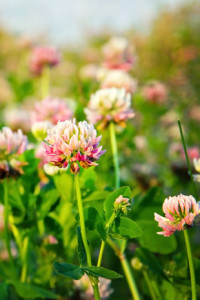
Next up is clover. Bees love clover and these happy little flowers also make tasty honey. Around the same time the clover is blooming, crocuses and other early spring bulbs start to make their way above ground. Clover, if left to its own devices will take the bees through most of the summer and into the fall when asters appear. Summer bulbs and vegetable garden blooms slowly appear throughout the growing season.Alsike Clover, Trifolium hybridum

What’s the bloom schedule like in your area? Do you have a variety of plants blooming throughout the growing season? If you’d like to boost the bee population in your area there are seed mixes available. If you’re a beekeeper or you’d like to help the bees have more food for the winter, these seed mixes might be the way to go.

Native Metallic Green Sweat Bee

AGAPOSTEMON: METALLIC GREEN SWEAT BEE

by Jessica of TheBeesWaggle.com

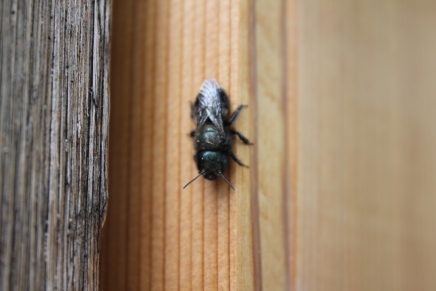
The green sweat bee is a beautiful native bee that comes out to pollinate from spring to fall.  These beauties typically nest underground in tunnels, which are sometimes adjacent to many other sweat bee nests.  They will sometimes even share an entrance into many diverging nesting tunnels.   It has even been documented that these sweat bees are even willing to nest next to other species of bees!

Nests are formed as they dig the holes with their jaws into the side of a dirt hill, and use mud to form partitions between each egg.  There is no honey made by these bees, but they are great pollinators to many flowers, which means more seeds of those flowers for the next season!

These bees are often on the smaller side (1/4 inch) but can approach 1/2 inch long.  The males have a green head and thorax, while the females are typically all green, with exception to one who has black and white abdomen with a green head and thorax.

They can be seen across North America feeding on a wide variety of blooms, as they are generalists.

Next time you are out gardening or amidst a large plot of flowers, watch closely and you might catch a glimpse of these remarkable bees.

Pollinators Support Biodiversity

Importance of Pollinators

by Jessica of The Bees Waggle

Biodiversity is the variety of life.  It showcases the relationships between all life forms on Earth.  It is the web of life, connecting all life on Earth in an interdependent web of function, purpose, and necessity.   It can be a protective mechanism against catastrophic failure of life.

Biodiversity provides:

A wide array of foods and materials, which contributes to the survival of all.  Examples include: medicines derived from plants; 7000 species of plants are also food sources for other species.

Genetic diversity, which defends against diseases and pests.

Example:  Monoculture crops are not diverse, genetically or otherwise,  and are thus susceptible to influxes of pests and disease, which is one reason why farmers of these crops are so dependent on chemicals to sustain crops. Planting hedgerows with a variety of plants encourages natural pest control for crops via predatory insects and birds.

Ecological services, which are functions performed by many species that result in sustaining life on Earth, and are a supported by biodiversity. Within each ecological service, there are many species at play.

Some examples of ecological services are:

Decomposition of waste

       Water purification

       Pest control

       Flood moderation

       Soil fertility

       Pollination

Adaptability to disturbances, which is achieved by a concerted effort of many life forms repairing the damage done by a natural disaster, or another form of disturbance.

Every piece of every ecosystem is important and each piece depends on the other pieces. We, as humans, are part of a planet-wide ecosystem, and we depend on many different systems for our survival.  One extremely important web we depend on is that of the pollinators.

Pollination supports biodiversity!  It is a mutually beneficial relationship between the pollinator and the pollinated. One without the other would be catastrophic. Pollination supports diversity of plants, as well as the animals that feed on those plants.  This beneficial relationship reaches broadly to birds, small mammals, large mammals, other insects, and us!  If this relationship were lost, many ecosystems would implode.

Pollinators contribute to biodiversity and life on Earth in ways that are significant to every ecosystem existing today.  Roughly 90 % of all flowering plant species are specialized for animal-assisted pollination!  7000 plant species are a form of food for other species.  Many of these flowering plants develop food only as a result of visiting pollinators, and this food supports the lives of countless species, including humans!  The disappearance of pollinators would inflict catastrophic consequences on the entire planet.

The diversity of pollinators alone is staggering!  There are 20,000 bee species accounted for on Earth, and there are likely more. This number does not account for the hundreds of thousands of species of flies, moths, butterflies, birds, bats, and beetles who also pollinate flowering plants.

Our pollinators are struggling.  Some populations of butterflies have declined as much as 90%!  Honeybee colony losses are at an all time high!  What do you think that means for our native bee species?  I can tell you it isn’t good.  The struggle is due to: loss of habitat, lack of food, and pesticide use.  

The fact that pollinators are broadly struggling threatens the balance of biodiversity, and life on Earth!

You can help by doing the following: add back habitat (shelter, food, and water), plant flowering plants, and please stop the use of all pesticides (including: insecticides, fungicides, and herbicides).  

Lives of Solitary Bees

Lives of Solitary Bees

by The Bees Waggle

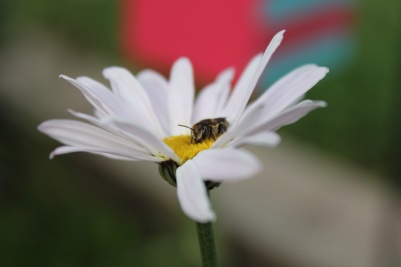
Do solitary bees such as Mason Bees and Leafcutter Bees live through the winter?  Well, to put it simply, no. The mason and leafcutter bees you have seen flying from flower to flower and back to their nesting holes will die off, and the egg cells they have built become the future army of solitary bees, and will emerge next spring and summer. Solitary bees live alone and lay eggs alone, so they do not have the resources that honey bees do to overwinter (more on that topic next week!).  Solitary bees will happily nest next to another solitary bee, and never show aggression toward each other, no time for tomfoolery!

Mason Bee

Here’s a review of what mason bees do!

Mason bees have only one purpose, to procreate, and this motivates them to pollinate with fierce efficiency!

Female mason bees emerge early spring, find a nesting site, and proceed to collect as much pollen and nectar as possible before they begin laying eggs. Mason bees do not have carrying baskets on their hind legs, but collect lots of pollen via static cling on their abdomens. They dive into flowers and immerse themselves in the center of flowers and cover their bodies with pollen before moving to the next flower. This makes them fairly inefficient at carrying pollen over long distances, but efficient at pollinating because they dive into flowers and transfer lots of pollen from flower to flower.

They work vigorously from early morning until early evening, and cover impressive pollinating ground in that time span. One mason bee can pollinate what 100 honey bees can in one day. Wow! But what’s the big rush? Why are these bees working so hard? Mason bees have a much shorter life span than honeybees, and no sister colony workers to help get the job done! So, time is of the essence.

Using mud, mason bees create partitions between individual egg cells, and they fill the cell in a sequence: pollen and nectar provision, egg, mud cap, repeat until the nest is completely filled with egg cells!

Once the cells with eggs inside have all been capped, the eggs are likely to hatch within a few days. Once they have hatched, they are referred to as larva, and remain inside the cell. The larva feeds on the nectar and pollen provision for up to 10 days, which promotes growth of this young mason larva. When the provision has been consumed, the mason larva will spin a cocoon around itself. Inside the cocoon the mason bee will pupate into an adult. This metamorphosis occurs by fall, and then the adult bee hibernates inside the cocoon through the winter until spring.

When spring has arrived once again, the adult mason bees will begin to emerge and begin the cycle all over again. Mother mason bee has arranged all her young into an order inside the nest; males in the front and females in the back. This makes it more favorable for the males to mate with the emerging females. Males will wait very patiently at the nest for a female to emerge, and then mate, and die shortly thereafter.

Below is a chart displaying the timing in a way we can all appreciate.

Here’s a review of the leaf cutter bee’s activities over the summer!

Leafcutter Bee

This species is another solitary breed, like the mason bee. However, unlike mason bees, leaf-cutter bees will do their own excavating in rotting wood, holes in thick stemmed plants, and in any conveniently located crevice.

They too, like mason bees, are very good pollinators compared to the honey bee. One leaf-cutter bee can pollinate what 20-40 honey bees can pollinate. Leaf-cutter bees do not have pollen carrying baskets on their hind legs, but they do carry lots of pollen via static cling created by the hairs on their abdomen. The way they visit flowers is much like the mason bees, diving into the pollen as they fly from flower to flower. This techniques sets them apart from honeybees and makes them very effective pollinators.

Leaf cutter bees use half-moon shaped cuts from leaves to create a package for their eggs.  There is also a sequence within the package: pollen and nectar provision, egg, cap it with another piece of leaf. Like the mason bee life cycle, the young bees will pupate into an adult by fall and hibernate within the leafy package until the following spring! They will emerge late spring and work all summer long!

So, not to worry, we will see our pollinating friends next spring buzzing about, pollinating our gardens!


Vegetables That Grow In The Shade

Vegetables for Shady Areas

by Sandy Swegel

OMG, Can you believe how hot it is? That’s the refrain from everybody I talk to. I’ll work in the garden when it’s below freezing or when there’s light rain, but I draw the line at working in the sun when the temperature is above 90. Unfortunately, temps around Denver area are in the upper 90’s. Poor Phoenix was 118. As one of the weather services said, “millions of people in the US are experiencing temperatures 10 – 20 degrees above normal this weekend.

So as I stood under a big tree and looked across the yard at my lettuce wilting under the hot sun, I started rethinking what my vegetable garden should look like. All those leafy vegetables don’t need full sun….and they’d deeply appreciate some relief on hot afternoons.

So, note to self: next year make some new beds in the shade. Dappled shade is best and dark shade won’t work, but the only vegetables that need lots of sun are those fruit-producing vegetables like tomatoes and peppers.

There are lots of lists on what to grow in shade, but blogger Empress of Dirt has the most thorough, showing the gradient of shade tolerance. Your area will vary. Shade in Denver is different from shade in Seattle, so experiment. You know you have too much shade when the plants are barely growing. But I’ve watched arugula thrive under a big apple tree where it barely got any direct sun.


What to do about those poor greens out in the hot sun now? Give them some temporary shade. A shade cloth structure is ideal. I’m going to pull out the winter frost cloth and drape it over the garden till these extreme temperatures subside.


Keep your garden well watered but don’t drown it. No amount of water can compensate for extreme heat.

In the meantime, we’re grateful to all the firefighters out battling wildfires erupting throughout the Southwest in this record-breaking heatwave. They are true heroes.


Photos and information:

http://empressofdirt.net/shade-vegetables/

A Working Garden Club

Finding a Garden Community

by Sandy Swegel

There are lots of garden clubs around. I personally belong to three and follow another two email-only groups online. When I first started gardening as an adult, I didn’t think I’d ever be a garden-club-kinda girl. Growing up in a Southern Big City, garden clubs to me meant you had to wear your best dress and go to a lovely tea with people of a certain social class in a beautifully manicured rose garden. That was just my own prejudices showing through because the love of gardening knows no class lines. However, I didn’t think I’d ever get my fingernails clean enough to go to one of those parties. With age and experience comes some wisdom and now I do go to one of those formal groups with officers and Robert’s Rules of order and I admire the community of members who have known each other for decades and who are so wise about local gardening.

I belong to another scruffier group that is especially interested in “culinary gardening” – gardens with lots of edibles. We mostly meet through email because there are quite a few market farmers and community garden volunteers so people don’t have time to meet with all the work they have to do…but any questions you ever have can be answered on our email list. We also order seeds and roots and greenhouse supplies together in bulk to save a lot of money. Every once in a while I meet someone who says they belong to this group and I have to ask their email address before I recognize them. We do have a heck of a delicious holiday party once the season ends.

A third occasional club I meet with has one primary task…to maintain a public rose garden a few times a year. So we are a kind of working group. We don’t all know each other well, but we know and love our roses.

I was at a small town garden tour yesterday and met people from a different kind of gardening club. They are a small (fewer than ten members) club who is a real WORKING group. No sitting around chatting about plants or looking at slide shows for them. Regularly they meet in one member’s garden and work for a good two hours on a garden project of the member’s choice. Naturally, this is followed by cold drinks and good food. They have met for years and welcome anyone…as long as they are willing to work to their ability. I admire this group because their gardens and knowledge have steadily improved over the years but they have also become a close-knit community based on their love of the earth and growing plants. They share in each other’s lives too and tend each others’ gardens or bring supper if someone is sick. They freely welcome newcomers to their group…if they’re willing to work.


I’m fond of saying that gardening is like the new church. Good people with shared values coming together and supporting one another in many ways and having a good time. Everyone clearly loves plants but there’s not a lot of doctrine. (well not counting opinions on pesticides.)

If I ever moved to a new town, the first thing I’d do is join a garden club. That’s the way to make true blue friends AND get more free plants.

Photo credits
http://www.dailyherald.com/article/20160204/entlife/160209489/
http://www.shorelinetimes.com/articles/2013/04/09/opinion/doc516475b154574110166725.txt
https://vitalandwell.files.wordpress.com/2012/04/garden-club-kids-2012.jpg