Top 10 Plants for Honey Bees: Best Nectar and Pollen Plants for a Full-Season Bee Garden
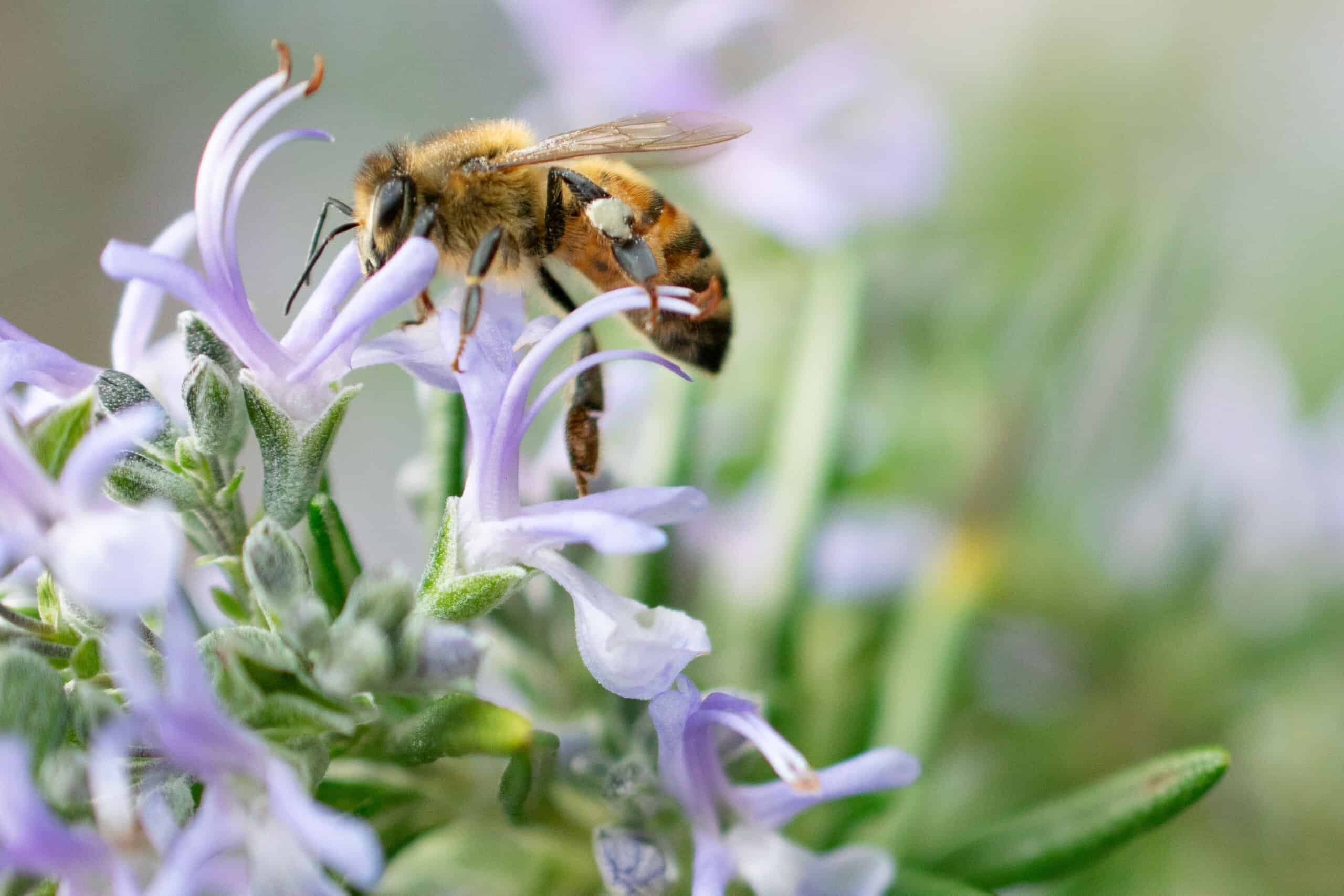
Honey bee gathering nectar from pale purple rosemary flowers from one of the top 10 plants for honey bees

The top 10 plants for honey bees are willow, clover, borage, bee balm, anise hyssop, lavender, coneflower, sunflower, goldenrod, and aster. These plants provide honey bees with a useful mix of nectar and pollen across spring, summer, and fall. This matters because honey bees need nectar for energy and honey production, and pollen to support brood development and colony strength.

The best plants for honey bees aren’t always the showiest flowers. They’re the ones that provide a dependable source of nectar and pollen throughout the entire growing season, helping colonies thrive from spring through fall.

To provide honey bees with reliable forage throughout the growing season, BBB Seed’s Honey Source Mix is a great place to start.

Quick Answer: The Top 10 Plants for Honey Bees

PlantBloom SeasonWhy Honey Bees Like ItBest Use
WillowEarly springEarly pollen and nectar sourceLarge landscapes, wet areas, habitat plantings
CloverSpring to fallNectar, pollen, lawn, and field adaptabilityLawns, fields, cover crops, larger plantings
BorageSummerLong bloom period and heavy bee activityGardens, herb beds, pollinator patches
Bee balmSummerNectar-rich flowers that attract many pollinatorsLandscapes, perennial beds, native gardens
Anise hyssopSummerAbundant flowers and strong bee appealSunny beds, low-water plantings, mass plantings
LavenderSummerNectar source, fragrance, structureDry, sunny landscapes and garden borders
ConeflowerSummer to fallOpen centers with accessible pollen and nectarPerennial beds, prairie gardens, retail landscapes
SunflowerSummer to fallLarge, accessible flower headsGardens, field edges, educational plantings
GoldenrodLate summer to fallLate-season nectar and pollenMeadows, naturalized areas, prairie plantings
AsterLate summer to fallFall forage when other blooms fadeNative gardens, borders, habitat plantings

For a simple nationwide list, these are the plants to plant for honey bees. Then adjust by region, soil, water needs, sun exposure, available space, and project size.

What Makes a Plant Good for Honey Bees?

Several factors to consider when choosing plants for honey bees include:

  1. Quality nectar and pollen resources. Nectar gives honey bees carbohydrates for energy and honey production. Pollen provides protein, fats, and nutrients that support brood development and colony strength.
  2. Bloom time matters because colonies need food in spring, summer, and fall.
  3. Flower structure matters because bees need access to the nectar and pollen.
  4. Plant density matters because bees forage more efficiently from grouped plantings.
  5. Safe sourcing matters because pollinator plants should not expose bees to harmful pesticide residues.

The Top 10 Plants for Honey Bees

1. Willow
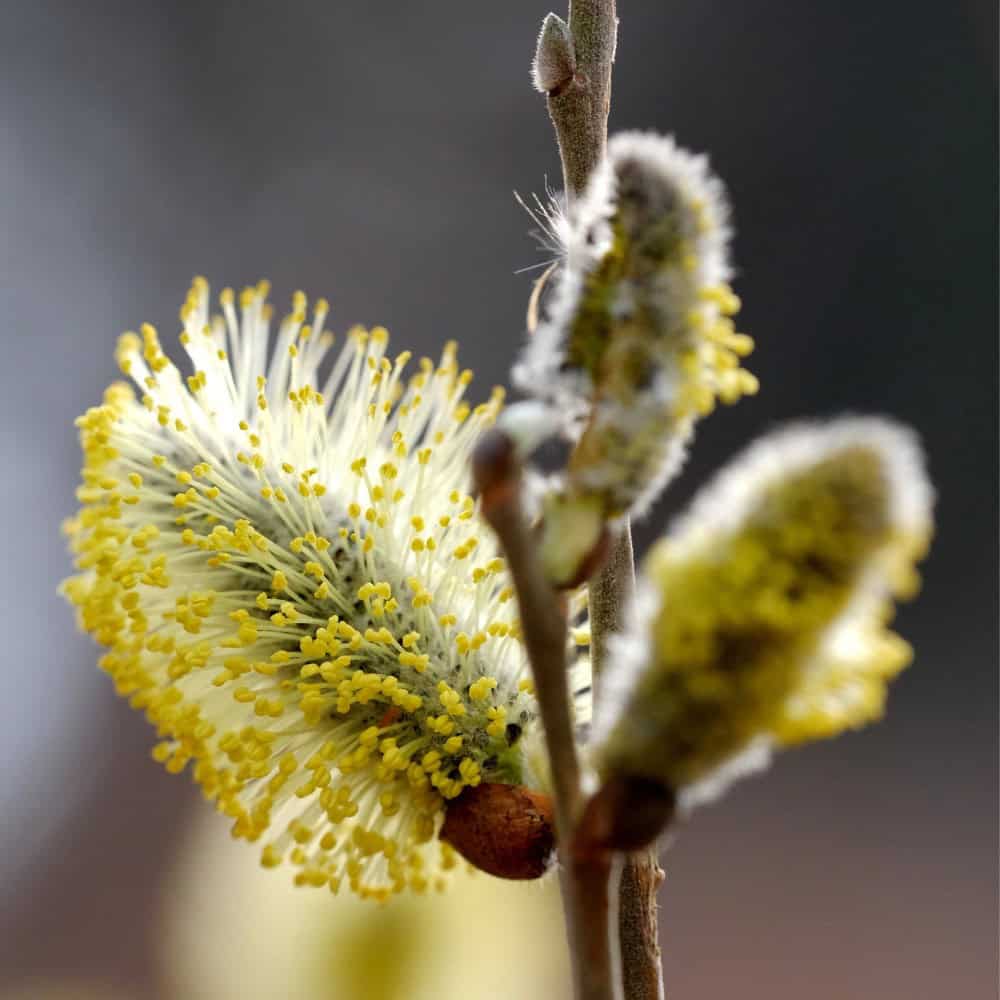
Willow catkins covered in yellow pollen in early spring

Willow is one of the first dependable food sources of the year, supplying both nectar and pollen just when colonies are waking up, expanding, and preparing for the busy months ahead.

Willows are especially useful in larger landscapes, naturalized areas, wet sites, drainage zones, restoration projects, and habitat plantings. They are not the right fit for every small yard because many willow species need space and moisture, but where they fit, they can be extremely valuable.

Best for: beekeepers, landowners, restoration projects, larger landscapes, habitat corridors
Planting note: Choose a willow species suited to your region, soil moisture, and available space.

2. Clover
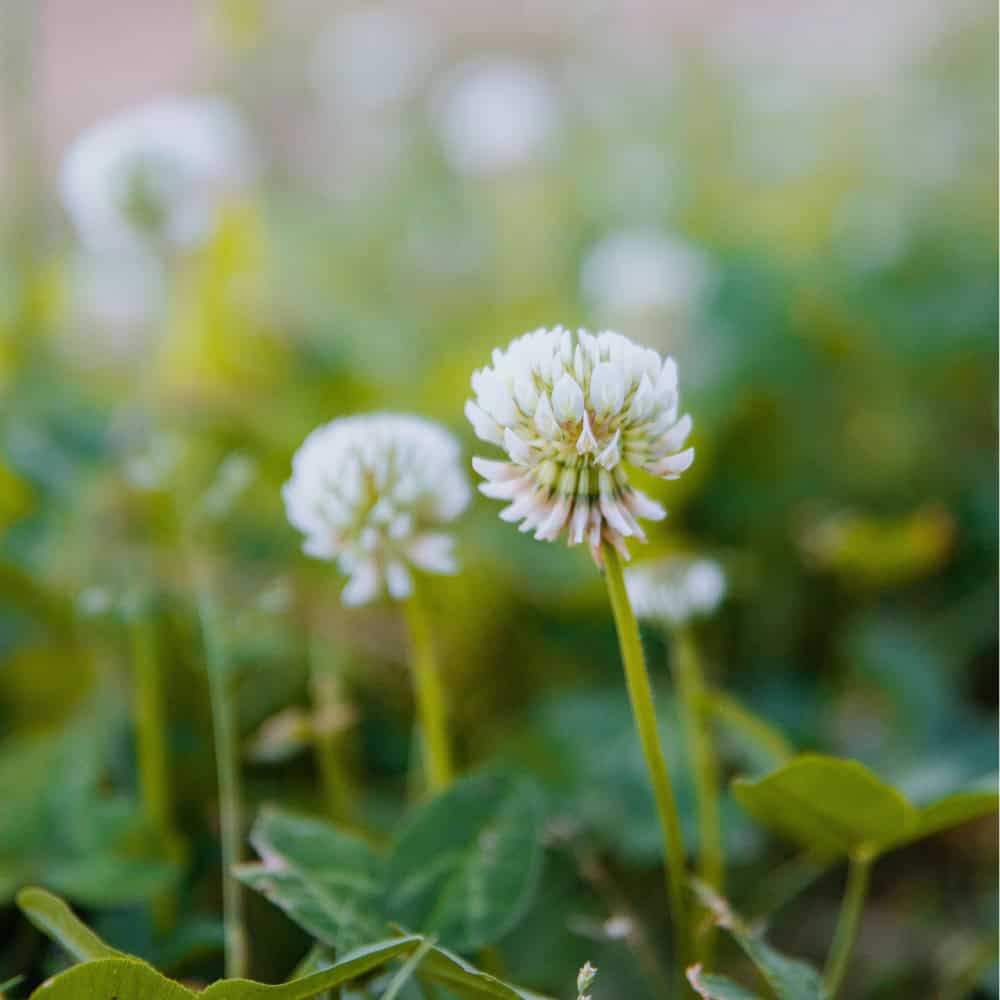
White Dutch clover blossoms blooming in green turf

Clover is one of the most practical plants for honey bees because it works in more places than many ornamental flowers. It can fit into lawns, fields, cover crop systems, orchard alleys, pasture edges, and larger-scale plantings. White Dutch Clover is one practical option for lawns, ground cover, erosion control, and bee-friendly plantings.

For beekeepers and wholesale buyers, clover is especially useful because it is scalable. You are not limited to a small flower bed. Clover can support larger forage areas.

A homeowner might add clover to a bee lawn. A beekeeper might think about nearby fields. A landscaper might use it in a lower-input lawn strategy. A wholesale buyer might look at it as part of a broader pollinator program.

Best for: bee lawns, cover crops, orchards, fields, large landscapes
Planting note: Choose the right clover for the site, traffic level, and local growing conditions.

3. Borage
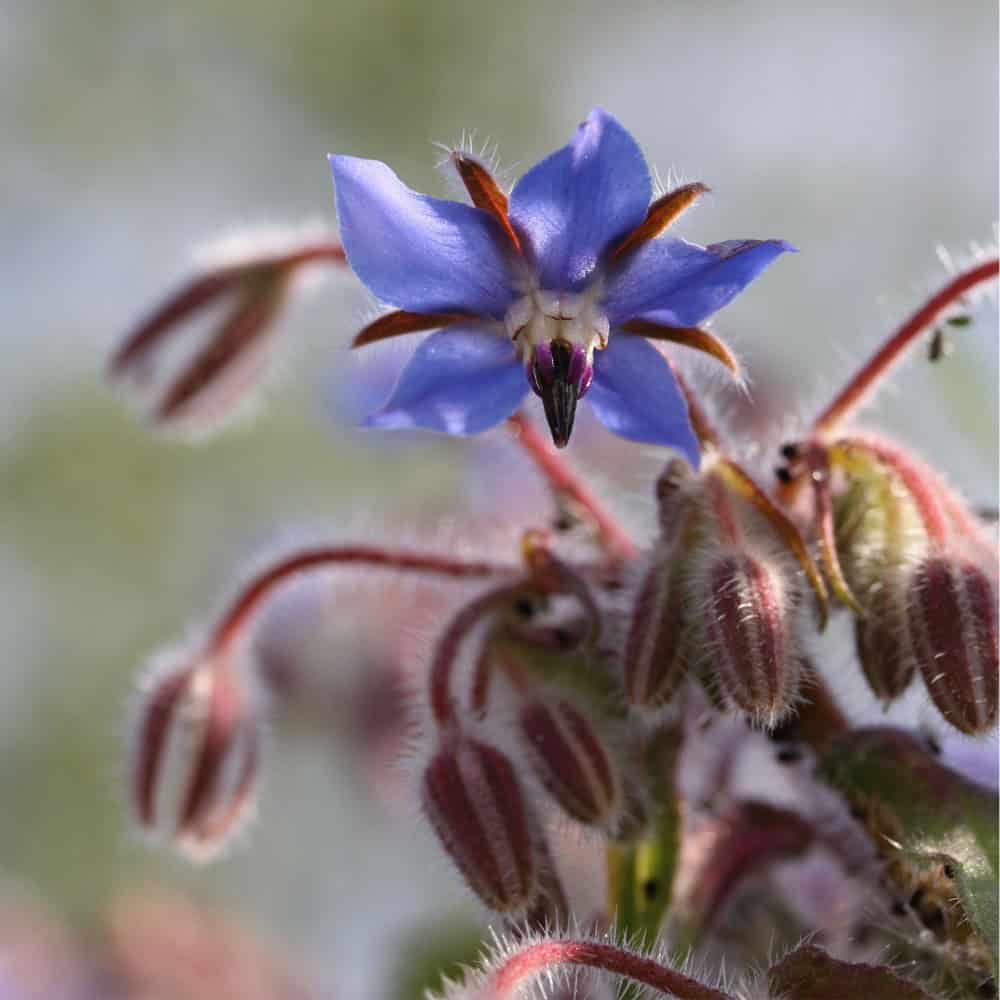
Blue star-shaped borage flower with a dark center

Borage is one of my favorite summer plants for honey bees. Bees work it heavily, and when conditions are right, it keeps producing flowers for a long period.

Borage is especially useful in herb gardens, vegetable gardens, pollinator strips, and mixed annual plantings. It is easy to grow and brings a lot of bee activity into a sunny planting. For more herb garden ideas, BBB Seed’s guide to herbs for the bees is a helpful next read.

Best for: gardeners, beekeepers, herb beds, annual pollinator patches
Planting note: Borage can reseed, so place it where that is acceptable.

4. Bee Balm
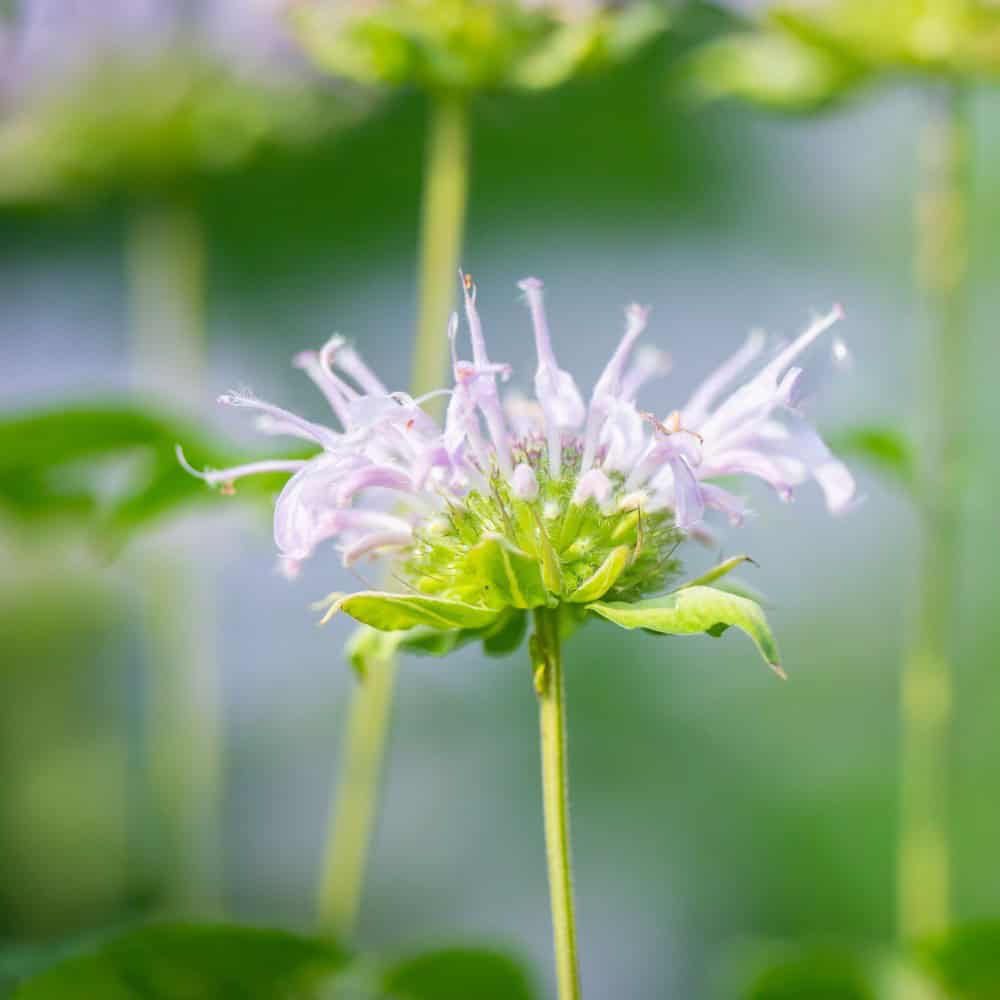
Pale pink bee balm, also called Monarda, in summer bloom

Bee balm, also called Monarda, is an excellent summer-blooming choice for honey bees and other pollinators.

Bee balm works well in perennial beds, native gardens, cottage gardens, meadow edges, and pollinator landscapes. It is especially useful when planted in groups.

I like bee balm because it serves multiple audiences. Gardeners enjoy the color. Landscapers can use it as a showy perennial. Beekeepers benefit from another summer forage source that also attracts native bees, butterflies, and hummingbirds.

Best for: perennial beds, native gardens, pollinator landscapes, retail plant programs
Planting note: Give bee balm good airflow and match the variety to your local climate, especially in humid regions where powdery mildew can be an issue.

5. Anise Hyssop
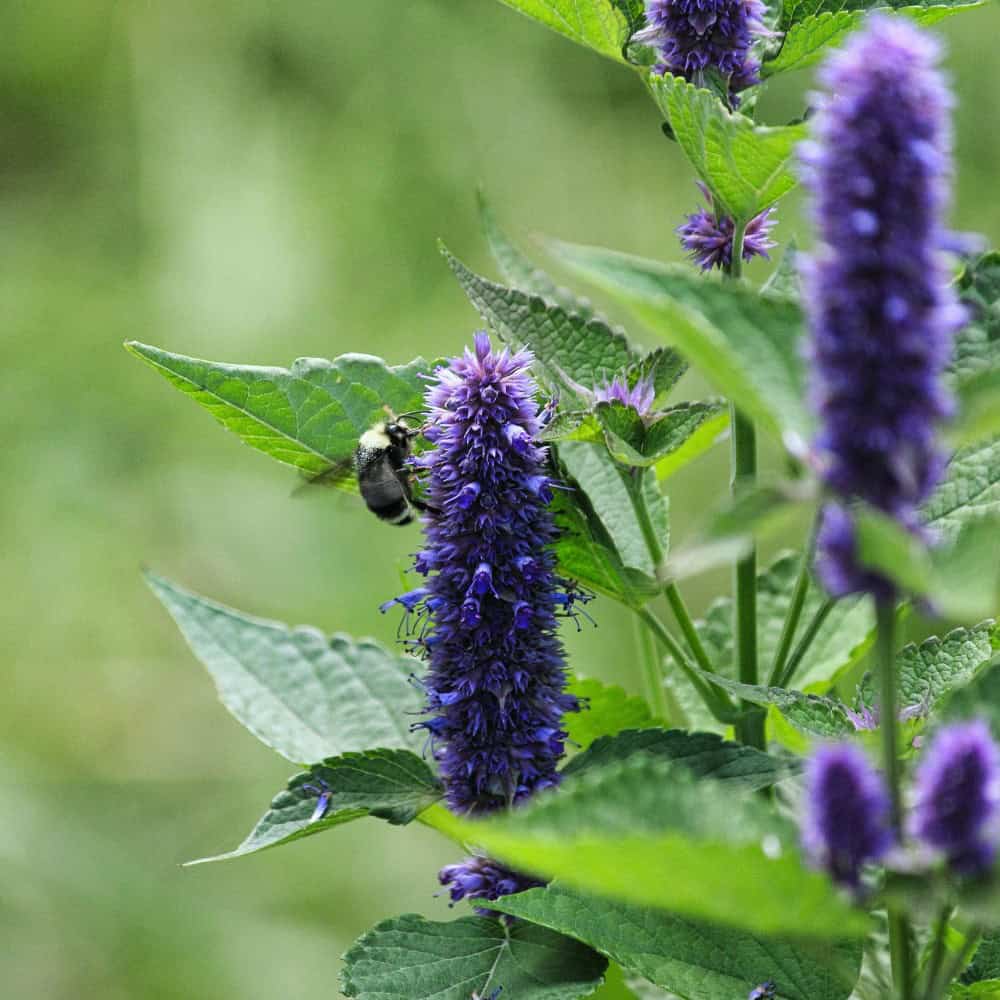
Bee foraging on a purple anise hyssop flower spike

Anise hyssop is one of the best bee plants for honey-focused gardens because it produces abundant nectar-rich flowers and draws steady bee activity in summer. It also has a tidy enough form for designed landscapes, which makes it useful for both residential and commercial plantings.

I have seen anise hyssop perform well along the Colorado Front Range, especially in sunny, lower-water plantings around places like Gunbarrel, Louisville, and Lafayette. In other regions, the exact species or variety may change, but the idea stays the same: use durable plants with abundant flowers that offer nectar and pollen.

Best for: sunny perennial beds, Western gardens, water-wise plantings, mass plantings
Planting note: Plant in groups for a stronger visual impact and easier bee foraging.

6. Lavender
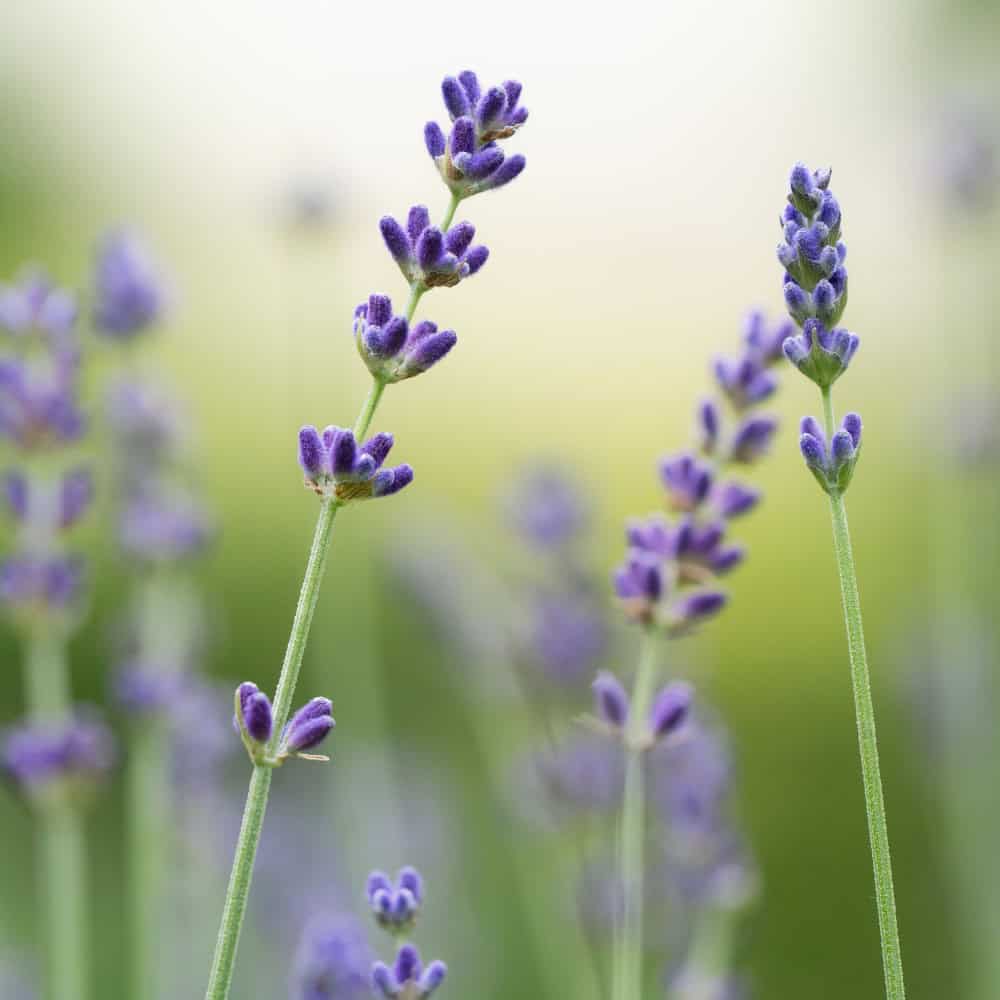
Lavender flower spikes blooming in a sunny, well-drained garden

Lavender is another strong option where the climate supports it. It is not the right answer for every site, especially humid areas or poorly drained soils, but when lavender is planted in the right place, bees usually find it quickly.

For landscapers, lavender can add structure, fragrance, and a clean visual line. For beekeepers, it adds another nectar source. For gardeners, it is easy to grow and easy to love.

Lavender is especially useful in dry, sunny regions, Western gardens, Mediterranean-style landscapes, and borders. It can struggle in heavy clay, wet winter soils, and humid climates, so site selection matters.

Best for: dry sunny borders, Western landscapes, low-water gardens, mass plantings
Planting note: Prioritize full sun, good drainage, and varieties suited to your winter hardiness zone.

7. Coneflower
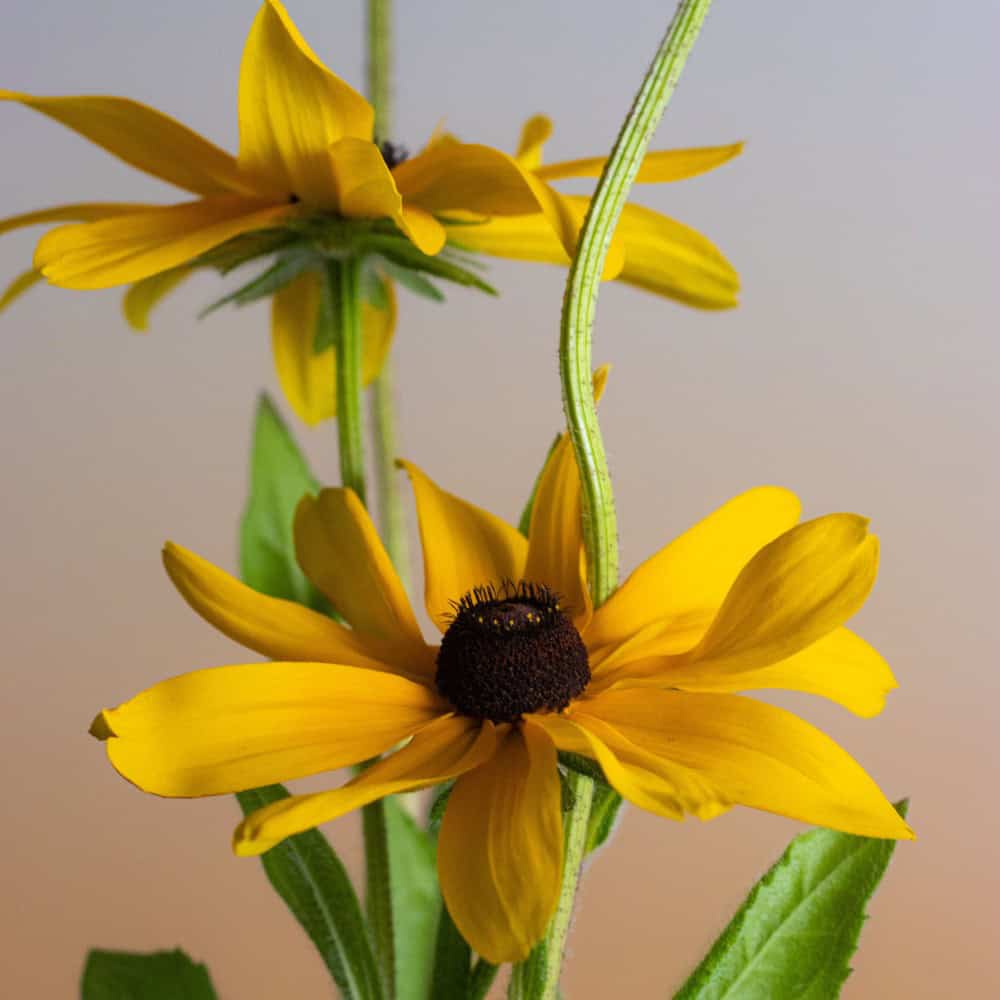
Yellow, dark-centered coneflower blooms in a perennial bed

Coneflower is a simple and recognizable honey bee plant. It works well in perennial gardens, prairie-style plantings, public landscapes, and retail plant programs.

The key is to choose flower forms bees can actually use. I prefer single, open flower forms over heavily doubled ornamental varieties because bees need access to the flower’s center.

Coneflowers also pair well with other plants for honey bees, including bee balm, anise hyssop, black-eyed Susan, mountain mint, blazing star, goldenrod, and asters.

Best for: gardeners, landscapers, prairie plantings, perennial beds
Planting note: Choose open-centered varieties and avoid highly doubled forms if bee value is the priority.

8. Sunflower
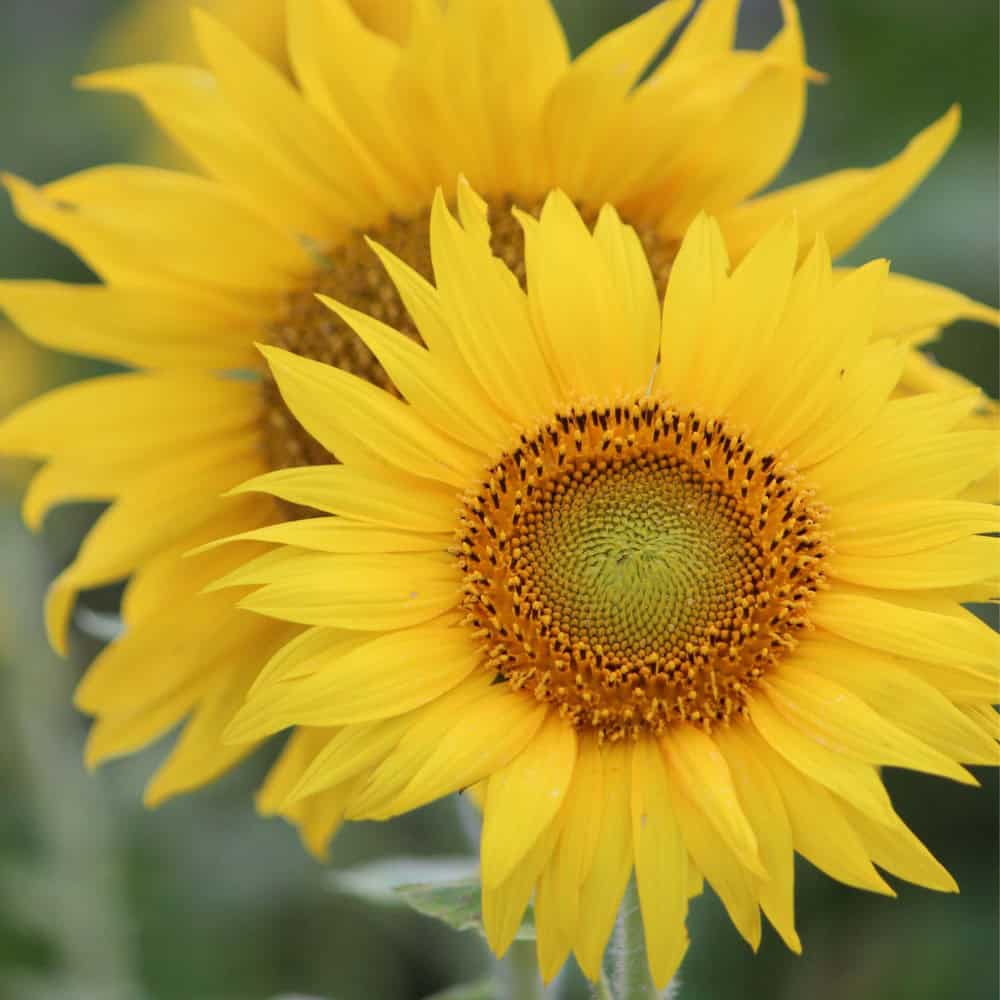
Open sunflower head with accessible pollen and nectar for bees

Sunflowers are simple, recognizable, and useful. They can provide pollen and nectar, and they are easily recognizable to customers, crews, and homeowners. They also work in many planting styles, from backyard gardens to field edges.

For honey bees, the best sunflowers are usually open, pollen-bearing types. Some ornamental or pollenless cut-flower varieties are bred for vase life and cleanliness, not bee forage. If your goal is to support honey bees, choose varieties that provide accessible pollen and nectar.

Sunflowers are also useful because they help connect people to the planting. Kids recognize them. Customers recognize them. Gardeners enjoy them. That makes them among the easiest plants for honey bees to plant when education and visibility matter.

Best for: gardens, farms, educational landscapes, field edges, pollinator strips
Planting note: Choose pollen-bearing varieties and plant enough for bees to forage efficiently.

9. Goldenrod
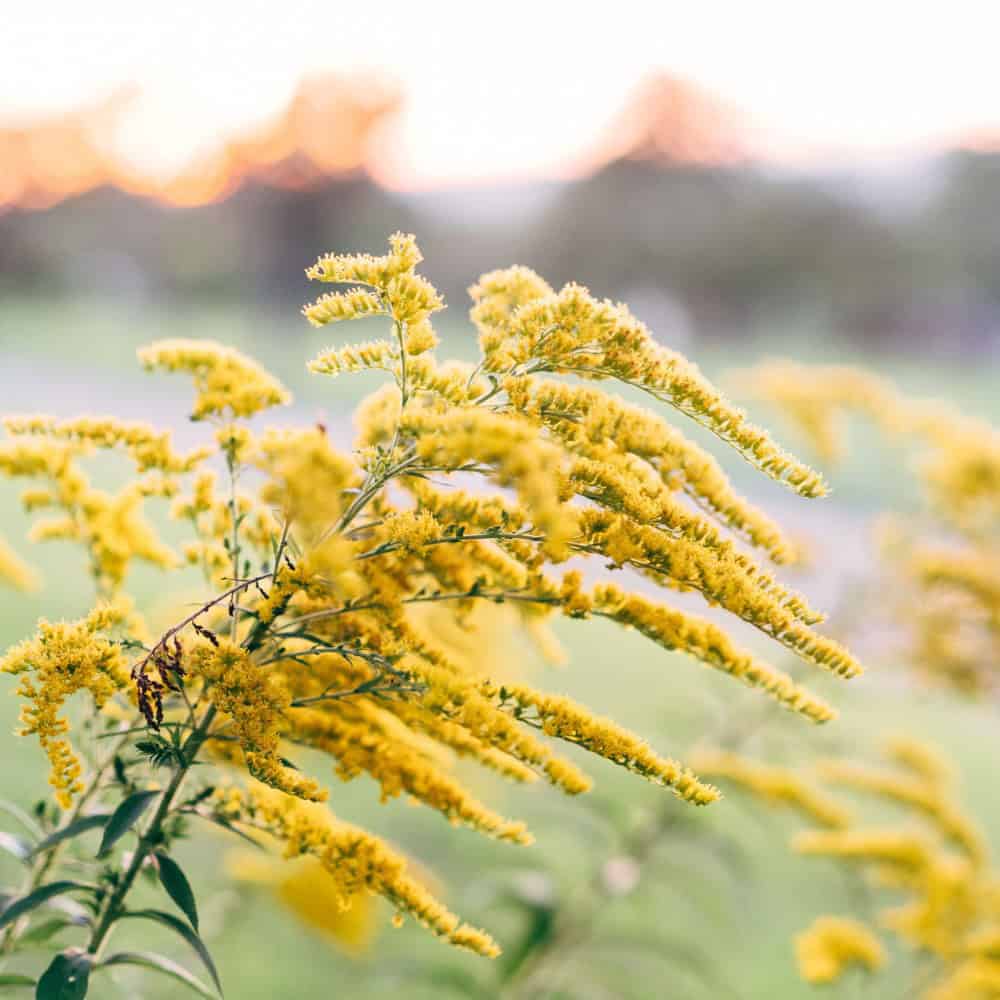
Golden goldenrod plumes blooming in late summer

Goldenrod is one of the most important late-season plants for honey bees. Late summer and fall are when many bee gardens fail, and goldenrod helps fill that gap.

If you want the best nectar-producing plants for honey bees, do not ignore the end of the season. Honey bee colonies still need forage as they prepare for winter, and late-blooming plants can make a meaningful difference in the landscape.

In late summer, here in Boulder County, I pay close attention to what is still blooming. Goldenrod is one of the plants I like to see because it extends the forage window when many earlier flowers are finished.

Best for: late-season forage, meadows, native gardens, prairie plantings, naturalized landscapes
Planting note: Choose regionally appropriate goldenrod species, especially for designed landscapes where height and spread matter.

10. Aster
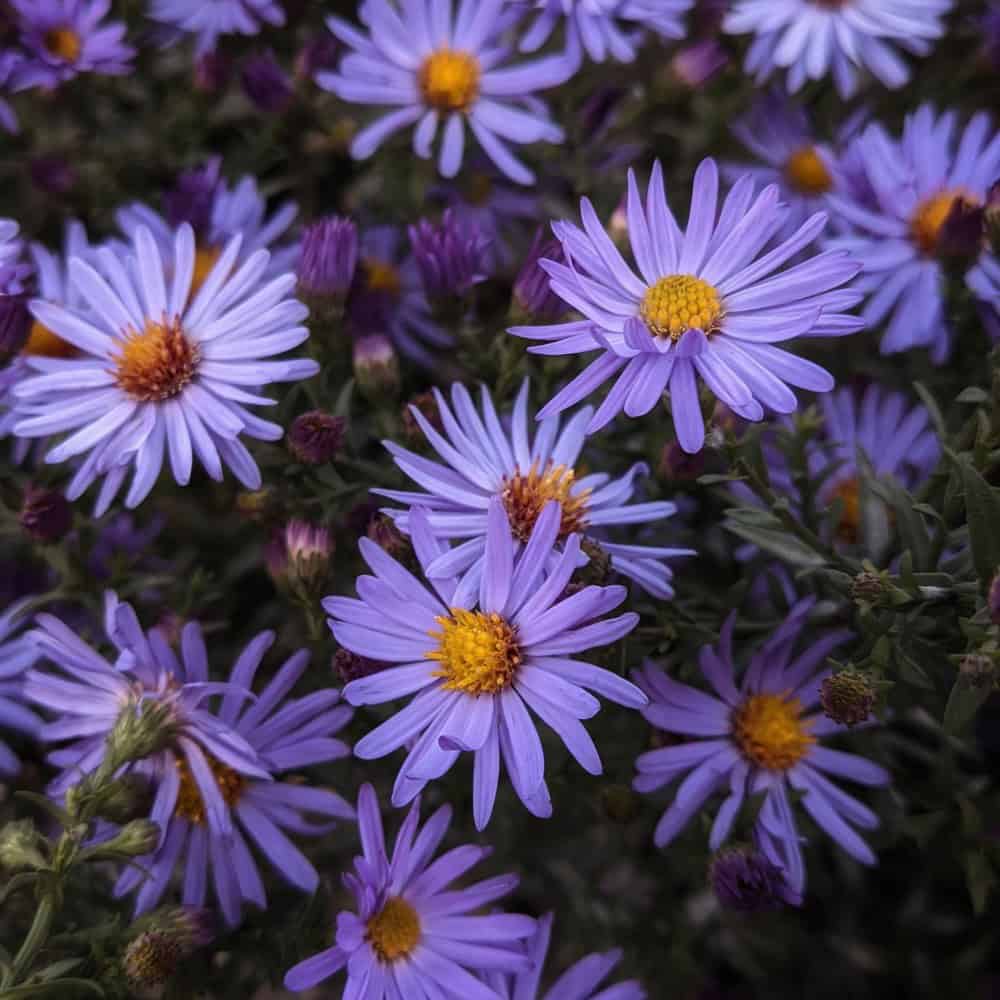
Purple aster flowers blooming in fall

Asters are excellent late-season bee plants because they bloom when many gardens are running out of flowers. They pair naturally with goldenrod, and together they can keep a pollinator planting active into fall.

Asters are especially valuable in Midwest and Western plantings where late-season bloom matters. They work in native gardens, prairie-style landscapes, meadow edges, perennial borders, and restoration projects.

Best for: fall forage, prairie plantings, native gardens, perennial borders
Planting note: Choose native or regionally adapted asters when possible.

Bloom Sequence Matters More Than One Big Flush of Flowers
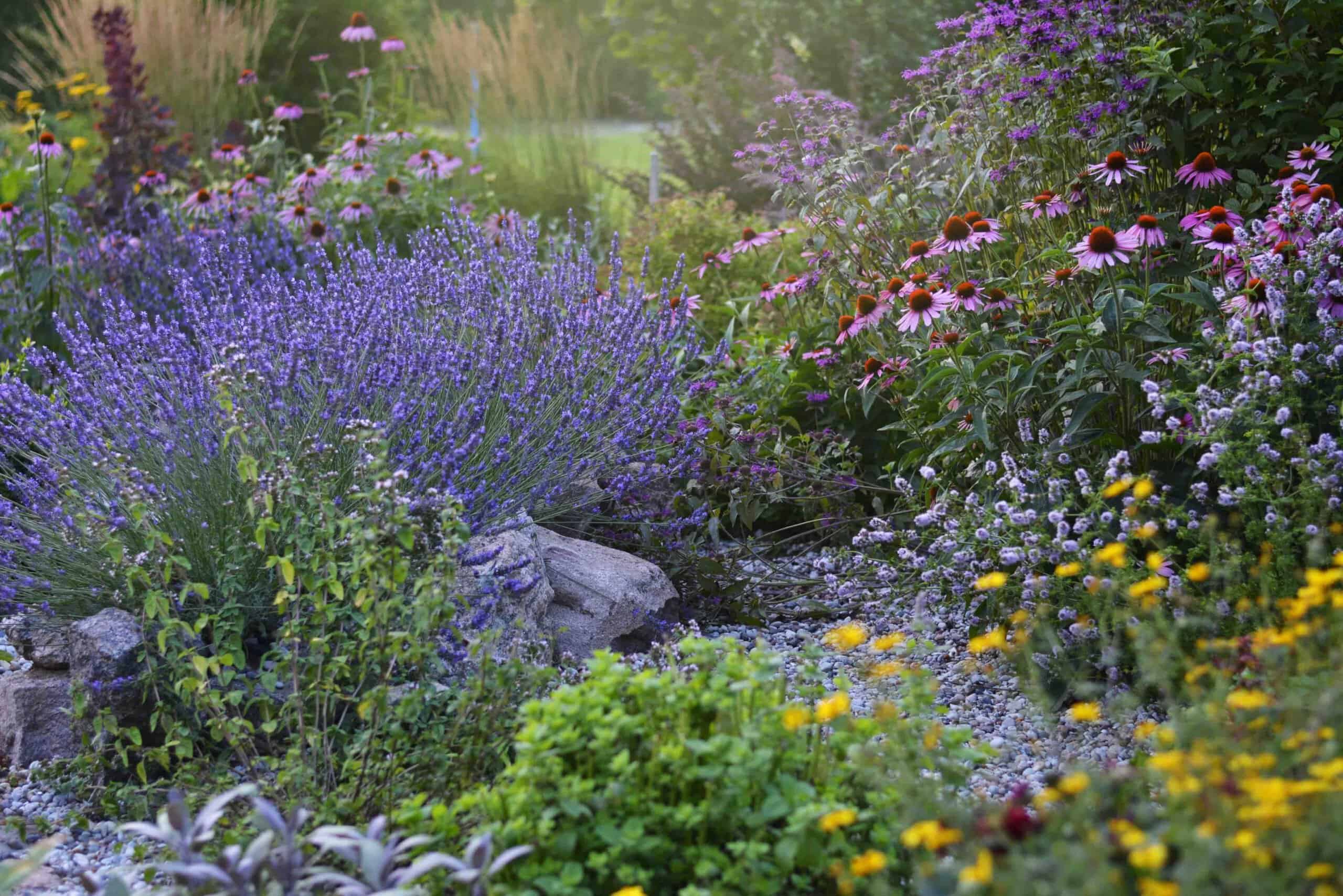
Mixed pollinator garden bed with lavender, yellow, and pink blooms

A honey bee garden can look great in June and still fail bees later in the season. I have seen this happen around Boulder, including gardens near Table Mesa and North Boulder that look full early in summer but have very little bloom by July or August.

The stronger approach is to build a bloom sequence:

  1. Early bloomers for spring buildup.
  2. Summer workhorses for peak activity.
  3. Late-season nectar and pollen plants for fall preparation.

Colorado State University Extension recommends choosing plants with bloom times from early spring to late fall so flowers are available throughout the pollinator activity season.

That same principle applies across the U.S. Whether you are planting in Colorado, the Midwest, the Northeast, the South, or the West Coast, the goal is not just to choose attractive flowers. The goal is to keep useful forage available from early spring through fall.

Best Honey Bee Plants by Bloom Season

A strong honey bee planting is not just a top 10 list. It is a sequence. Use the top 10 plants as your foundation, then add regional plants that fill any seasonal gaps.

SeasonGoalPlant Examples
Early springHelp colonies build up after winterWillow, fruit trees, clover, serviceberry, penstemon
SummerSupport peak foraging and nectar flowBorage, bee balm, anise hyssop, lavender, coneflower, sunflower, mountain mint, blazing star
Late summer and fallExtend forage before winterGoldenrod, aster, sedum, late salvia, native sunflowers, Joe Pye weed where appropriate

USDA recommends planting a continuous food supply with different species blooming across spring, summer, and fall.

Late summer and fall are when many plantings fall short. Goldenrod and aster are my top recommendations here, but sedum, late salvia, mountain mint, and regionally appropriate native perennials can also help extend forage. For more ideas, see BBB Seed’s guide to fall-blooming plants for pollinators.

Regional Planting Notes for the Midwest and Western U.S.
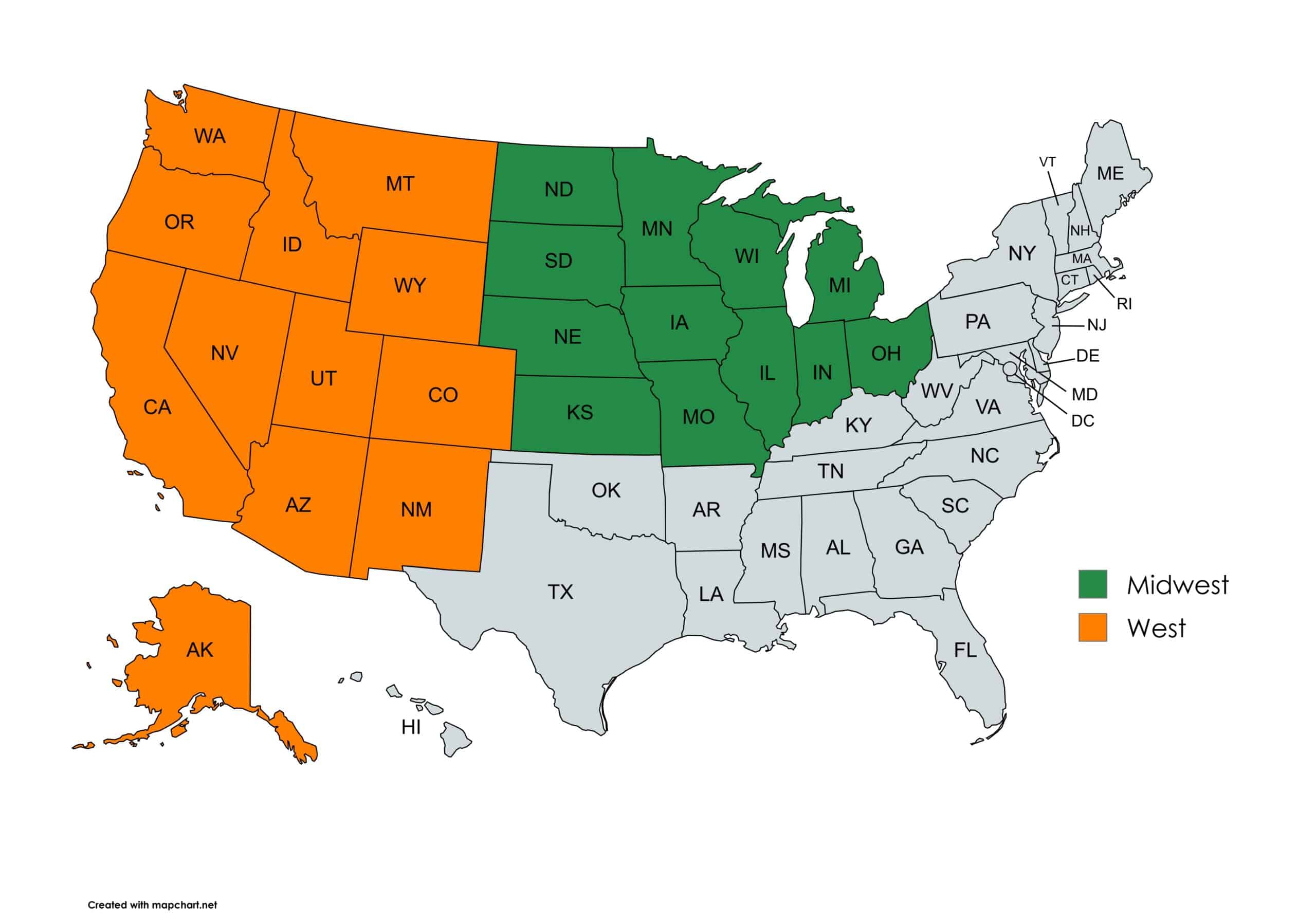
Map of the United States highlighting the Midwest and Western regions

The best plants for honey bees vary by region, but the strategy stays the same: choose nectar and pollen plants that bloom across the full season and fit the site. For larger projects, regional wildflower mixes can help match seed choices to the area where they will actually be planted.

RegionStrong ChoicesNotes
MidwestClover, coneflower, sunflower, goldenrod, aster, blazing star, mountain mint, prairie clover, milkweed, bee balmPrairie-style and meadow-style plantings can provide long bloom windows and strong pollinator value.
Western U.S.Anise hyssop, lavender where drainage is good, penstemon, salvia, goldenrod, aster, sunflower, rabbitbrush, native milkweed, blanket flowerWater use, drainage, sun exposure, and climate adaptation matter.
NationwideWillow, clover, borage, bee balm, coneflower, sunflower, goldenrod, aster, fruit trees, regionally adapted native plantsChoose plants that grow well enough in your region to bloom reliably.

In my experience along the Colorado Front Range, the best results come from matching the plant to the actual site. A sunny, lower-water planting near Lafayette or Louisville needs different choices than a shaded, irrigated garden bed in another region.

Before ordering or planting, check:

  • USDA hardiness zone
  • Sun exposure
  • Soil drainage
  • Water availability
  • Humidity
  • Heat tolerance
  • Mature size
  • Bloom season
  • Whether the plant is invasive in your region
  • Whether it was grown with pollinator-safe practices

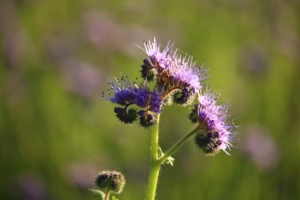
Lacy phacelia is another useful bee plant to consider, where it fits the site. BBB Seed carries Lacy Phacelia, and its article About Lacy Phacelia offers more detail on this pollinator-friendly plant.

Tips for Landscapers, Beekeepers, Gardeners, and Wholesale Buyers
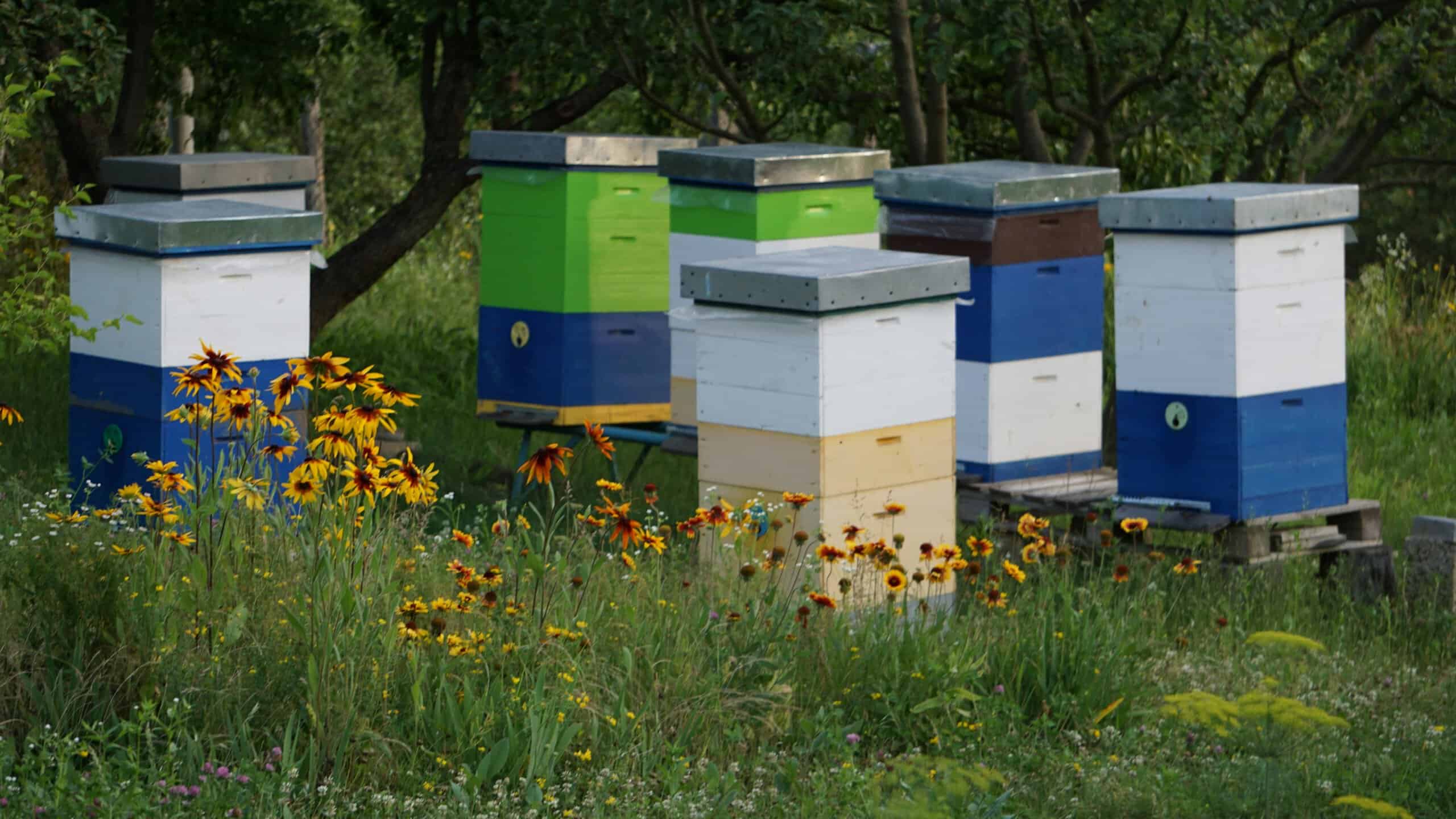
Colorful beehive boxes set in a wildflower meadow

Different buyers may use the same honey bee plants in different ways. A gardener may want a small pollinator bed. A beekeeper may be thinking about forage near hives. A landscaper may need a reliable plant palette. A wholesale buyer may need seed or plant material that works across larger projects.

Plant in Groups So Bees Can Forage Efficiently

Do not scatter one of everything across a property and expect the same impact as a strong mass planting. Bees forage more efficiently when they can move through a cluster of the same plant. The U.S. Forest Service also recommends planting in clumps rather than isolated single plants.

For landscapers, this also looks better. For beekeepers, it can improve forage efficiency. For wholesale buyers, it helps you think in trays, flats, and project quantities instead of one-off plant choices.

Choose Single, Open Flowers Over Heavily Doubled Blooms

One of the biggest mistakes I see in pollinator planting is choosing only for color instead of food value.

Single, open flowers usually give bees better access to pollen and nectar. Heavily doubled blooms may look dramatic, but they are often less useful to bees. This matters when selecting coneflowers, sunflowers, roses, zinnias, dahlias, and other ornamentals.

The prettiest catalog photo is not always the best bee plant.

Think Beyond the Backyard
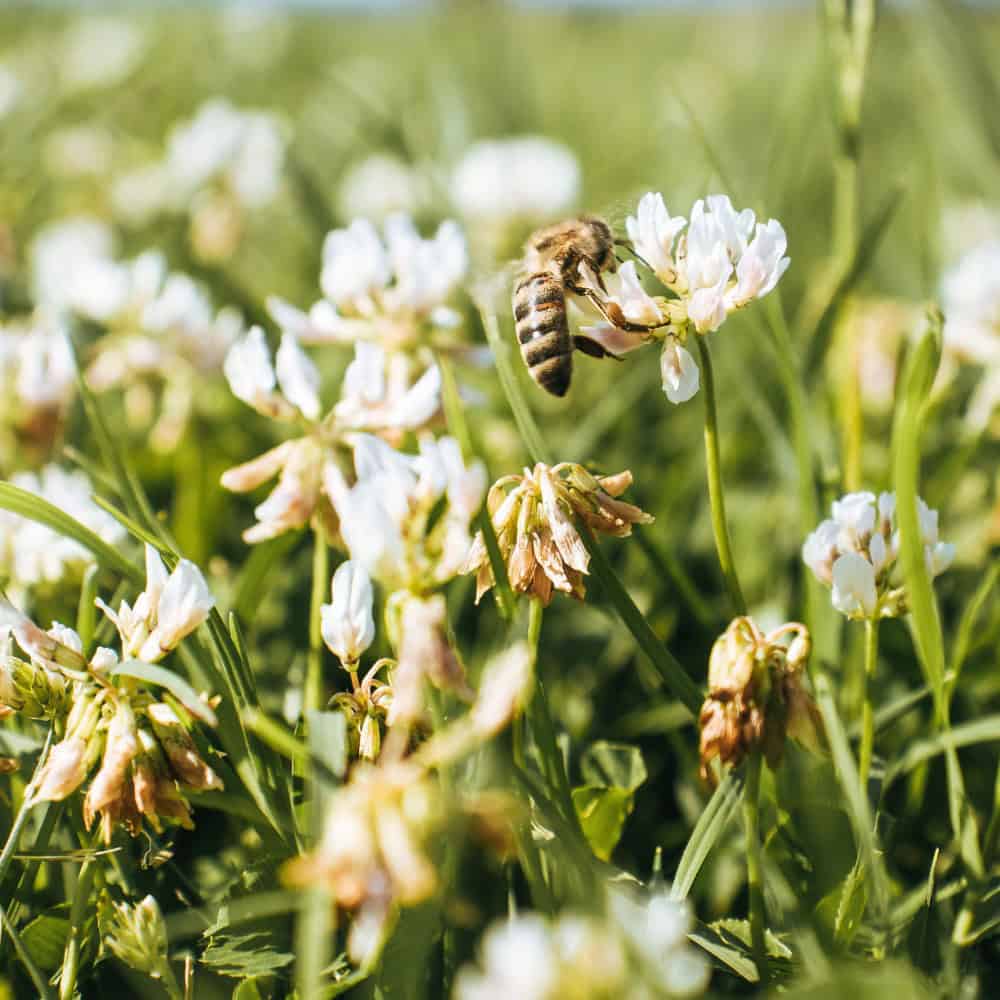
Honey bees foraging on white clover growing in a bee lawn

For gardeners, a pollinator bed is a great start. For beekeepers, landscapers, and larger buyers, the bigger opportunity may be across the whole property or community.

Think about:

  • Bee lawns
  • Clover areas
  • Orchard edges
  • Field borders
  • Roadsides
  • Drainage areas
  • Meadows
  • Farm lanes
  • Public landscapes
  • Commercial properties

Honey bee forage does not have to come from one perfect garden. It can come from many practical plantings across a property or community.

Landscapers, beekeepers, and large-scale buyers can explore BBB Seed’s pollinator mixes or apply for a wholesale account for wildflower seeds, native grasses, regional mixes, and pollinator mixes.

Ask About Systemic Insecticides Before Buying Bee-Friendly Plants
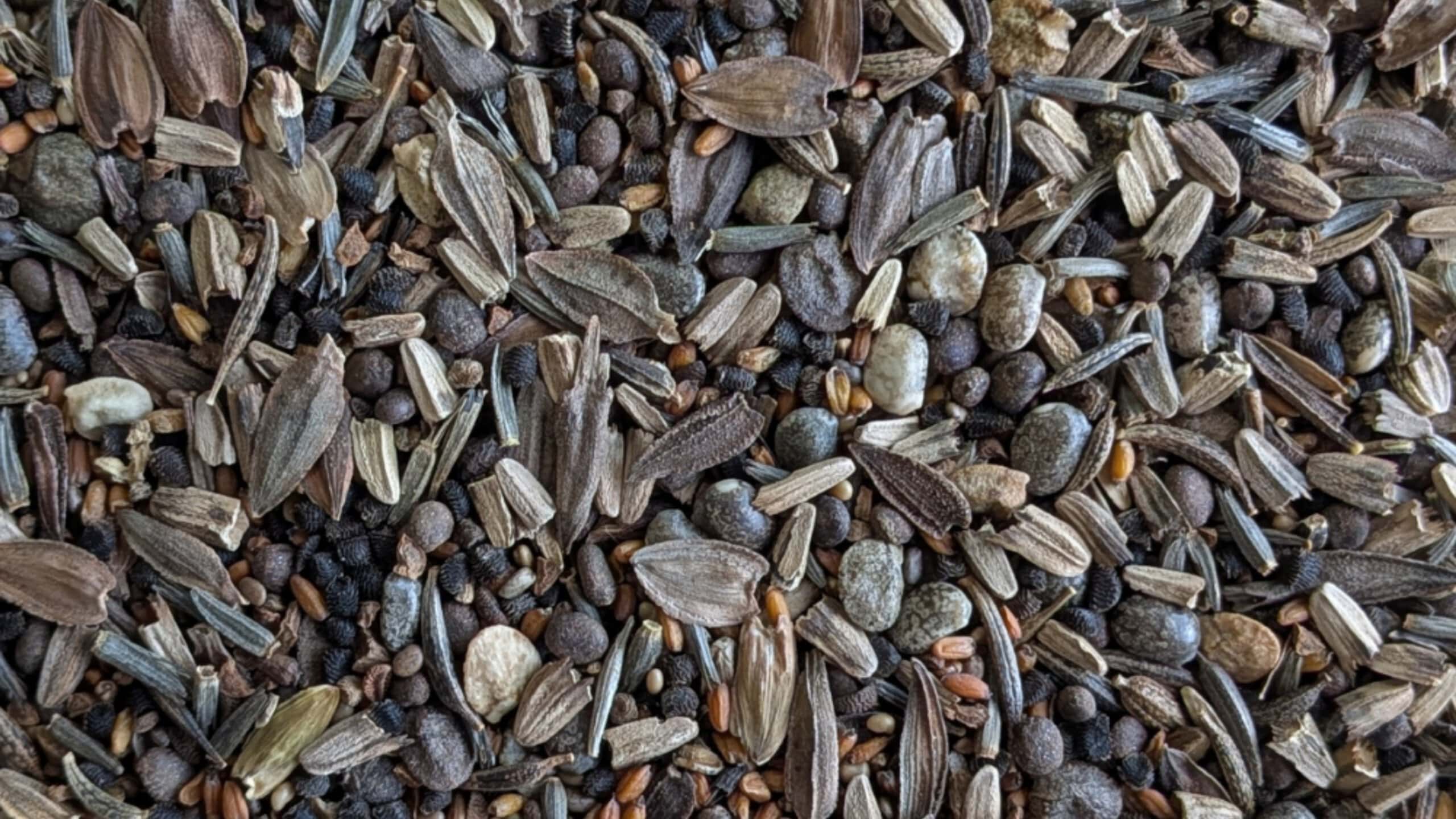
Close-up of mixed sunflower seed

A plant marketed as “bee-friendly” is not truly bee-friendly if the pollen or nectar may carry harmful residues. This is especially important for landscapers and wholesale buyers because they are often planting on a larger scale.

Xerces offers guidance on choosing bee-safe nursery plants, including why buyers should ask about neonicotinoids and similar systemic insecticides.

Questions to ask before buying:

  • Were these plants grown with neonicotinoids or other systemic insecticides?
  • What pest management practices were used?
  • Are pollinator-safe production practices available?
  • Are organic plants or seeds available?
  • Can you provide untreated or pollinator-conscious options for wholesale orders?

Safe sourcing should be part of the planting plan, not an afterthought.

Native and Regional Alternatives Worth Considering
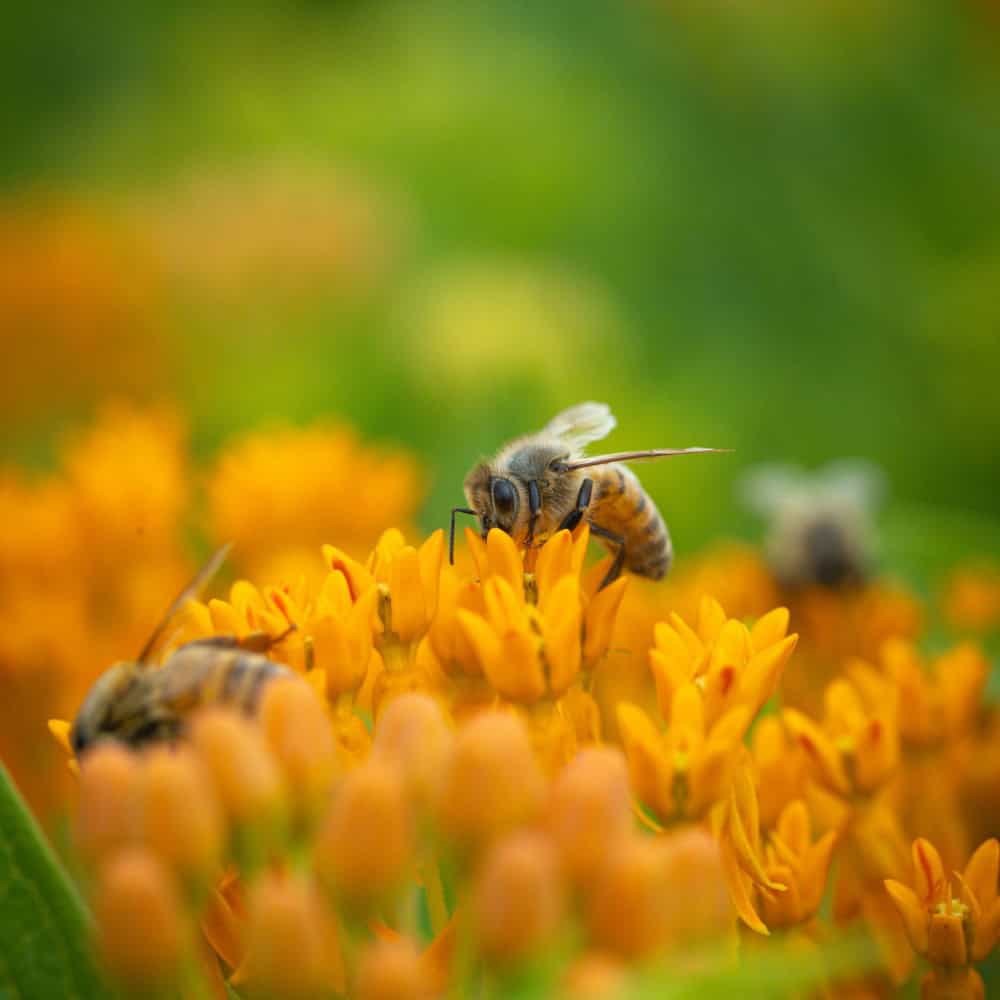
Honey bees feeding on orange butterfly weed blossoms

The top 10 plants for honey bees are a strong starting point, but you should adjust the list with native and regionally adapted plants wherever possible. Xerces provides regional native plant lists to help gardeners and landscapers choose pollinator-friendly plants.

Depending on your region, consider adding or substituting:

  • Milkweed
  • Mountain mint
  • Penstemon
  • Blazing star
  • Salvia
  • Prairie clover
  • Serviceberry
  • Fruit trees
  • Sedum
  • Yarrow
  • Blanket flower
  • Native sunflowers
  • Rabbitbrush in parts of the West
  • Joe Pye weed, where suitable
  • Lacy phacelia, where appropriate

Native plants are often a strong choice because they are adapted to local conditions and support broader pollinator ecosystems. For honey bees specifically, I like to use native plants and proven bee forage plants together. Honey bees are generalist foragers, so the best planting is usually diverse, practical, and regionally appropriate.

For a deeper related read, BBB Seed also has a guide to the best plants for honey bees.

FAQs About Plants for Honey Bees
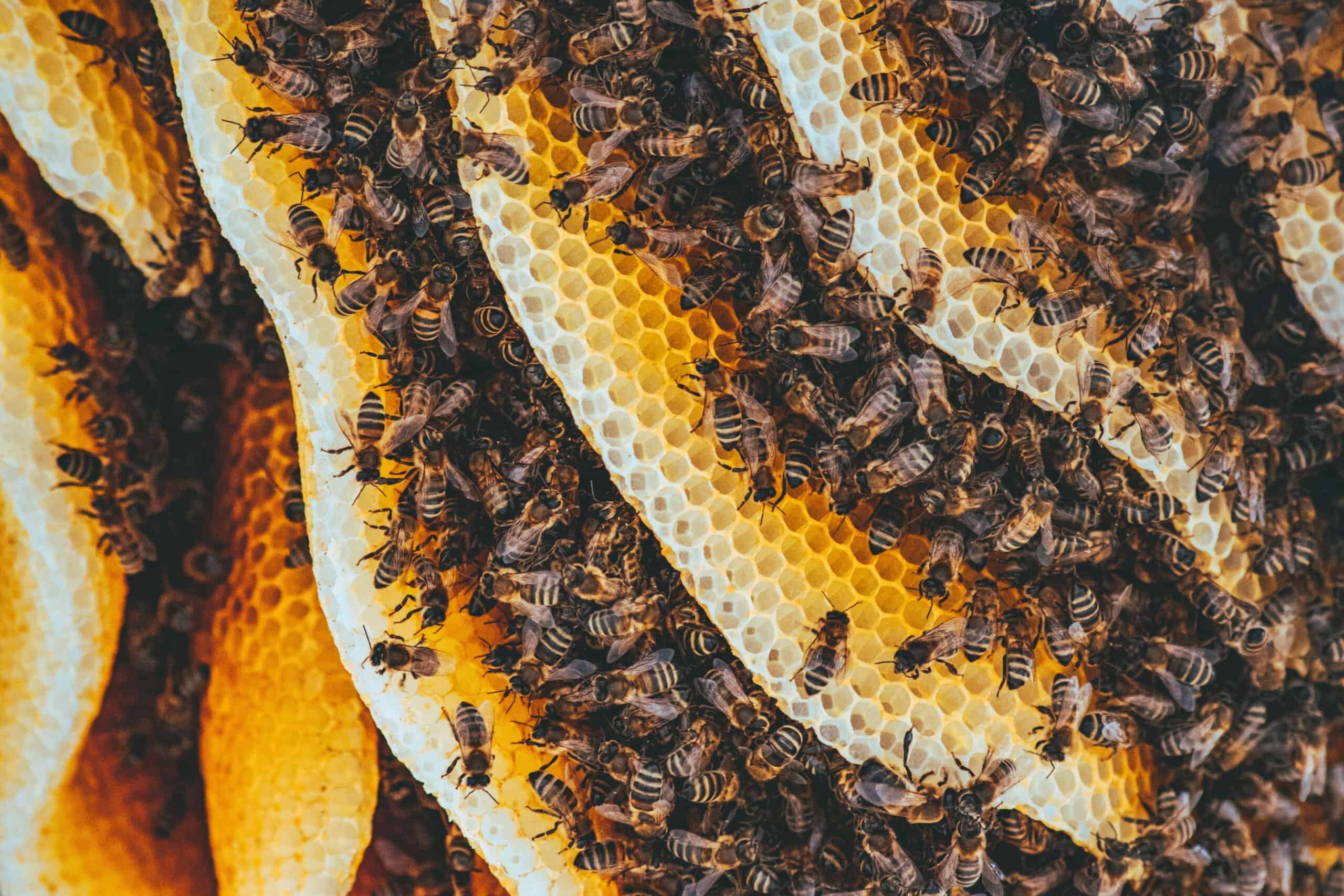
Honey bees covering honeycomb inside a hive

What is the best plant for honey bees?

There is no single best plant for every region, but clover is one of the most practical choices because it can work in lawns, fields, cover crops, and larger landscapes. For early spring, willow is excellent where it fits the site. For summer, borage, bee balm, anise hyssop, lavender, coneflower, and sunflower are strong choices. For fall, goldenrod and aster are hard to beat.

What plants produce the most nectar for honey bees?

Some of the best nectar-producing plants for honey bees include clover, borage, lavender, anise hyssop, goldenrod, aster, bee balm, and certain flowering trees. Nectar production varies by species, variety, region, weather, soil, and plant health, so it is better to plant a sequence of nectar plants than rely on one option.

Is clover good for honey bees?

Yes. Clover is one of the best plants for honey bees because it provides nectar and pollen and can be used in lawns, fields, and larger landscapes. White clover is especially practical because it fits low-growing bee lawns and is widely recognized as a honey bee forage plant.

Is lavender good for honey bees?

Yes, lavender can be very good for honey bees when planted in the right climate and soil. It performs best in full sun with excellent drainage. It is an excellent choice for dry, sunny landscapes, especially in parts of the West, but it may struggle in humid or poorly drained locations.

Are sunflowers good for honey bees?

Yes, sunflowers can be good for honey bees, especially open, pollen-bearing varieties. Avoid pollenless cut-flower varieties if your main goal is bee forage. For pollinator value, choose sunflowers with accessible centers and plant enough for bees to forage efficiently.

What fall-blooming plants should I plant for honey bees?

For fall, plant goldenrod, asters, sedum, late-blooming salvia, native sunflowers, long-blooming annuals, and regionally appropriate late-season perennials. Goldenrod and asters are two of my favorite late-season recommendations because they help extend forage when colonies are preparing for winter.

What flowers should I avoid in a honey bee garden?

Avoid relying heavily on flowers that are bred only for appearance, especially heavily doubled flowers where bees cannot easily access nectar or pollen. Also, avoid plants treated with systemic insecticides or plants that are invasive in your region.

Should I choose native plants for honey bees?

Yes, native plants are often a smart choice, especially when they are matched to your region and site conditions. However, the best honey bee planting can include a mix of native plants, herbs, annuals, perennials, shrubs, and trees. The goal is full-season nectar and pollen from plants that grow well where you are planting.

Final Takeaway: Build a Bee Planting That Feeds Colonies All Season
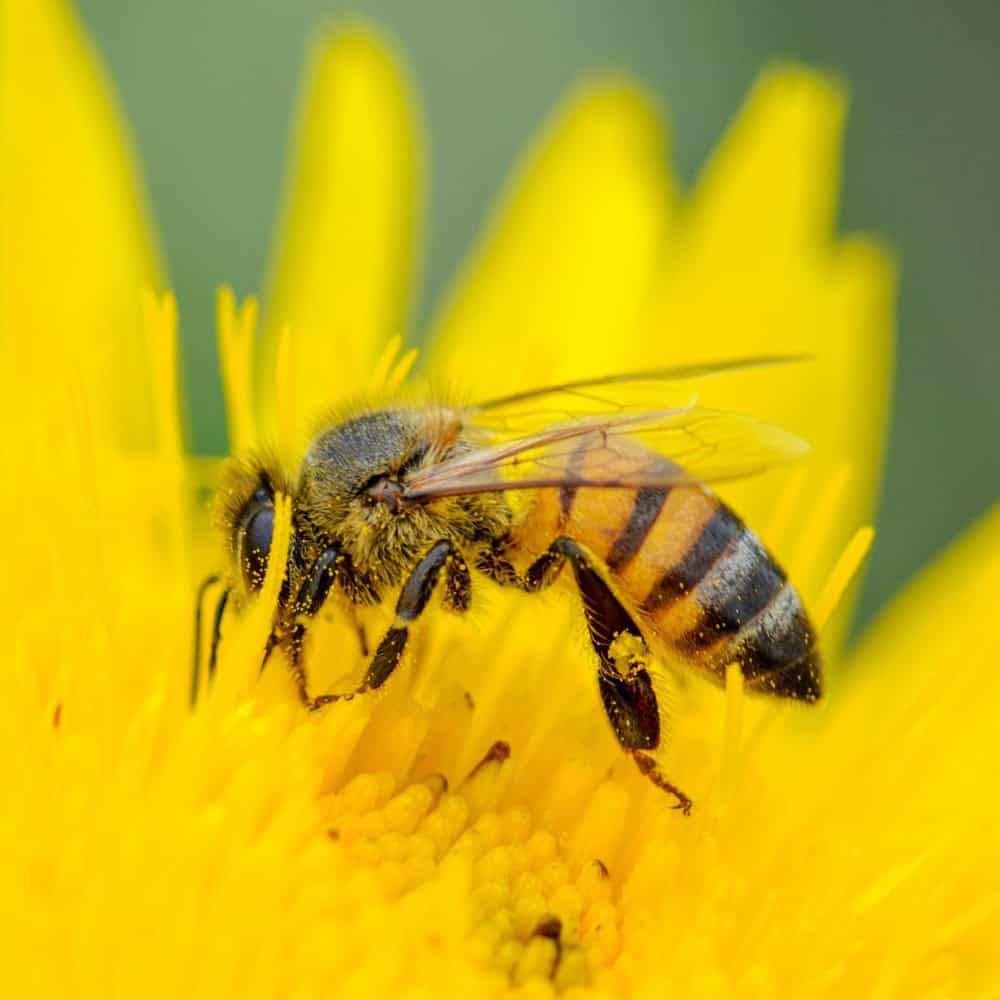
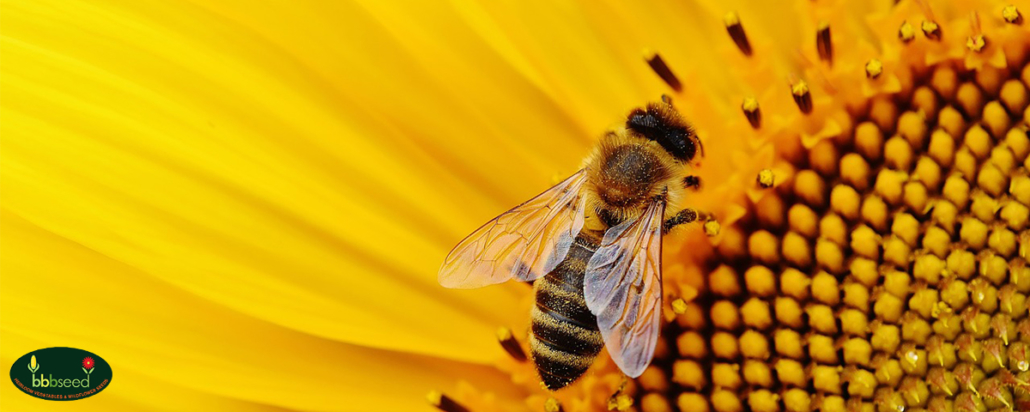
Honey bee collecting pollen on a bright yellow flower

If I had to give a clear nationwide answer, my top 10 plants for honey bees are willow, clover, borage, bee balm, anise hyssop, lavender, coneflower, sunflower, goldenrod, and aster.

But the real strategy is bigger than the list. Choose early bloomers, summer workhorses, and late-season nectar plants. Plant in groups. Favor open flowers over heavily doubled blooms. Match the plant to your region. Ask about pesticide practices before buying. And remember that the best plants for honey bees are the ones that provide nectar and pollen when honey bees need them most.
Best Flowers for Honey Bees: What to Plant for Nectar and Pollen All Season

Best Flowers for Bees: What to Plant for a Pollinator-Friendly Garden

How to Share Your Plant Starts for Profit

Plant Starts

Image by Shameer Pk from Pixabay

by Sandy Swegel

Sharing plants is a simple joy in life. Sharing plants and making money, well that’s even better. Read on to learn how to share your plant starts for profit.

My happy group of gardening buddies first got to know each other because of our great avarice for more seeds. We had all joined a local gardening email list so we could talk more about plants and gardening, but the more we spoke with each other, the more seeds and plants we wanted. Every time someone mentioned a new variety of tomatoes or annual flowers or ground cover, we had to have one of those.

The first year, we decided to meet in person and share seed packets. Armed with dozens of recycled envelopes, we doled out tiny seeds to each other, taking home three Cherokee purple tomato seeds or six cosmos seeds. This quickly became confusing and chaotic and required so many tags in our seed trays. So the next year we decided to become more economical. We’d each buy a packet of seeds and grow out all the plants…and then swap our plant starts. We definitely got more plants than we would have grown on our own and we each had unusual varieties you can’t buy in stores.

But the third year of our avarice proved to be the year we figured out that we could get as many seeds as we wanted…and they practically paid for themselves.  All we had to do was start our seeds and sell 2-month-old plant starts to each other and to the other greedy gardeners who envied our ever more diverse gardens. We learned that anyone can sell healthy organic heirloom tomato starts, especially if you have pictures of last year’s garden.

You can try your own mini plant exchange and sale. We price our seedlings cheap ($1 or $2 at most). I can afford all the heirloom tomato plants I want if I just sell three seedlings for $1 from each seed packet. Throw in some herbs and flowers and soon the plants barely fit in the car. Our little group now has a giant plant sale every May where everyone brings their plants to sell to each other, but thanks to free advertising on Craigslist and neighborhood electric poles, we also sell our humble little plants to the public.

Avarice never ends, of course, and now we have to grow more plants so we can make money so we can afford backyard greenhouses. Last year our small group of about 12 home gardeners sold some $4000 worth of plants that they started in closets and on top of refrigerators just two months before. Not enough to get rich, but enough to buy more seeds, build hoop houses and season extenders, and have a load of precious organic sheep manure delivered to our gardens.

So enjoy your seed shopping and think about swapping some of the plants you start with others. We learned that while there is no end to avarice among gardeners, there is also no end to generosity. It is a great joy to have an abundance of little plants to share with friends and strangers.

Saving Seeds

Saving Seeds from Heirloom VegetablesSaving seeds from heirloom vegetables.

What are “heirloom” vegetables? An heirloom vegetable is a non-hybrid, open-pollinated variety that has been passed down from generation to generation and, in some cases, can be traced back hundreds of years.  These seed lines have been carefully selected to maintain uniformity and consistency for germination.

Heirloom seeds become ‘heirloom’ because they exhibit exceptional traits desired by the gardener.  Often this means the plants are more colorful, flavorful, and unique, or have great germination and vigor.  Often the traits are location-dependent.  Meaning, seeds planted in one garden will not produce in the same manner in another location.  We encourage you to try heirloom seeds, see which have the qualities for your area to become your favorites and make them into your own very special seed line.  Seed saving from heirloom vegetables is easy and fun.

Gardeners have found that as seeds are selected and saved over many years, production is increased and the quality is improved, creating plants that will produce best for that locale and will resist diseases and pests of that locale.  Contributing to genetic diversity strengthens the ecosystem. Historically farmers and local gardeners have created and sustained this rich genetic heritage by learning to save their own seeds from varieties that perform best in their own mini-ecosystems.  The current trend toward mono-crops where only one seed type is used to produce a crop worldwide is eliminating the ability to be able to find genetic variations that will withstand emerging pathogens and climate changes.

Planting your crop:

Start with good Heirloom Seed varieties.  Keep in mind that to allow the plants to produce seed and to allow the seed to fully mature, you will have to allow for a longer growing season.  This can be done by starting plants indoors and arranging for protection from frost in the late season. You will grow some for food or flower harvest and some for seed production.  Fully mature seeds will be viable (able to germinate) and produce vigorous plants.  You may want to do some research on the different flower types for proper pollination techniques and plant with row/species separation in mind, to prevent cross-pollination.

You also may look into caging procedures to isolate species that are in flower at the same time.  By caging different plants on alternate days, you can take advantage of the pollinators to do the work without cross-pollinating your crop.  Cage one plant or group on one day and early the next day, before the bees wake, transfer your cage to a different plant or group.  Some crops are biennial and do not produce seed until the next year, so you will need to determine whether you should leave the roots in the ground over the winter or dig and store them.

There are many publications with detailed information on seed-saving and growing techniques for each species.  “Seed to Seed” by Suzanne Ashworth, 2002 by Seed Savers Exchange, Inc. is a good way to get started. Also, check out these easy instructions for seed saving, written by the International Seed Saving Institute, a non-profit established to teach seed saving.

Why save seeds:

When you grow crops using your own saved seeds from your best plants for next year’s crops, the seeds begin to adapt to the growing conditions (temperature, moisture levels, pests, diseases, and so forth) that exist in your garden.  This adaptation makes your garden stronger over time.  Seeds that are used to grow crops year after year have the opportunity to adapt to incremental climate changes.  As global temperatures change, these plants will have a better chance at survival and productivity.  A single plant from a single seed can produce dozens or hundreds of seeds, increasing your seed stock exponentially.  Sharing and exchanging seeds with other gardeners, community gardens or seed libraries helps to increase the diversity of everyone’s collections.

Harvesting and collecting seeds:

When saving seeds from heirloom vegetables, look for favorable characteristics such as; freeze and cold tolerance, heat tolerance, adaptability, winter hardiness, early maturation, vigor (strong germination, and growth), flavor, color, size, texture, etc. Also, look for desirable traits such as; vine or plant type, seed type, and specific disease resistance.  Plan to be ready to harvest the seed as they mature.

– Collecting dry seed:

It’s easy to save seeds from plants that produce pods, husks, and other dry casings such as peas, beans, and flowers.  The technique is called “dry processing” and is faster than collecting seed from fleshy, pulpy fruits such as tomatoes and cucumbers.  Seeds that are dry-processed can be allowed to dry right on the plants unless there is wet weather in the forecast.  Seeds often fall where they may, naturally, little by little.  Often the pods will pop open when you are not around to collect the seed and it will be lost.  Allow the seed pods to remain on the plant in the ground for as long as possible.  Usually, the seed will not continue to mature after the pods are cut from the plant. To collect the seeds easily as the seeds begin to mature, secure paper bags over the seed heads and attach them to the stems of the plants.  As they mature they will drop into the bags.

Separating the seeds from the chaff (dried pods and stems) is called threshing.  Commercial threshing is done by multitasking machines that can harvest, thresh, and winnow the seeds all at once.  For the home gardener, a bag, pillowcase, or small sack is all that’s necessary.  Put the seeds into the bag, secure the ends, and roll it around, lightly crushing and breaking up the pods a bit.  Be gentle so you don’t damage the seeds, but just loosen the chaff.  For tinier seeds, you can just put them on a board and crush them with your fingers.

Then you will need to winnow the chaff from the seeds.  Place the seeds in a bowl and gently blow on them to remove the lighter-weight chaff.  Swirl the seeds around and continue blowing gently until most of the chaff is removed.  Another option is to use a screen or sifter where the holes are smaller than the chaff to simply sift them apart.

– Collecting seeds from pulpy fruits:

Pick the best, most ripe (even to the point of over-ripe) tomato, pepper, cucumber, etc.  Choosing an over-ripe veggie will ensure the seed has fully developed.  If you wait for a frost or freeze before you pick the fruit or veggie, most of the seed will not be developed enough to be viable next year.

Cut open the fruit and scoop out the seeds or for small fruits like cherry tomatoes, simply squeeze the seeds out into a glass jar.   Add a little water and label the jar with the seed variety.  The seeds usually are surrounded by a gel that inhibits germination.   Leave for two to five days to begin fermenting. This will break down the seed coat while killing off many of the harmful bacteria and fungi lurking on the seeds.  Swirl the contents in the jar every day.

When the pulp floats to the top, the seeds are ready for cleaning.  Most of the seeds will have sunk to the bottom.  Carefully skim off the pulp then tip the liquid and seeds into a strainer. Wash the seeds under running water, using the back of a wooden spoon to carefully remove any remaining material stuck to the seeds.  Spread the seeds onto a paper towel to remove most of the water, then transfer them to a non-stick surface such as a dinner plate. Dry the seeds in a warm place out of direct sunlight. It will take two to three weeks for the seeds to completely dry out.

Make sure you label the seeds with their name and the date they were collected immediately after you have finished harvesting each variety.  Excellent record-keeping is your best friend when it comes to seed-saving.  It’s amazing how easy it is to mix up seed varieties!

How long do seeds last?

If you keep your seeds in a cool dry place, your seeds can last for years.  These things are seed killers: excess moisture, excess heat, light, and rodents.  Some seeds last easily for years. Others only last one year before the germination rate goes down.

Here is a chart from the Chicago Botanic Gardens on longevity in vegetable seeds as well as one from Iowa State University extension.

Seeds that have passed their prime for producing viable plants can be used to scatter as a cover crop, for bird seed, for eating, or for cooking (as in herb seeds).

Dried Flowers – 3 Ways to preserve your beautiful flowers

Ruby-Throated Hummingbird

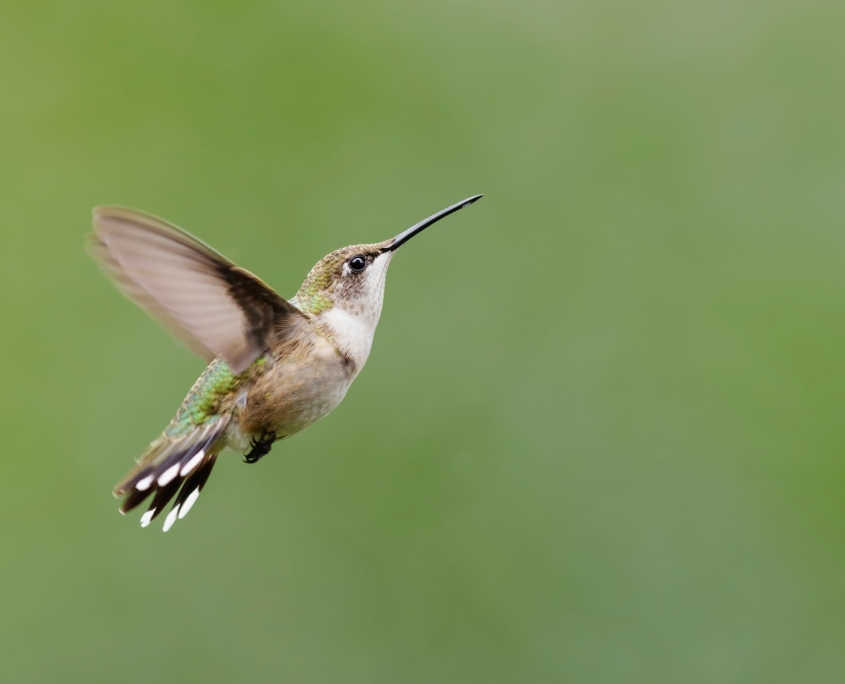
A female Ruby-throated Hummingbird in flight.

Photo courtesy of pixabay – skeeze


All About The Ruby-Throated Hummingbird

The Ruby-throated Hummingbird is one of the most commonly recognized hummingbirds in North America, especially in the eastern half of the country where they spend their summers. They are the only hummingbird to breed east of the Great Plains. Commonly found in open woods, forest edges, parks, gardens and yards, their familiar green and red plumage make them easy to identify.

Ruby-throated Hummingbirds are 3-3.75 inches in length and weigh around 10-13 ounces with a life span of about 4-6 years. These speedy little birds flap their wings 53 times per second, can hover in mid-air and fly upside down and backward. The males have a striking bright red or red-orange iridescent throat. The males’ upperparts and head are bright green. The female’s underparts are plain white and upperparts green, but they lack the brilliant red throat of the male.

Ruby-throated Hummingbirds feed mostly on nectar and insects. They are strongly attracted to red and orange flowers, like those of trumpet vine, red columbine, bee balm, scarlet sage and many Penstemon varieties. They happily feed from nectar feeders too.

Ruby-throated Hummingbirds are solitary birds that only come together to mate. The female builds her cup-shaped nest about 10-20 feet above ground in a well-camouflaged area of a shrub or tree.  Here she will commonly produce 1-2 broods of 2 white eggs per year. The incubation period is 10-16 days. The female, alone, will care for the young for 2-3 weeks before they are mature enough to leave the nest.

In early fall, the Ruby-throated Hummingbird will begin its migration to Mexico & Central America crossing over 500 miles of water in their nonstop journey across the Gulf of Mexico. They can become a little more aggressive near food sources in late summer as they begin preparing for the journey.

To attract more of these lovely birds to your yard keep a clean and full nectar feeder, plant more nectar-rich flowers in their favorite colors of orange and red, limit insecticide use and provide a water source such as a mister or shallow fountain for these birds to bathe and preen in.

Let us help you plant more nectar-rich hummingbird attracting flowers with our Wildflowers for Hummingbirds Mix.

About Lacy Phacelia

Wildflower Seeds

by Heather Stone

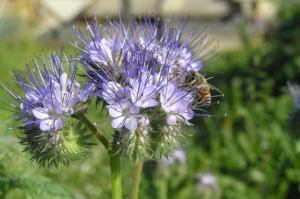
Photo of a bee on a Lacy Phacelia blosson.

Image by Cydonia from Pixabay

One of my favorite plants began blooming this week, Lacy phacelia, Phacelia tanacetifolia, so I wanted to take a moment to tell you all about Lacy Phacelia. It has many common names including lacy scorpionweed, tansy leaf phacelia, blue tansy, purple tansy and my favorite, bee’s friend. Clusters of light blue-violet flowers that unfurl in a fiddlehead shape sit atop attractive fern-like foliage. Reaching heights of 1-3 feet and blooming for 6-8 weeks this fast-growing wildflower is an excellent addition to any garden. It also makes an excellent cut flower. 


Native to the southwestern United States, this easy to grow annual does well in hot, dry conditions but easily adapts to a variety of site conditions. Lacy phacelia seeds germinate readily in 15-30 days. Sow seeds early in the spring while there is still a possibility of frost. Ideal soil temperatures for best germination are between 37-68 degrees F. Press seeds gently into the soil at a depth of ⅛-¼”. 


It’s not only the lovely blue-violet flowers that make lacy phacelia one of my favorite plants. Lacy Phacelia is well known for its ability to attract bees and butterflies to an area. It is a heavy nectar producer and is listed in the top 20 pollen-producing flowers for honeybees. Having this source of high-quality nectar and pollen means you’ll be attracting many native bees, bumblebees, honey bees and butterflies to your garden. I have these flowers growing near my front porch and just this week I counted 4 different varieties of bees on the few flowers that just started blooming. 

Unfurling blossom of Lacy Phacelia.

Image by rihaij from Pixabay

Trying growing lacy phacelia near your vegetable garden to increase your yields. 

Lacy phacelia also does well in containers. These containers can then be moved to different areas of the garden that need pollination. The benefits of Lacy phacelia as a cover crop are becoming more popular. It is widely used in Europe as it aggressively outcompetes weeds and absorbs excess nitrates and calcium from the soil. But it’s most important contribution is its pollinator-attracting power. 


Lacy phacelia readily self sows so removing flower heads before they set seed helps limit any unwanted volunteers. Though when you see these beautiful flowers and how many pollinators they attract to the garden you might want to let a few of these wildflowers go to seed. 

Our 5 Most Popular Pollinator Seed Mixes


Honey Bee on yellow blossom.

Save the Pollinators

Pollinators are the magic ingredient that makes our natural world work. They fuel lifecycles of entire ecosystems and are found everywhere flowering plants are. Humans are also incredibly dependent on pollinators. Pollinators come in all shapes and sizes. Honeybees, native bees, bumblebees, butterflies, birds, bats, and other wild critters are all incredibly important pollinators!

Unfortunately, we are losing our pollinators at an alarming rate. Insect pollinators are being hit especially hard. Habitat loss, exposure to pesticides, lack of food, and diseases are all leading factors in the decline of these species. We should all be concerned. One-third of our food, from coffee to strawberries, are dependent on pollinators to produce. We need these animals just as much as they need us.

We take our favorite wildflower seeds and blend them into pollinator seed mixes specially formulated to help create habitat and forage for the pollinators in your backyard. We make sure to use fresh, high quality, open-pollinated, GMO-free seeds because you deserve to have a successful, healthy, and fun planting experience. Our mixes are all seed with none of the fillers that you might find in other mixes because we believe you should get what you’re paying for.

Click here if you have any questions about how to select your site, plant, or care for our wildflower mixes!

Here are our 5 most popular pollinator seed mixes:


1.     Monarch Rescue Mix

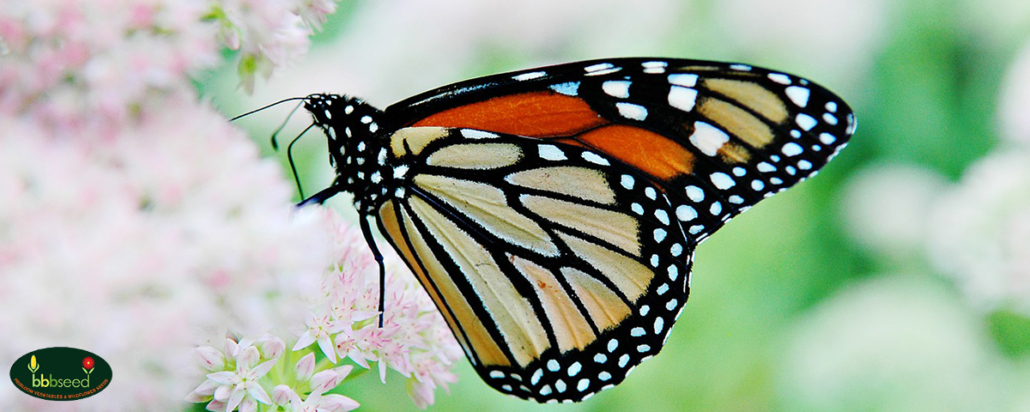
Monarch butterfly on pink blossom.

Monarch Butterflies are some of the most wonderful and strange animals on Earth. Every year, they migrate between the high mountains of Mexico through most of North America. This migration takes four separate generations of butterflies to complete and covers a massive amount of territory. To complete this migration, the Monarchs need plenty of forage and nesting sites along the way.

However, habitat and forage loss has been devastating for the Monarch Butterfly. Milkweed plants are the only plants that Monarch Butterflies will lay their eggs on. These plants have been wiped out of large portions of the United States due to concerns about allergies and their designation as a “weed”. Habitat loss and pesticide use have also reduced the amount of good forage for Monarchs, weakening them too much to complete their journey.

This is why we created our Monarch Rescue Wildflower Mix. This mix of Milkweeds and wildflowers is a Monarch Butterfly booster shot. This mix is full of nutrition and habitat for the butterflies passing through your area. Make your garden a Monarch paradise with this mix.

Find it here.

2.     Bee Rescue Mix

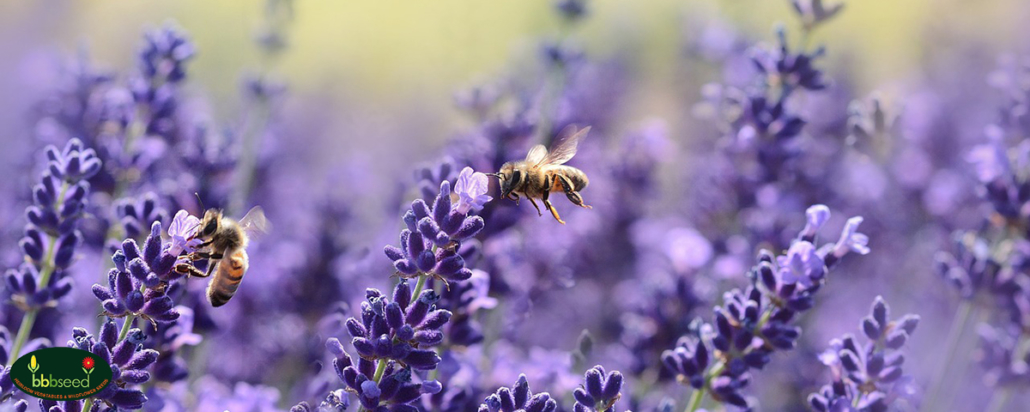
Honey bees on purple lavender blossoms.

Bees have had a rough time of late. The incredible loss of honey bees in recent years has been well documented and reported on. However, the crisis is much deeper than just honey bees. North America has over 4,000 species of native bees. Most native bees are solitary and are extremely effective pollinators. However, these little bees are little understood and are in even more danger than honey bees because they don’t have beekeepers watching out for them!

This colorful combination of wildflowers will provide nectar and pollen for full season support of native and introduced bee species.  Our “Bee Rescue” Wildflower mix has been designed to include the absolute best species to support the health and vitality for a wide range of native pollinators as well and the honey bee. This is one of our best selling pollinator seed mixes! These are the flowers that attract the most pollinators and will do well over the most growing zones.

Get our Bee Rescue Wildflower Mix here!

3.     Bumblebee Bonanza Mix

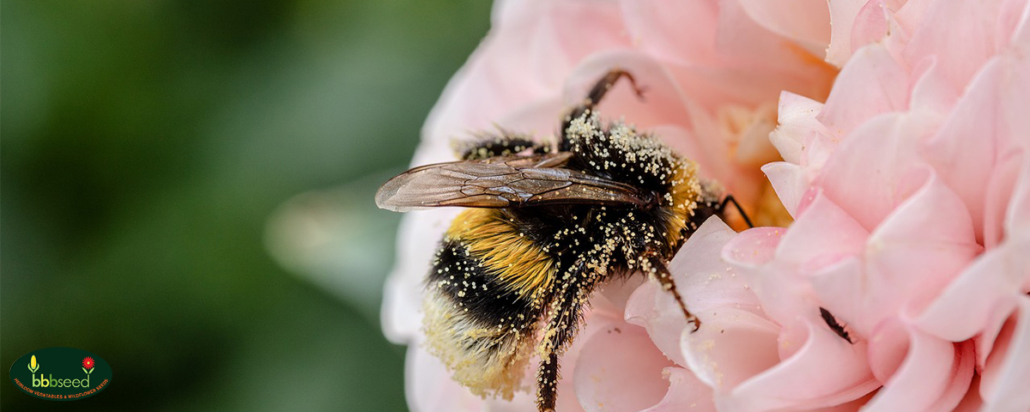
A pollen covered bumblebee on a pink blossom.

Bumblebee Bonanza Mix is a colorful mix that includes specially selected species of nectar and pollen-rich, annual and perennial flowers that are known to attract bumblebees and other pollinators and will provide quality forage from early spring until late fall.

This mixture of annuals and perennials is designed to provide early, mid and late season blooms to support the life cycle of the bumblebee as well as other pollinators. These flower species will do well in a variety of growing conditions and are recommended for a maintained, home-garden planting or commercial landscape.  The best time for planting this mix is in the early spring, early summer and late fall.

Buy the Bumblebee Bonanza Mix Here!

4.     Hummingbird Mix

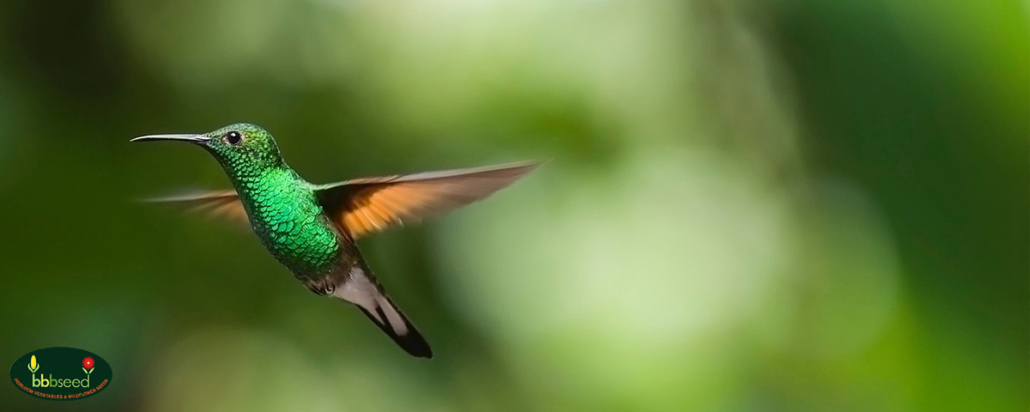
Green hummingbird in flight.

This mix has been created with the vibrantly colored, nectar-rich species that hummingbirds love.  Consisting of mostly perennials, this mix will continue to provide support to hummingbirds and other important pollinators.  A few annuals are included to provide color the first year while the perennials become established and will bloom the second year.

Get it here and start enjoying your hummingbird garden!


5.     Honey Source Mix

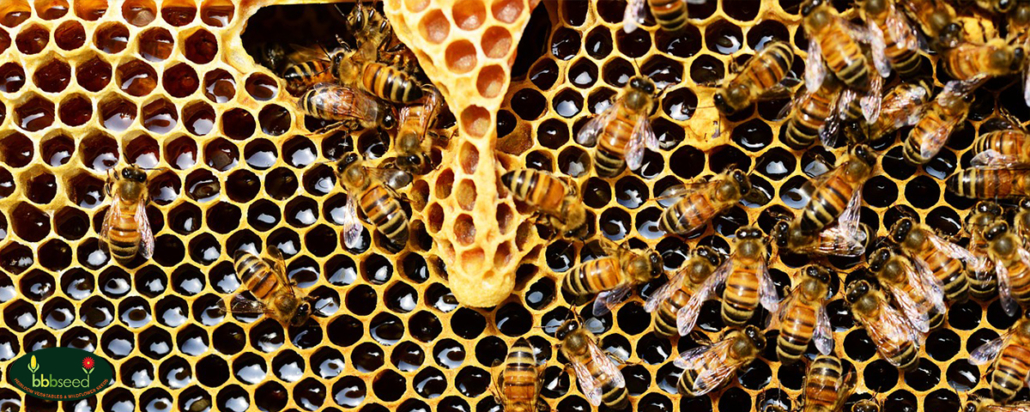
Honey bees on a honeycomb.

A long blooming mix of beautiful, nectar and pollen-rich annuals and perennials put together just for our Honey Bee friends.  Plant this mix to provide vital nutrition for the European Honey Bees.  These hard-working pollinators are necessary for our agricultural production and are a major contributor to our food supply.  Lack of native nectar and pollen sources between crop rotations can cause stress and starvation that contribute to colony collapse.

Our Honey Source Wildflower Mix can be found here!

One Last Thing

At BBB Seed, we are deeply committed to providing the highest quality grass, wildflower, and grass seeds to empower our customers to get out and grow! This list of our 5 most popular pollinator seed mixes is intended to be a useful resource for you to see what products our customers and we are enjoying right now!

We also are incredibly concerned about providing sustainable and environmentally conscious products to you. We source seeds that are non-genetically engineered, tested, and grown sustainably. We hope these products will help you enjoy nature and learn about this wonderful world in the garden. We strongly encourage you to visit our Pollinator Action Page or The Bee Conservancy to learn about the pollinators that make our natural world possible and learn more about what you can do to help them. Thank you!

Grow. Enjoy. Share…the beauty and the bounty!