ILLITERATE GARDEN

Garden Problems We All Have

By: Sandy Swegel

“My garden is illiterate.  It didn’t read the book about what it can’t do.”

That was the wisecracking opening remark at a gardening talk I attended recently.  We all laughed and during the break we started talking about some of the stupidest plants we know.

Looking at wild plants, we laughed about orchids native to cold, arid Colorado.  But the most illiterate plants are the ones we humans planted because we didn’t know better.

The plants that don’t know they can’t survive in Zone 5.

Pineapple sage don’t you know anything? You like living in semi-tropics.  What are you doing living another year in the Colorado clay soil iris garden with 70 mph winds?

The plants that don’t know that being an annual means can’t live longer than one year.

Yep Verbena bonariensis I’m talking about you.  The books say you are an annual but I’ve watched you survive for three years in a row.  Ditto snapdragons…I have trees younger than you.

Plants that don’t know they are supposed to be invasive.

I’m waiting for you, bamboo. Any day now you’re supposed to fill in that entire border between my yard and my neighbor’s ugly garage.  Sure, four years ago I saw one runner into the grass…but what have you done lately?

Codependent plants.

These are the plants that not only don’t know they can’t survive but also put up with terrible abuse.  Don’t be sweet-talking me Japanese Maple.  You know who you are.  You croaked all those times I planted you in protected areas and nurtured you with extra mulch in winter and water in summer.  But the year I put you, a tree, in a pot with six other plants on a third-floor deck without protection from the cold and without winter watering…that’s the year you survive?

If it were up to humans, we’d never have surprises in the garden or tulips blooming in July or scabiosa blooming in December literally under the snow.  Or the gallardia that blooms in my driveway. We won’t even mention the weed that seeded and bloomed in my truck bumper the December I was driving around Louisiana.

What a relief that our plants are so darn illiterate.


Photocredits:

fullycoolpix.blogspot.com/2014/08/plants-live-everywhere.html

www.boredpanda.com/plants-flowers-versus-concrete-asphalt-pavement/

 

The Windy Garden

Building a Wind Resistant Garden

By: Sandy Swegel

This could be a perfectly beautiful early Spring. We’ve had a week of warm sunny weather that is waking up the daffodils and tulips. Birds are flitting about and energetically singing out mating calls. It’s a joyful break from dark winter days. But then there’s the wind. Chinook winds. Or as they were called the year I lived in the Alps, “scheiss foen.” Everyone understood if the foen had arrived that you could be in a foul mood because of the irritability and headaches from the air pressure changes these mountain-made winds caused.

Wind can have devastating effects on a garden. Sure the strong winds can break stems and tree branches, but the greatest stressors comes from the drying effects of the winds. Plants close their stomata (leaf pores) to reduce water loss, but that slows the plants’ ability to grow. The winds desiccate the plant tissue and dry out the top inches of the soil meaning the plants need more water. Even plants under snow cover can get very drought stressed because the winds evaporate the snow before it can melt.

If it’s going to be a windy season, I make a few mental changes in my garden plans. Here’s things to consider if you have a windy garden:

Use more drought tolerant plants.
Increase your watering after the winds die down.
Grow shorter plants.
Grow plants like lavender with thinner leaves that won’t desiccate so easily.
Plant some tall ornamental grasses through the flower garden. They look beautiful in the wind and provide some wind break protection.
Plant evergreens as windbreaks.
Consider a garden wall.

And take an aspirin for your sinus headache.


Photocredits:

http://www.pc.gc.ca/pn-np/ab/waterton/ne/ne-galerie-gallery-2.aspx?a=1&photo=%7Bdfae32e8-4d1e-47e4-a909-08c9ea68dd13%7D

Crevice Gardens

By: Sandy Swegel

Some crevice gardens look like regular gardens where flowering plants cover all the rocks. Others look more like rocky alpine mountainsides. The Denver Botanic Gardens latest crevice gardens combine sculptural placement of the rocks with native plants.

So keep at eye out for a crevice garden near you. Botanic Gardens around the world are investing millions of dollars installing crevice gardens that highlight the art of stone and alpine gardens, and that provide us with ideas of how we will keep growing beautiful plants and flowers even as global warming reduces our available water in some places.


Photo credits :
www.nargs.org
www.rockstarplants.com/
www.architectureartdesigns.com/18-effective-ideas-how-to-make-small-outdoor-seating-area/
www.yampariverbotanicpark.org/gardens.php

LAB GIRL

A Good Seed Read

By:  Sandy SwegelClose-up photo of Calendula seeds.


Hope Jahren has helped me fall even more deeply with seeds and the natural world this week. Our book group just started to read her best selling book “Lab Girl.” Lab Girl is like two books in one….a marvelous account of her life as a woman in science AND a romantic ode to nature that waxes poetic about seeds and trees and vines that want to climb.

Here’s her excerpt about seeds:

“A seed knows how to wait. Most seeds wait for at least a year before starting to grow; a cherry seed can wait for a hundred years with no problem. What exactly each seed is waiting for is known only to that seed. Some unique trigger-combination of temperature-moisture-light and many other things is required to convince a seed to jump off the deep end and take its chance—to take its one and only chance to grow.

A seed is alive while it waits. Every acorn on the ground is just as alive as the three-hundred-year-old oak tree that towers over it. Neither the seed nor the old oak is growing; they are both just waiting.”

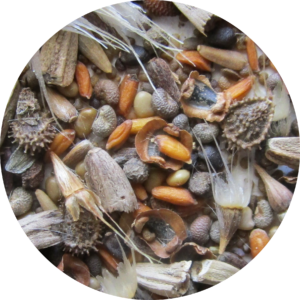
I love seeds. I love to walk up and down the aisles of the BBB Seed warehouse and touch the hundreds of thousands of seeds that are there, full of potential. To imagine just a single packet grown out and burst into bloom. Hope Jahren has given me yet another vision: all those seeds there. Alive. As alive as the trees outdoors. Alive and waiting. Waiting patiently and calmly.Close-up photo of the seeds in BBB Seed's Honey Source Mix.


Photocredits:

www.opensesamemovie/heirloom-seeds-extinction/

New Agricultural Products

by Sandy Swegel

As a gardener I often say “Thank God.” The growing legality of growing marijuana has meant a proliferation of stores that sell amazing tools and new agricultural products that make gardening easier and cheaper. Despite living in Colorado, I’ve never been interested in smoking pot. Even as a decadent college student I thought “Why smoke when you can drink?” I helped a friend trim some of her high end organic marijuana grown outside and declined the offer for some of the product. But I am endlessly interested in marijuana growing techniques. I have three products that might not have been available if it weren’t for the early mmj growers.

My EZ Clone aeroponic plant propagator.
These used to cost $400 but I got mine for $50 off of craigslist from a guy in a souped-up muscle car who had had dreams of getting rich by growing clones but lost interest when that didn’t happen overnight. Now you can buy new cloners for much less than $100 from Amazon or Home Depot if you aren’t brave enough to venture into a grow shop. These simple machines spray warm mist on the roots of cuttings and cause hardwood and softwood cuttings to grow roots in a very short time—days! This is my favorite way to root shrubs, tomatoes, small fruit plants and even roses. Should work great for trees too. I can have well-rooted plants in just a couple of weeks.

My LED grow light.
The first indoor light I tried were the big sodium ones that provided enough light to take indoor plants all the way to bloom. That was amazing but also an energy hog. This year for indoor seed starting, I’m loving my Costco LED shop light that is half the size of my old shop lights, lightweight, and uses almost no electricity.


My liquid all natural growing supplements.
I still rely on kelp and Superthrive as growth stimulants, but the organic, natural fertilizer concentrates produce some of the best growth and production I’ve seen, especially in tomatoes. Lots of research went into getting ideal growth out of marijuana plants. Marijuana and tomatoes are quite similar in plant needs. If you can grow one, you can grow the other.

There’s nothing like old fashioned common sense for growing using compost and time-honored natural techniques. But a few high-tech products can make your garden spectacular.


Photo Credits:

https://bigbudsguide/best-nutrients-cannabis/


Five Spot: A wildflower for shade and for native bees

Wildflower Seeds

by Sandy Swegel

I love blue flowers so naturally I am enthused about our new “Blue Blazes” collection of seeds for eight different blue wildflowers. What really caught my attention is a little flower I’ve never seen growing that now I just have to have.

Nemophila maculata is white with single blue-purple spots on the tips of each of its five petals. So cute. Such an unusual design is believed to have evolved to capture the attention of native solitary bees. “Five Spot,” the flower’s common name, is an early cool-season annual flower that prefers shady moist areas. Although my garden in Colorado is pretty dry, shady areas under trees are well-watered in Spring where the snow is slow to melt in the shade. Perfect I think for a flower whose name Nemophila loosely translates as “woodland lover.”


I’m going to plant my five spots in an area with that has early Spring purple crocuses and early Summer blue columbine. I’m hoping Five Spot blooms just between those two.


Five Spot finishes blooming once the weather gets hot, but it leaves seeds to reappear next Spring. Now I have a new travel destination on my list: California’s Sierra Nevada in early Spring when fields of this sweet wildflower bloom naturally.


Photo credit
https://agresearchmag.ars.usda.gov/2010/aug/bee

https://en.m.wikipedia.org/wiki/Nemophila_maculata#

First seeds to plant in the New Year

Seed Starting

by Sandy Swegwel

Winter Solstice has come and gone, so it’s safe to start planting outdoors.

And the first seeds to plant outside in cold climates are POPPIES!

My farmer friend gave me the best advice on how to seed poppies: the night before a big snow go outside and strew the seeds on top of old snow or dry earth. Let Mother Nature do the rest.


Under the blanket of snow that’s about to fall, the poppy seeds will be insulated and get a nice cold spell. As the snow melts the seeds will be nicely hydrated. Warm spells will stimulate germination at exactly the right time. The first flowers show up for me in May. Plant a mix of different poppies like the “Parade of Poppies” and you’ll have poppies of some sort till frost.

Photo credits
https://www.99roots.com/en/plants/iceland-poppy-p40063
http://www.magazinzahrada.cz/galerie/krasne-zahrady-plne-barev/10.html#contentw
http://www.hgtv.com/design/outdoor-design/landscaping-and-hardscaping/how-to-plant-a-poppy-container-garden

Holiday Gifts for Gardeners

Gift Ideas

by Sandy Swegel

There’s something about winter coming on that sparks the desire to garden. Suddenly we think of all the things we wish we had grown. Or we remember how nice it was to always have a vegetable or flower bouquet to give away. And now what. We want to grow and create to give something.

These are the gifts that I’m giving that I can grow indoors quickly in time for the holidays.

Flowering Amaryllis

A lucky visit to the garden center showed me this year’s casual gift. Amaryllis bulbs already starting to bud right in the box were on sale at 50% off. Amaryllis are ridiculously easy to grow…in soil or in water. I soaked the roots of the bulbs overnight and potted them in plan plastic pots and put them on the windowsill. Once they bloom, I wrap the pot in holiday wrap, add a bow and have awesome gifts ready to go.

Fresh pots of basil.

If you soak basil seeds overnight and plant them densely in clean potting soil in a warm place they’ll germinate very fast. Keep them in a sunny spot or under lights and in two weeks they will be a vigorous aromatic patch of basil micro greens that make a great winter gift.

Vase of coleus

Before your coleus freezes, take lots of cuttings of the most beautiful leaves. Put several stems in a mixed vase. It will be a beautiful arrangement (the reds are quite poinsettia-like.). This is the perfect gift for people who say they have a brown thumb…they just have to monthly refill the water. Those with green thumbs will have rooted plants next Spring.

My favorite gift idea a gardening friend gave last year is pretty hard-core. It is a gift from a serious gardener to another serious gardener. The gift? A bucket of goat manure pellets. Goat manure is one of the best manures…dry, no weeds and not very smelly. I love my eccentric gardening buddies!

Photo credits
http://www.jacksonandperkins.com/amaryllis-bulb-gifts/c/JP-Amaryllis/
https://myurbanfarmscape.com/tag/coleus/

Garlic Chives – A Rugged Plant with Pretty Flowers

Cover Crop Seeds

by Sandy Swegel


It’s that time of year when I nominate plants for this year’s Garden Awards. All Fall I’ve been admiring one plant that is a “crossover” plant able to be a contender in both the “Tough and able to handle the absolute worst soil and little water” category AND a nominee in the “Aren’t You Pretty” category. That stellar plant this year is Garlic Chives (Allium tuberosum). It gets extra kudos for being a late-season nectar and pollen source for bees and butterflies too.

The flowers are beautiful little white stars. Even as they turn to green seeds pods, they are still attractive enough to put in a vase. I’ve never seen any bugs or pests or disease on the chives…probably because they do smell like garlic.


Pungent aroma is one reason they aren’t a perfect garden flower. The greens are edible just like garden chives (and known in Asian cooking as Chinese chives). The flavor is more garlicky than oniony. They are lovely thrown in a stir fry or sauteed and served in egg or tofu dishes.

Now full disclosure requires I tell the other downside of garlic chives: they make a lot of seeds. And they love to reseed in rocks and crevices of garden walls. I deal with this by dead-heading the seed heads in about October before the black seeds drop. While this can be a bother in an irrigated flower garden, it’s not a problem at all in a tough xeric area where there’s not much water anyway.


You can direct seed the chives or start them and transplant. The only extra requirement they have is that they need dark to germinate well….so sprinkle some soil over the seeds. Most of the time the chives overwinter or reseed. They grow in clumps about a foot tall and the flowers are one-two inches wide…depending on your water and soil fertility. If you have sun and moist soil they grow big and spread quickly. But part shade is fine. So is very dry or heavy clay soil. The plants will be smaller, but still impressive.

Yes, that’s what the garlic chives were this year: impressive. Tough plants and pretty.

Photo Credits
http://www.missouribotanicalgarden.org/PlantFinder/FullImageDisplay.aspx?documentid=10864
https://www.mountainvalleygrowers.com/alltuberosum.htm
http://statebystategardening.com/images/uploads/article_uploads/11June_mwnews_5-B2.jpg

Garden and Grow Flowers all Winter Long

Wildflower Seeds

by Sandy Swegel

For gardeners foolish enough to live where winter takes hold and the ground freezes, the time between first frost and last frost can be very long. Some gardeners are wise enough to welcome the break from the work of the garden and enjoy the natural flow of the seasons. Others like me start longing for a greenhouse or dream of living in warm tropical climates. I fantasize about building a mobile greenhouse I could drive down south to grow all winter and drive back to Colorado next Spring. I mourn the death of geraniums in beautiful pots and the brown frozen leaves of basil.

Before you lug dozens of plants into your living room where they mostly suffer until they succumb to low light and pests, make a plan for how to garden your indoor area.

If you have good indoor southern exposure…

Blooming plants like geranium, Hibiscus, Bougainvillea and Mandevilla will put on winter-long displays of flowers. Often by January, the dry air and lack of circulation will cause aphid explosions, and you’ll need to give the plants a quick shower or deal with the aphids in some other way before they get completely disgusting. Fragrant plants like rosemary will also thrive and even bloom if you keep them well-watered. Plants that didn’t need much water outdoors have different needs indoors and will probably need to be watered twice a week.


Low light windows…

Winter is the time to move cyclamen and African violets out of the direct winter sun to the north or east windows to keep them happy. Begonias also do well in lower light.
Cuttings of coleus bring in lots of foliage color. Coleus plants are so attractive in pots but expensive to buy. Simple jars of water will keep the coleus happy and grow roots so you have plants next Spring.

Herbs…

The rosemary is in the southern window. You can harvest the thyme from outdoors all winter as long as you can push aside leaves or snow. Tender herbs like basil and oregano are another story. I haven’t had much luck bringing them indoors…they bolt or get buggy. I have had great luck seeding narrow windowsill pots densely and enjoying the young leaves as microgreens.

Forcing bulbs…

Amaryllis are great to start now. Setting aside a few bulbs from Fall plantings can occupy your gardeners’ heart for weeks in January and February. Not all bulbs force so there is some experimentation here and some bulbs will need a cooling period in your frig or cold garage. But little daffodils inside in late January give great joy.


Forcing stems…

Make a mental note now of what spring flowering trees and shrubs there are in your yard or neighborhood. In late winter after a warm spell, you can see the new buds swell on woody stems. Cut those stems and bring them indoors.

Winter doesn’t have to be long and gray. You can garden inside all season long.

Photos:
http://www.hiddenvalleyhibiscus.com/forum/index.php?topic=144.0
http://picklesandcheeseblog.blogspot.com/2009/11/bright-red-geraniums-in-big-black-pots.html
Miss Priss the Bougainvillea, Good To Grow, Liza’s plants