Anise Hyssop

Herb of the Year

By Heather Stone
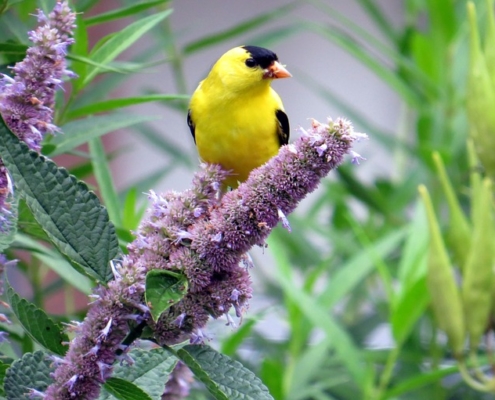
Photo of a yellow bird sitting on an anise hyssop blossom.

photo courtesy of pixabay

Every year since 1995 the International Herb Association has named an Herb of the Year. This year’s selection is Anise hyssop, Agastache foeniculum. This North American native wildflower has a lot to offer in the garden, the kitchen, the medicine chest and to the pollinators.


Anise hyssop is native to the Upper Midwest, Great Plains and into Canada. It’s found growing in prairies, dry upland forests, plains and fields from Northern Colorado to Wisconsin in the US and from Ontario to British Columbia in Canada. Anise hyssop is a member of the mint family. It grows best in full sun to part shade in dry to moderately moist soils with good drainage. This low maintenance perennial thrives in zones 4-9 reaching heights on average of 1-3’ tall by 1-3’ wide. Beautiful lavender flower spikes bloom in summer and with regular deadheading will continue until fall. The flowers are edible and make for a nice cut and dried flower. Both the flowers and the leaves can be added to baked goods or salads. My favorite way to use them is finely chopped in a fruit salad.


Anise hyssop is easily grown from seed and established plants will spread by rhizomes or will self-seed in the right growing conditions. It also transplants easily. Deer tend to leave this plant alone, but the same can’t be said for rabbits. Anise hyssop works well in the middle or back of the border and is at home in native, wildflower and herb gardens as well as in prairies and meadows. Great companions for anise hyssop include Black-eyed Susan, Purple Coneflower, Bee Balm and native grasses. Anise hyssop also looks fantastic in pots mixed with flowering annuals.


While the flowers of this plant have no scent, the leaves of anise hyssop smell and taste like licorice with notes of lemon, pine and sage. Native Americans found the scent uplifting and used the leaves to help treat depression. This was but one of many uses the Native Americans had for Anise Hyssop. It was also used externally as a poultice to treat wounds and burns and as a wash for itchy skin irritations such as poison ivy. Internally, it was used for treating diarrhea, fevers and coughs. Anise hyssops’ antibacterial, anti-inflammatory and expectorant properties make it an excellent herb for soothing coughs and relieving chest congestion. I find it to be especially effective in children. The best time to harvest leaves for use is just past full bloom when the oil content in the leaves is at the highest.


Anise hyssop is also a favorite plant of many pollinators. The lavender flowers are a good nectar source and highly attractive to bumblebees, native bees, honey bees, butterflies, hummingbirds and beetles. Goldfinches love to feed on the seed so make sure to leave some flowers standing in the garden at the season. So let’s celebrate 2019 by adding a plant or two of Anise Hyssop to the garden this year.
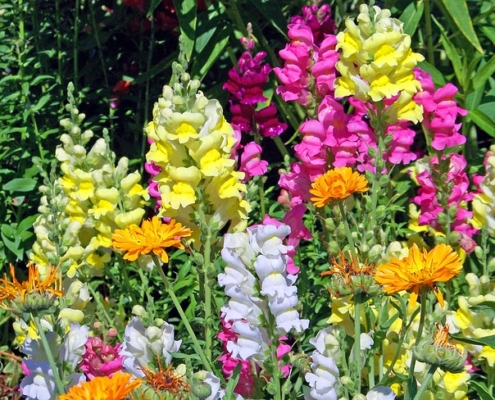

IT’S ALL ABOUT THE SNAPDRAGON IN 2019

Photo of many snapdragon flowers in bloom.

photo courtesy of pixabay

Wildflower Seeds

By Engrid Winslow


Snapdragons (Antirrhinum majus) are one of the most widely grown and well-known flowers in the garden for many reasons. Children adore them because of the distinctive bloom of the dragon’s head shaped flowers with mouths that open and close when squeezed from both sides. Many gardeners associate them with memories of their parents’ or grandparents’ gardens and they come in every color of the rainbow and beyond with shades from white to a purple so deep it almost looks black. They can be short or tall, bloom for a really long time and are easy to grow in full sun to part shade. Usually blooming in cooler weather in the spring and fall, they can bloom in hotter months if given additional water and deadheaded regularly. Snapdragons are useful as perennials because they often overwinter or as annuals in planters. They are a lovely addition to a cottage-style garden, pretty in bouquets and are not too fussy about soil type, although they do better with the addition of organic matter. They can even tolerate dry conditions. On top of all that, bumble bees love them and they are lightly fragrant. The National Garden Bureau has named the Snapdragon one of its 2019 plants of the year: ww.https://ngb.org/year-of-the-snapdragon/

Snapdragons are readily available as plants but they are so easy to grow yourself from seed if you decide to give them a try. They germinate better if placed in the freezer for a couple of days before planting and should be started sometime in February for spring planting. They do need light to germinate and since the seeds are tiny, press them into the top of the soil and water them from the bottom. They take 1 to 2 weeks to germinate and should be pinched back once they have 6-8 leaves to encourage a stronger stem. Plant your starts outdoors about the time of the last frost once they have been hardened off. https://bbbseed.com/care-planting-seedlings/

For additional helpful information about starting flowers and vegetables from seed check out this past blog: https://bbbseed.com/ez-indoor-seed-starting/

HERBAL SALVE FOR YOUR BEST FRIENDS PAWS

Close of of furry dog face. Herbal salve for paws.

Photo of Cute fluffy dog compliments of M. Cosselman.

Herbal Salve for Paws

By Engrid Winslow

It’s clearly winter and we can tell because our skin gets drier and we use more lotions and balms to combat dry, chapped skin. But what about your dog? Winter means cold, ice and salted roads, all of which can dry out your furry friends’ paws. Did you know that there are herbs which are particularly healing for dogs and can be mixed into a salve? Here are a few ideas and the master recipe for turning them into a creamy topical application for your dog. If you didn’t save any of these from last year’s herb garden or have never grown them, this will give you some ideas for the next growing season. Also, there are herbal apothecaries in many towns or you can order the ingredients from https://www.rebeccasherbs.com/. You should gently massage the salve into the skin before your dog spends long periods outside. Also, these are safe on humans as well as dogs so when you apply it to your dog’s paw pads, you will get the benefit too.

Calendula

(Calendula officinalis) flowers are antimicrobial, antifungal, antibacterial and very healing. It is ideal for treating all skin irritations and wounds for humans and dogs. It can, however, be potentially toxic to cats, so refrain from sharing it with feline house members.

Chamomile

(Matricaria recutita, Chamaemelum nobile) flowers don’t just make a calming tea. It is also antibacterial and can help soothe irritated skin. Occasionally, a dog will have an allergic reaction so proceed with caution to be sure your pet is not one of those unlucky few.

Rosemary

(Rosemarinus officinalis) leaves, stems and flowers is a versatile herb for cooking as well as having anti-inflammatory and antifungal properties. It works well in treating abrasions and is antifungal.

Sage

(Salvia officinalis) leaves or flowers have both cleansing and antiseptic properties and are very healing. It is also a very safe herb as long as you take care for to use Artemisia (Artemisia spp.) sages.

Slippery Elm’s

(Ulmus fulva) inner bark is healing for topical wounds and soothes irritation. Rarely, a dog will have an allergic reaction so, once again, be in-tune with your dog and watch for any signs of itching sneezing or other allergy symptoms.

MASTER SALVE RECIPE

5 oz. coconut oil

3 ½ oz. powdered or finely ground herb from the list above

4 oz. beeswax

Heat the coconut oil and herb in the top part of a double boiler and let the water boil for 1 ½ hours to infuse the herb.

Strain the herb out of the oil with cheesecloth, squeezing out as much liquid as possible. Return to oil to the double boiler and add the beeswax. Heat over boiling water, stir frequently until the wax is melted and thoroughly combined.

Pour into small jars and allow to cool, then seal.  If stored in the refrigerator, this herbal salve for paws will keep for at least two years.


Name that Seedling

Wildflower Seeds

by Sandy Swegel

Everything’s greening up in your garden and there are so many interesting baby plants.  Can you recognize what’s a friend or a foe?  Here are some clues to help you identify little seedlings that may be coming up in your garden right now!


  1. I’m a weed, but I’m a nutritious and yummy green for salads or saute. Wait too long, and I may grow to four feet tall.
  2. I’m volunteering in your herb garden.  I look a lot like other herbs, flowers and weeds, but crush a leaf and smell it…and you’ll know exactly who I am.
  3. Did you plant your cool-season vegetable seeds recently? I’m always up the fastest!
  4. I don’t mind cold and snow.  A lot of people plant me on St., Patrick’s Day.
  5. Don’t I look healthy!  Let me grow and I’ll be in your garden FOREVER.
  6. Did you plant annual wildflowers last year?  I may have a hard time making a commitment, but I’ll be back every year.
  7. Nobody remembers planting me, but I love to grow in surprising places.  I may be all green now, but come back in a week and I’ll be jumping to see you.


Answer key to seedling clues

  1. lambs quarter
  2. cilantro
  3. radish
  4. pea
  5. bindweed
  6. bachelor’s button
  7. johnny jump up

DREAMING OF SPRING

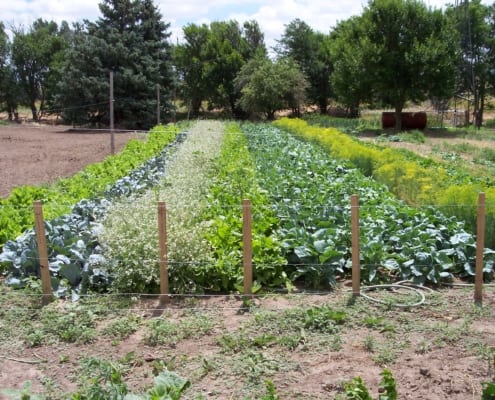
Plan your vegetable garden. Rows of Vegetables in a Garden.

Plan your vegetable garden!

By Engrid Winslow

Yes, it is still very cold and very dark but nothing fills the heart in the dead of winter than planning for spring. What should you be doing now that will keep those spirits up? Plan your vegetable garden and herb garden!

1. First of all, take a look at those vegetable and herb beds and decide what and how many varieties you want to plant next year. Do you want to start those peppers a bit earlier this year? Did you plant tomatoes there last year – rotate tomatoes every 3 years if at all possible to avoid depleted soil and issues with many diseases. What do you want to grow more of this year? Anything you want to try that’s new? What did you and your family really love? Want more tomatoes or basil for pesto or tomato sauce? [4 Tips For Keeping Your Basil Productive and Pesto Secrets] Were there any epic fails? Maybe it’s time to move on to buy those at your local Farmer’s Market and devote the precious real estate to something else.

2. Speaking of soil, this is a great time to start adding mushroom compost in a nice thick layer that can work its way into the soil during late winter freeze and thaw cycles and heavy periods of moisture. You can also cover the compost with a layer of seed-free straw that was grown organically.

3. Peruse the seed catalogs and websites. It is so fun to read those descriptions and they all sound wonderful but be aware of your space and climate when choosing seeds. Take stock of any seed that you saved from last year and organize and assess any leftover seed packets. Seed viability goes down over time. Onions, corn, parsnips, parsley and leeks should be refreshed every year, but tomatoes and lettuce can go 4-6 years and still germinate. Check out these charts if you have questions: https://hortnews.extension.iastate.edu/1999/4-2-1999/veggielife.html/

and http://ottawahort.org/wp-content/uploads/2017/02/Seed-Viability-Times.pdf/

4. Gather up your seed starting supplies and order more if needed. Dust off those grow lights, check the heat mats and make sure they still work and clean any seed starting containers that you plan to re-use with a weak bleach solution. Again, assess what worked and what didn’t in prior years. Did lettuce seeds that were direct-sown in the garden elude you? Try starting them indoors under a plastic dome which helps retain moisture until they are fully germinated.

5. Did friends and neighbors share anything they learned with you? Maybe it’s time to get everyone together for a Happy Hour, swap saved seeds and talk about their gardening experiences.

6. Review past blogs, books and articles that you might have saved for ideas, tips and new information. Here’s a good place to start: Care and Planting of Seedlings, Rules You Can’t Break, and Two Ways To Guarantee Your Seeds Grow

Responsibility

Musings on Responsibility

by Rebecca HansenBBB Seed's "Never GMO's!" carrot man.

Here at BBB Seed, we are fortunate for the opportunity to talk with so many interesting people and to hear their philosophies on life, living, and gardening.  As we have learned from our customers, there are many different but equally valid views on sustainable agriculture, organic versus non-organic gardening, uses for wildflowers, and just about everything else. The BBB Seed staff is no exception – our opinions are just as varied as those of our customers.

Some people think that using plant species that are native to a specific area is the best way to re-create the way life used to be.  Others just want to grow a beautiful bed of flowers or the perfect heirloom tomato.   Some are excited by the simple emergence of a green shoot above a moist bed of soil, regardless of what lies below.  Some come from farming families while others have been born and raised in an urban environment.  The varied ideas and ideals in our workplace and of our customers help to make our work both fun and interesting.

Responsibility and the safe seed pledge

Though we celebrate these diverse views and thoughts, we at BBB Seed have one goal that brings us together: to take personal responsibility for providing a high-quality product which, to the very best of our knowledge, is environmentally sound.  We make our choices based on seed test information that is provided by the growers and collectors of our wildflower seeds as required by law.  We only purchase seed that, by the results of testing, has a noxious weed content of 0 (zero).  We carefully follow the ever-expanding list of noxious and invasive species lists to ensure that we don’t knowingly distribute varieties to areas where they might be considered invasive.  BBB Seed provides quality products and information to any and all of our customers that they may use for their own purposes.  We cannot control how our seeds are used once they leave the shop, but we hope that our products are put to use in an environmentally sound, agriculturally sustainable manner.  Given the discussions we have had with our customers, we are confident that this will be the case.  After all, in the end, we all have personal responsibility for our own actions. Hence the statement on our packages:

“Beauty Beyond Belief Wildflower seeds, Heirloom Vegetable Seeds, and seed mixes are of superior quality and are carefully chosen based on purity and viability standards, essential elements for a successful, beautiful and self-sufficient landscape. Our seed mixes include no fillers or inert materials.”


Decorating with Wildflowers

Wildflower Seeds

Summer is upon us and the wildflowers you planted are in full bloom and you have enough to spare, maybe, for a bouquet for your table!

Wildflowers are great candidates for cut flower arrangements.  Blooms can be freely cut without fear of ruining the manicured look of the typical flower bed and arrangements can be just as free and wild as the components.  Make a big multicolored arrangement with a relaxed informal design that will really light up your room and give the feel of walking through a meadow.  The components of your design will necessarily reflect the seasonal bloom times.  Try arranging flowers along with interesting textures of grasses, ferns or branches from bushes or trees.  Seed pods and even bird’s nests make great accents.  The small delicate size of most wildflowers allows for groupings of similar flowers together with open spaces.  Look for colors that complement each other and a variety of textures.


Favorite flowers for bouquets are Bachelor’s Buttons in shades of pink and blue, spikey Purple Coneflower, fluffy towers of lavender Lupine, tall stalks of blue Larkspur, and the striking yellows of Black-eyed Susan and Gloriosa Daisy.  Think about including the multicolored warm hues of the Firewheel Gaillardia, native annual Sunflowers, and Plains Coreopsis.  Tall stalks of the brilliant white Shasta Daisy, the fuzzy spikes of Liatris or tall stalks of ferny-leafed Cosmos add eye-catching interest. Poppies, although brilliantly tempting, don’t have a very long vase life.  Their delicate petals tend to fall off with just a touch. Use the bobbing, white clusters of annual Baby’s Breath to fill in the spaces and unite all components.  Lastly, add a few tall grass tassels reminiscent of meadows and forest glens.

When decorating with wildflowers, plan to cut your flowers for arranging in the morning hours.  This is when the plants have taken up the most water and are not in the work mode of photosynthesis.  Choose the freshest flowers, even choosing some that are just beginning to open up, to ensure that your arrangements will last as long as possible.  Take a clean bucket, filled with 6” or so of warm water, out to the wildflower patch and cut the stems as long as possible on an angle with very sharp scissors or knife.  This will ensure that the flower stem will be able to take up water and nutrients for the longest time possible.  Any vessel can serve as a vase or container for displaying your bouquet.  Be creative, even a basket will work with a smaller cup or bowl inside that can hold water.  Keep in mind the scent of your flowers.  Some of those beautiful flowers in the wild may have a very strong or unpleasant scent when in a closed room.  Wildflowers with milky sap, such as poppies, release the sap into the water and stop the water uptake of the other flowers.  The stems can be sealed shut by holding a lit match to the cut end of each stem until the stem turns black.

Even a ‘wild’ flower arrangement starts with some basic arranging steps.

First, start with the base layer.  This can be some general greenery or the flowers that will provide the bulk of the contents.  Make sure to remove all vegetation that will be below the water level which would rot and increase the bacteria in the water and decrease the life of the arrangement.

Next, add the other flower choices to your display, working with one flower species at a time, placing them at differing angles and directions. Add the larger focal flowers in odd numbers, such as 1 very tall central flower or 3 or 5 large eye-catchers.

Then, balance and fill holes with baby’s breath or greenery and last, add in odd numbers, the tall textural grasses or seed pods. Check the water level and add water daily with 1 tsp of household bleach per quart to inhibit bacteria growth.  You can revive wilted flowers by re-cutting the stem end and placing in hot water.

Create an arrangement for any room of the house or porch or even your favorite reading nook.  Remember to balance the size of the arrangement with the room and use, putting low arrangements on the dining table.  Don’t be afraid to bring the bounty of your own wildflower meadow into your home and feel free to upload a picture of your arrangement to our website!


The Essential Pollinator

Pollinators
Essential Pollinator

Those pesky critters that buzz by, causing us to dance and flap our arms when we are outside, are far more than a mere annoyance.  We don’t give these tiny powerhouses the credit they are due.

Native pollinators such as bees, butterflies, flies, moths, beetles, and bats are essential for human survival but their populations are in a serious decline.  Our fuel, food, drugs, and fiber are directly and indirectly taken from plants that depend on pollinators for their existence.  Some have estimated that one out of every three to four mouthfuls of food we eat results from the actions of pollinators.  Pollinated crops contribute an estimated $20 billion to our economy each year.   Native pollinators control the healthy function of our natural ecosystem.  The documented decline of native pollinators, as well as that of the introduced European honeybee, concerns the scientific community.  This decline results from the fragmentation and destruction of native habitats which has reduced the food sources for many native pollinators.  The traditional corridors of nectar- and pollen-rich plant sources have been destroyed by development and changes in land use.  Isolated habitats are further degraded by non-native and invasive species.  Misuse of pesticides and the introduction of non-native pollinators have contributed to the extinction of many of our native species.

The bright side of this issue is that we can help our native essential pollinator populations by choosing to plant nectar- and pollen-rich vegetation species that are native to a specific area that will provide nutrition and cover.  Remember to include plants that provide food for the larval stage and also to provide a water source.  The flowering plants that are native to your area have co-evolved along with their pollinators to provide the perfect combination of petal shapes, fragrances, and colors for their mutual benefit.  Make sure to plant a variety of native plant species of mostly perennials to ensure an appropriate and dependable supply of nectar and pollen for the bees, butterflies, and other pollinators throughout the spring, summer and fall.  Select nectar-rich species with clusters of brightly colored tubular florets and plant them in groupings rather than as individual plants.  Avoid cultivars of plants grown mainly to produce larger flowers as these often do not have the pollen or nectar that the pollinators require.  Bees are attracted to purple, blue, and yellow flowers and hummingbirds prefer red and orange flowers.  Try to include night-blooming varieties to attract bats and nocturnal moths.  Use pesticides sparingly or not at all.  Have patience, most perennials will take one or two seasons, with good care, to bloom.  Read more here>https://bbbseed.com/pollinators/about-pollinators/

Thoughtful plantings, whether in pots and containers or backyard gardens and a conservative, integrated pest management system, can create and establish a stable ecosystem that is pollinator-friendly.


Worms in my Kitchen?

Composting Indoors

by Cheryl Soldati Clark

What is Vermiculture?

Vermiculture is more than just a funny word, it is the process of using worms to decompose food waste.  The worms turn the waste into nutrient-rich material that will ensure healthy & happy plant growth. It is nature’s way of recycling! This method is a sustainable way to save energy, water, landfills and it reduces the need for synthetic fertilizers. You can feel good about not throwing your kitchen scraps down the kitchen disposal or contributing to the over-crowding of our landfills. You can even have a worm bin indoors without any odor or mess!

How to Get Started on Your Indoor Worm Bin…

You Will Need:

Cardboard (Optional) – Can be used to cover bedding to lock in moisture
Rubbermaid or Wooden Container with Lid – Recycled containers work great, just make sure that they have never been exposed to chemicals. A 1’x2’x2’ bin can hold kitchen waste from families of 2 people. A 1’x2’x3’ bin can hold kitchen waste from families of 4 to 6 people. You don’t want a very deep bin because worms feed in the top layers of bedding.
Bedding (Newspaper) -Black ink on newspapers is made of Carbon and oils and is not toxic to worms. Colored ink should not be used.
Yard Waste (Optional) -Decaying leaves from your yard makes a great composting material to add to your worm bin.
A handful of Soil – Provides the grit that worms need to break down food in their gizzards because they don’t have teeth.
Red Wiggler Worms – Number of worms depends on your daily food waste. One pound of worms can eat ~3.5 lbs. of waste per week.
Moisture – To wet down your bedding & worms also need moisture in order to breathe.

Step by Step Instructions:

Step 1:

Use a drill or hammer & nail to poke 1/8-1/4” air holes in your bin 1 inch apart. You want some holes on the bottom for drainage, on the lid of the bin and along the top of the four sides. Make sure to raise the bin on bricks or wooden blocks with a tray underneath to catch the excess liquid that can be used as a liquid fertilizer for your plants.

Step 2:

Shred newspaper (black & white ONLY) into 1-inch strips. Moisten strips and squeeze out excess water.  The newspaper should not be soggy, just damp. Fill ¾ of the bin with moist shredded newspaper, decaying leaf litter (optional) and a handful of dirt and then mix it all together. You want the bedding to be fluffy not packed down. Let bin sit for a day before you add your worms.

Step 3:

Separate your vermiculture worms from the packing material that they came in. Scatter them in your bin. Feed them slowly at first so they can acclimate to their new environment and to monitor the rate at which they break down waste.

Step 4:

Feed your worms foods that they love and avoid the foods that they dislike (listed below). Don’t forget to harvest your compost every couple of months because your worms will continue to break down their bedding material.

Step 5:

After you have fed your worms for 3-6 months you will see some worm compost/castings on the bottom of your bin. It will be very dark in color and extremely rich in nutrients. You can harvest what is there or you can wait until your bin is really full. Worm castings are toxic to worms, so if you have mostly compost and not a lot of food or bedding left in your bin, then it’s time to harvest. Whatever method you choose, the key to harvesting is to separate your worms from the compost. Your worms will not survive if you put them in your garden with the compost.

To harvest your compost, you have a couple of different options:

  1. Your worms will be in the top 1/3 of your bin. You can remove the top 1/3 of worms, bedding & food and set that aside. Once you remove the compost from the bottom of your bin, then you can put your worms and remaining bedding/food back into the bin, add fresh bedding and resume feeding and maintaining your bin.
  2. If you have a larger bin, then you can push all of the material in your bin to one side and add new material to the empty half of the bin. After a month or so, when it appears that the worms have moved over to the new side, then you can harvest the compost from the other side.
  3. Spread the contents of your worm bin out on a plastic sheet/table cloth in the sun or under a bright light. Your worms will start moving down into the compost to get away from the light. About every 20 minutes you can scoop up the top layer of compost and the worms will move down again. Repeat this method for a couple of hours until you are left with a wiggly pile of worms that have been separated from the compost. Return the worms to their bin with fresh bedding immediately.

*You can’t save all of the worms, but using one of the three methods listed above will help to ensure that you save the majority of them!*

Here is an instructable with more information and photos:

https://www.instructables.com/id/Multi-Layer-Vermiculture-Bin/


Preserving Foods

Food Preservation

by Rebecca Hansen

Many of us have tried our hands at the new Victory Gardens and are getting back to our roots in our community’s Grow Local movements.  With the flow of garden produce increasing each minute, we have donated excess to the local Community Food Share programs and, we are beginning to be mildly panicked at the thought of all of that fresh produce going to waste solely because we can’t use it fast enough.

With our neighbors slamming their doors when they see us heading their way with an armload of our best organically grown zucchinis we find ourselves wishing the bounty could be spread out over the year and last well beyond the late summer flush.  More and more people are turning to home food preservation as a way to keep the bounty of their hard-earned, organic, heirloom, non-genetically modified gardens coming.

Now is the time to start your research, before the tidal wave of tomatoes sweeps you away. The number of food preservation methods is exciting and a bit daunting.  Drying foods is one of the oldest methods of preserving foods. Also, canning, freezing, pickling, curing and smoking, and fermenting are ways to keep your pantry full during the winter.

What could be more fulfilling than pulling out a sparkling jar of homemade salsa when the snowflakes are flying to bring back warm memories of those beautiful heirloom tomatoes growing on the vine?  CSU Extension has a couple of great publications on how to dry vegetables and fruits with all that you need to know about nutritional values, methods and safety precautions.

Also in the extension’s Nutrition, Health and Food Safety publications, are fact sheets on smoking and curing meats and making pickles and sauerkraut and preserving without sugar or salt for special diets.  Check out the one on safe practices for community gardens for tips on ensuring safe food for all gardeners.

With all of our efforts to ensure that we each have gotten the most nutritious value from our fresh produce, it would be prudent to search for the newest scientific research into home food preservation methods.  We want to eat healthy fruits and vegetables even when they are not in season.  The USDA encourages us to use safe canning methods. Scientific developments have changed recommendations over time. Always use up-to-date methods and do not just rely on the practices of past generations.  A great place to start is by exploring the National Center for Home Food Preservation website from the University of Georgia.

Publications and resources are available at the center’s website with useful tips for proper preservation techniques.  Also, not to be missed is an awesome, free, online self-study course called;

  • Preserving Food at Home: A Self-Study
  • Principles of Home CanningIf you are new to canning you should definitely have this publication at hand.

Preserving homegrown food can be an economical and fulfilling way to enjoy quality, nutritional food from your garden all year long.  So when your heirloom tomatoes, squash, onions, peppers, beans, garlic, beets, and turnips cover every surface in your home and garage and the refrigerator is brimming with more fragile produce, you will be fortified with the knowledge necessary to safely preserve the bounty for the time when the snowflakes will inevitably fly.